



































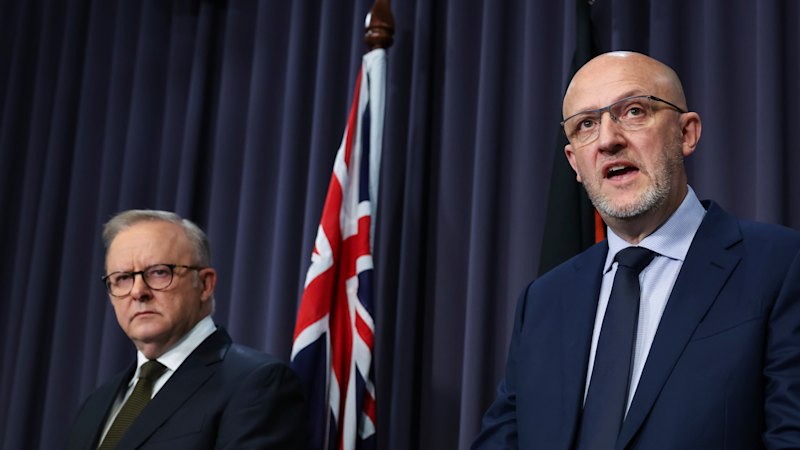
In a tragic incident during a Hanukkah event, a mass shooting in Bondi has left 12 people dead, marking Australia’s worst gun massacre in nearly 30 years. Prime Minister Anthony Albanese responded to the crisis in a late-night press conference, addressing criticism regarding his government’s handling of antisemitism and reaffirming a commitment to eradicate the “hate, violence and terrorism” that led to this attack.
Both the New South Wales (NSW) Police and the Australian Security Intelligence Organisation (ASIO) confirmed that one of the shooters was previously known to them, although they indicated there was no immediate intelligence suggesting he posed a threat. ASIO Director-General Mike Burgess stated, “We need to look into what happened,” highlighting the need for further investigation.
During the press conference, Albanese dismissed claims from various community leaders, including those within the Jewish community, who expressed concerns that the government had not adequately responded to increasing antisemitic sentiments in Australia. “We have taken it seriously and we’ve continued to act,” he stated, emphasizing that increased security measures around Jewish institutions would be part of the national response.
The shooting on Sunday evening not only left 29 others wounded, some critically, but also triggered a wave of condemnation. Albanese characterized the massacre as an attack on all Australians, assuring the Jewish community, “We stand with you. We embrace you, and we reaffirm tonight that you have every right to be proud of who you are and what you believe.”
Following the incident, Chris Minns, the NSW Premier, announced an inquiry into the shooting, while authorities also explored the possibility of a third shooter being involved. Former Prime Minister Scott Morrison condemned the attack, labeling it “unspeakable hate and evil terror.”
In recent years, ASIO has flagged right-wing extremism as a significant domestic threat. Albanese mentioned that he had received his latest national security briefing just a week prior, which included warnings about potential hate-based domestic attacks.
The sentiment among Jewish community leaders was one of frustration. Colin Rubenstein, the executive director of the Australia/Israel & Jewish Affairs Council, expressed deep concern that ongoing antisemitic rhetoric could escalate into violence. He stated, “We have warned for years that the unceasing antisemitic vitriol on our streets would evolve into antisemitic violence if left unchecked.”
International reactions also poured in, with Israeli President Isaac Herzog urging the Australian government to take stronger action against rising antisemitism. He remarked, “We repeat our alerts time and again to the Australian government to seek action and fight against the enormous wave of antisemitism which is plaguing Australian society.”
Controversy arose from the comments made by Mike Huckabee, the US ambassador to Israel, who criticized Albanese’s statement for not explicitly referencing the attack as jihadist in nature. He stated, “The disgraceful statement from Australia PM never mentioned it was jihadist attack on Jews on first day of Hanukkah.”
Albanese, visibly shaken during the press conference, reiterated the need for unity and safety for all Australians. He concluded, “You should never have to endure the loss that you have suffered today. You should never know the fear that you know. Tonight we will dedicate every resource required to making sure you are safe and protected.”
The opposition leader, Sussan Ley, expressed her full support for any federal response to the tragedy. In contrast, Pauline Hanson, leader of One Nation, criticized the government for not addressing the warning signs of rising antisemitism.
As Australia grapples with the aftermath of this devastating event, the focus will remain on how to effectively combat hate and ensure the safety of all citizens, particularly those in vulnerable communities.
