



































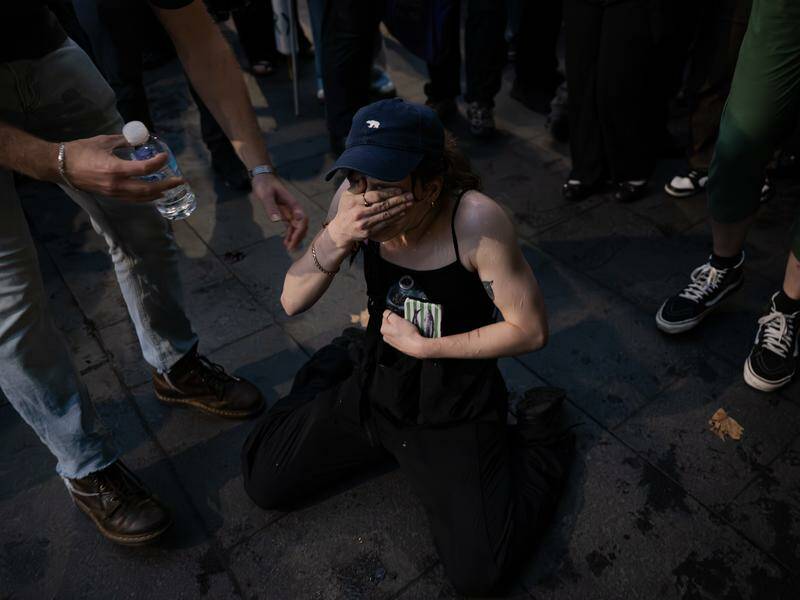
Hundreds of protesters gathered in Sydney on the evening of March 5, 2024, to voice their anger over police actions during a prior rally against Israeli President Isaac Herzog. The demonstration followed violent clashes with police, resulting in the arrest of 27 individuals and prompting renewed calls for accountability.
In response to the protests, at least 100 officers were deployed, both on foot and horseback, to manage the crowd. This came a day after the police were criticized for their aggressive tactics, which included beatings and the use of spray against demonstrators. Among those arrested, nine individuals faced charges that included behaving in an offensive manner and resisting police orders.
Videos circulating on social media captured distressing moments from the previous day’s events. One clip showed an individual being struck multiple times in the stomach, while another depicted a group of Muslim men being forcibly removed from their prayer positions. Five people required hospitalization due to injuries sustained during the confrontations.
At the latest protest, demonstrators expressed their frustration with chants directed at police and government authorities. Josh Lees, a spokesperson for the Palestine Action Group, condemned the invitation extended to Herzog, stating, “In order to roll out the red carpet for him, they crushed the rights of the people in this city to protest against him. We absolutely will not be intimidated.”
The protests have highlighted significant tensions within the community. Aftab Malik, Australia’s special envoy to combat Islamophobia, described the previous night as “a very dark night” characterized by “unprovoked violence and aggression” from law enforcement.
In defense of the police’s actions, NSW Police Commissioner Mal Lanyon labeled the crowd as “volatile” and justified the response as necessary under the circumstances. Chris Minns, the New South Wales Premier, supported the police, emphasizing their cooperative relationship with the local Muslim community. “But context is important and the circumstances facing police were incredibly difficult … it was in effect in the middle of a riot,” he remarked.
Criticism also emerged from within the political sphere. Labor MP Sarah Kaine, who spoke at the rally, rejected accusations of inciting violence. Meanwhile, Greens MP Abigail Boyd recounted her personal experience during the clashes, stating, “I got this almighty shove from my right and I went flying, lifted off the ground … and then this one copper just punched me as I was trying to get my balance.” Boyd, who had just returned from the hospital, described the police response as brutal.
As the protest unfolded, police imposed restrictions on movement around the demonstration site. Tensions escalated as officers attempted to disperse the densely packed crowd, resulting in chaos and confusion. Community worker Paula Abood reported being assaulted by police while trying to assist other rally-goers, stating, “I’ve never seen anything like this in my 40 years of marching the streets of Sydney.”
Herzog’s visit to Australia follows scrutiny over comments made in 2023, which a UN inquiry indicated could be interpreted as inciting genocide against Palestinians. The President has denied these allegations, asserting that his remarks were taken out of context.
The situation in Sydney reflects broader concerns about police conduct during protests and the rights of citizens to express dissent. As tensions continue to simmer, the community remains vigilant in its demands for accountability and justice.
