



































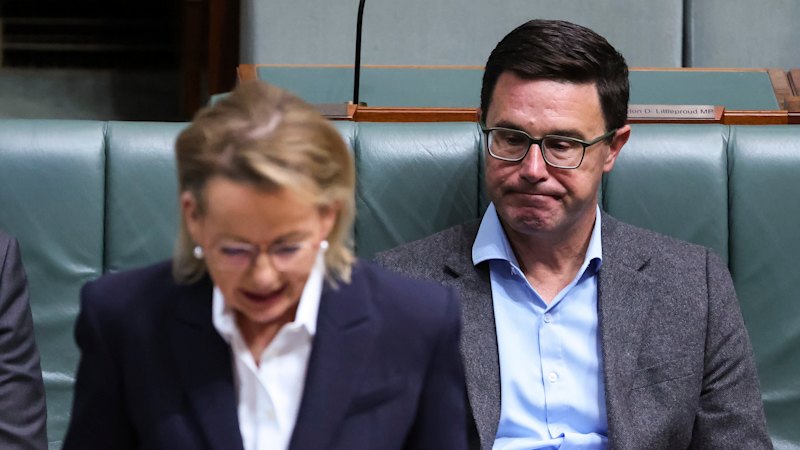
Opposition leader Sussan Ley has accepted the resignations of three frontbenchers from the Nationals after they defied a shadow cabinet decision to support legislation aimed at combating antisemitism and hate. This decision comes following a turbulent week marked by emotional debates and rapid legislation in response to a recent terror attack at Bondi.
During the Midwinter Ball in August, Ley attempted to inject humor into discussions about her leadership struggles, particularly regarding the complexities of negotiating with the Nationals. Her lighthearted remarks hinted at the ongoing tensions within the Coalition, a relationship characterized more by discord than cooperation. The cracks in this alliance became evident when Susan McDonald, Bridget McKenzie, and Ross Cadell voted against the bill designed to grant the home affairs minister expanded powers to combat hate groups.
The situation escalated on Tuesday evening when the three Senators acted against the shadow cabinet’s earlier agreement to support the legislation, which had been drafted rapidly following the Bondi incident. Ley responded promptly, asserting her authority by accepting their resignations the next day, a move that raises questions about her leadership style and the dynamics within the Coalition.
The legislation, which passed the Senate with a vote of 38 to 22, received support from both Labor and the Liberals, highlighting a rare moment of unity amidst political tensions. Ley acknowledged the confusion within the Nationals, who had reportedly held varying positions on the bill, with some members claiming there was never a clear agreement. The rapid nature of the legislative process left many feeling unsettled, complicating Ley’s position as she navigates the leadership challenges.
Former Nationals leader Michael McCormack weighed in on the issue, suggesting that the decision to vote was not reached through a joint party meeting, indicating a lack of cohesion. He stated, “Was this decided at a joint party meeting where, as one, we would either vote for or against a bill? No, it wasn’t.” His comments reflect the internal divisions that complicate Ley’s authority and the Coalition’s overall coherence.
Cadell framed his vote as an adherence to convention rather than an act of rebellion, emphasizing the need for accountability within the party. He expressed a willingness to step down if required, highlighting the complexities of party loyalty amidst dissent.
Ley’s choice to accept the resignations may have been intended to maintain a standard of discipline across the Coalition. Yet, it raises the question of whether she could have afforded to exercise leniency in this instance, given the extraordinary circumstances surrounding the legislation. By taking a firm stance, she risks deepening the rift with the Nationals, who have previously threatened to withdraw from the Coalition.
Opposition from Labor has characterized this episode as a sign of dysfunction within the Coalition. The reality, however, is that enforcement of party discipline does not necessarily equate to political coherence. For voters, the ongoing disputes within the Coalition may appear as indecision, potentially undermining public confidence in their governance capabilities.
As the Coalition’s primary vote remains near record lows, every visible fracture in the party serves to bolster the political brand of Pauline Hanson, who thrives on portraying major parties as weak. The internal conflicts within the Coalition provide her with the ammunition needed to argue that traditional parties are incapable of clarity and strong leadership.
Ley’s decision to prioritize party rules over flexibility may be a calculated move to solidify her leadership. Yet, whether this strengthens the Coalition or merely sets the stage for future challenges is still uncertain. In a political landscape already fraught with difficulties, ignoring the complexities of this situation was never a viable option for Ley.
As the Coalition grapples with its identity and direction, the fallout from this incident may echo in the months to come, affecting both internal dynamics and public perception.
