



































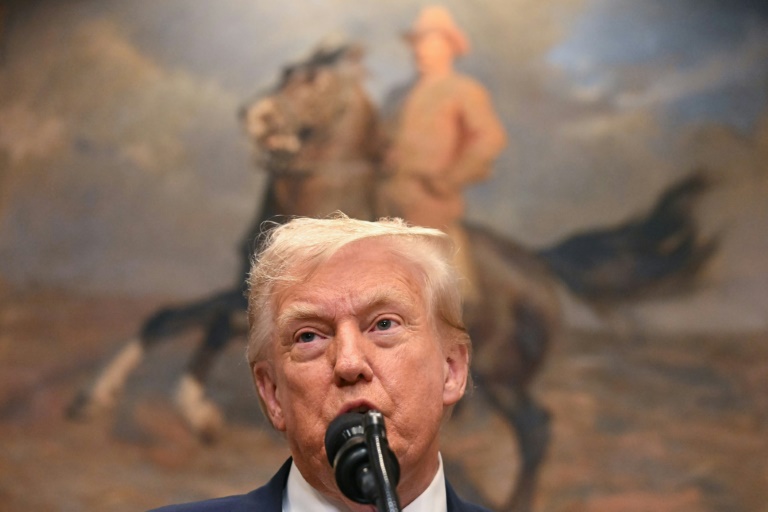
In a significant escalation of hostilities, President Donald Trump has demanded Iran’s “unconditional surrender” as military operations by the U.S. and Israel against Iranian targets intensify. This declaration, made on social media, comes on the seventh day of conflict marked by airstrikes and missile exchanges. Trump emphasized that there would be “no deal” to end the war without Tehran’s capitulation, framing the demand as essential to eliminate Iran’s nuclear capabilities.
The military actions have included fresh strikes on Iranian nuclear facilities and military installations, with Iranian forces responding with attacks on U.S. bases in the Gulf and Israeli cities. Reports from the Iranian Red Crescent Society indicate that the conflict has already claimed over 1,200 lives in Iran, with strikes reported in at least 174 cities.
Escalating Conflict and Global Reactions
The conflict began last weekend following Israeli airstrikes on Iranian nuclear sites and has drawn the U.S. into direct combat operations under the name “Operation Epic Fury.” In a recent address, Trump warned that failure to comply with his demands could lead to further devastation. He described Iranian leaders as “sick people” and claimed that U.S. forces had significantly diminished Iran’s military capabilities, although independent verification of such claims remains limited.
In a swift response to Trump’s ultimatum, Iranian Supreme Leader Ayatollah Ali Khamenei declared that Iran “will not surrender to anyone” and threatened “irreparable damage” to the U.S. if it escalates its involvement. His remarks underscore Tehran’s defiance amid growing casualties and destruction.
As the conflict escalates, the International Atomic Energy Agency reported damage to the entrance buildings of Iran’s Natanz nuclear facility, raising concerns about potential radioactive contamination. Israeli forces confirmed strikes in Tehran and urged evacuations in cities such as Arak and Khandab. Iranian state media reported the deaths of senior military figures, including Brig. Gen. Ebrahim Jabbari, as a result of U.S.-Israeli attacks.
Iran has retaliated aggressively, claiming to have targeted 20 U.S. military sites in the Gulf region. Additionally, the Islamic Revolutionary Guard Corps took responsibility for an attack on a U.S. oil tanker in the Persian Gulf, while a U.S. submarine reportedly sank an Iranian naval vessel off the coast of Sri Lanka, resulting in at least 87 fatalities.
Economic Impact and International Diplomacy
The military conflict has had immediate economic repercussions, with Brent crude oil futures surging past $90 per barrel. The closure of the Strait of Hormuz due to ongoing attacks has further exacerbated global oil supply concerns. Trump has threatened tariffs on nations purchasing Iranian oil, a move analysts have labeled as an “empty threat.”
International reactions vary, with the U.N. Security Council calling for restraint; however, efforts to pass resolutions have been hindered by vetoes from permanent members. Germany’s Chancellor Friedrich Merz discussed the campaign’s potential duration with Trump, indicating a timeline of “weeks” rather than days.
Domestically, Congress narrowly rejected a resolution aimed at limiting Trump’s military powers, reflecting significant partisan divides. Trump justified the military actions by citing Iran’s alleged advancements in nuclear technology and missile threats, echoing his longstanding criticisms of the previous nuclear agreement.
Humanitarian concerns continue to mount as Iranian officials accuse U.S. and Israeli forces of targeting civilians. Protests erupted in Tehran and other cities, with reports of unrest following the strikes. As night falls over the region, Israel intercepted several missiles over Tel Aviv, while Iran vowed to maintain its resistance.
With no ceasefire in sight and the potential for further escalation, the conflict risks drawing in additional nations and destabilizing the region. The origins of this conflict can be traced back to long-standing tensions over Iran’s nuclear program and regional activities, with Trump viewing Iran as a key adversary since withdrawing from the 2015 nuclear accord.
As military operations continue, the path to resolution remains uncertain, hinging on whether Iran’s leadership will acquiesce to U.S. demands or continue to fortify its position for a prolonged conflict.
