



































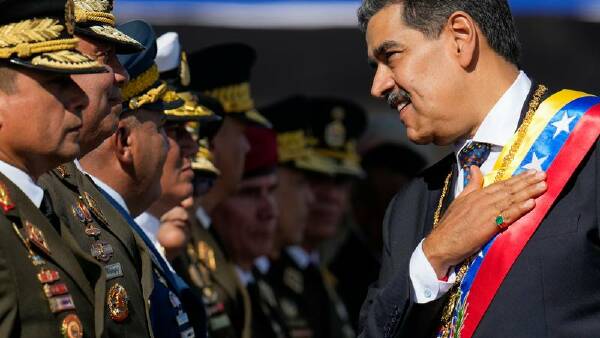
In a dramatic development, Venezuelan President Nicolas Maduro has been captured by US forces and is currently held in a New York detention facility. This operation, ordered by President Donald Trump, aimed to assert control over Venezuela and its significant oil reserves. The raid took place early on March 2, 2024, and included military strikes that disrupted electricity in parts of Caracas.
The operation saw US Special Forces not only apprehend Maduro but also his wife, Cilia Flores. They were transported to a US Navy ship offshore before being flown to New York. In a press conference held at his Mar-a-Lago resort, Trump announced, “We will run the country until such time as we can do a safe, proper and judicious transition.” His remarks highlight a renewed interest in Venezuela’s oil reserves, the largest in the world.
Military Action Raises Legal and Ethical Questions
Trump’s administration has long criticized Maduro, focusing on allegations of his involvement in drug trafficking to the United States. Following the capture, Trump indicated that major US oil companies would be invited back into Venezuela to restore the nation’s severely degraded oil infrastructure. However, experts warn that this rehabilitation could take years.
Concerns regarding the legality of the operation have arisen, particularly regarding the implications of seizing a foreign leader. Critics, including members of the Democratic Party, expressed that they were misled during recent congressional briefings on the situation. Trump acknowledged the possibility of a ground military presence in Venezuela, stating, “We’re not afraid of boots on the ground.”
The capture has sparked protests in various US cities against military intervention in Venezuela. Delcy Rodriguez, Venezuela’s Vice President, condemned Maduro’s detention, labeling it a kidnapping. Appearing on Venezuelan television, she demanded the immediate release of both Maduro and Flores, affirming Maduro’s status as “the only president of Venezuela.”
Global Reactions and Future Implications
As the situation evolves, the UN Security Council has scheduled a meeting to discuss the US actions, with Secretary-General Antonio Guterres calling it “a dangerous precedent.” Both Russia and China, staunch allies of Venezuela, have criticized the US for its intervention. China’s foreign ministry stated, “China firmly opposes such hegemonic behavior by the US, which seriously violates international law.”
The streets of Venezuela remained relatively quiet following the operation, with small pro-Maduro rallies occurring in Caracas. Many Venezuelan migrants worldwide celebrated the news, highlighting the ongoing crisis that has seen approximately 7.7 million people leave the country since 2014.
Maduro is set to make an initial court appearance in Manhattan on March 4, facing federal charges that include narco-terrorism conspiracy. The future of Venezuela remains uncertain, as Trump’s administration has yet to clarify how it intends to govern the country in the wake of Maduro’s capture.
