



































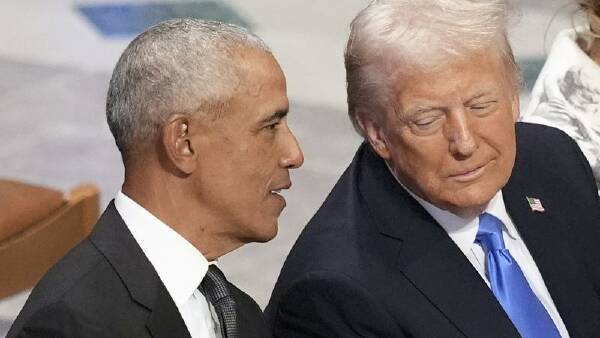
US President Donald Trump has faced backlash for a video shared on his social media platform, Truth Social, which portrays former President Barack Obama and First Lady Michelle Obama in a derogatory manner. The video, which emerged on March 15, 2024, sparked immediate bipartisan criticism for its racist undertones, particularly dehumanising individuals of African descent.
Initially, the White House defended the post but deleted it approximately 12 hours after its publication. The video, lasting just over a minute, included dubious claims regarding Trump’s 2020 election loss and featured a brief, AI-generated segment with dancing primates superimposed with the Obamas’ heads.
During a press conference on the same day, Trump stated he had not viewed the entire video before it was uploaded. “I didn’t see the whole thing,” he said. “I looked at the first part, and it was really about voter fraud in the machines, how crooked it is, how disgusting it is.” When asked if he condemned the video, Trump replied, “Of course I do,” but he refused to issue an apology, asserting, “I didn’t make a mistake.”
The incident created confusion within the White House, where spokesperson Karoline Leavitt initially described the video as an innocuous “internet meme.” However, as criticism intensified, another official stated that the post had been made in error and subsequently removed. This incident marks a rare occasion of the White House retracting a statement, typically known for its steadfast support of Trump.
Critics from both sides of the political aisle condemned the video. Republican Senator Tim Scott of South Carolina, who is Black and a Trump ally, called the depiction “the most racist thing I’ve seen out of this White House.” He urged Trump to remove the video. Others within the Republican Party echoed this sentiment, with calls for Trump to apologise and dismiss the staff member responsible for the post.
Historically, the portrayal of individuals of African ancestry as apes has been used to dehumanise and marginalise Black communities. Derrick Johnson, the national president of the NAACP, condemned Trump’s actions, stating, “Donald Trump’s video is blatantly racist, disgusting, and utterly despicable.” He added that voters are attentive to such rhetoric and will remember it during elections.
Despite the backlash, a spokesperson for the Obamas declined to comment on the matter. According to sources, only a select group of senior aides has direct access to Trump’s social media accounts, leading to questions about the protocols surrounding his communications.
Before the video was deleted, Leavitt defended its content, characterising the criticism as “fake outrage” stemming from a video that depicted Trump as “the King of the Jungle” alongside characters from the “Lion King.” However, once the backlash grew, the White House acknowledged the error.
Trump, who has a history of controversial statements, has previously faced scrutiny for disparaging remarks about various groups, including immigrants. His rhetoric has drawn criticism for normalising and emboldening racist sentiments in public discourse.
As the fallout continues, the incident raises significant questions regarding the impact of social media on political communication and the responsibilities of public figures in addressing the sentiments their messages may provoke. The implications of this video could resonate with voters, influencing perceptions of Trump’s presidency as he moves forward into the political landscape.
