



































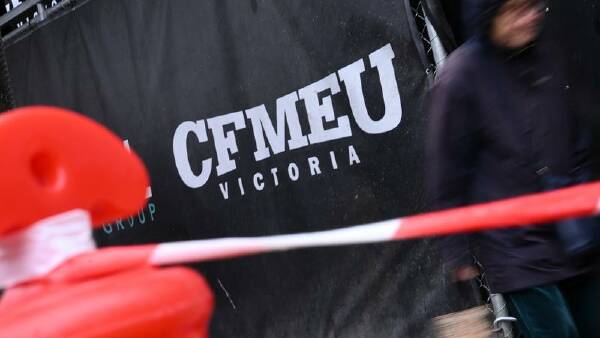
A recent report has revealed that the Victorian branch of the CFMEU (Construction, Forestry, Maritime, Mining and Energy Union) operated as a “crime syndicate” during the leadership of former boss John Setka. The findings, compiled by barrister Geoffrey Watson SC, allege that organized crime infiltrated this militant union, taking advantage of the financial opportunities presented by the Victorian government’s ambitious infrastructure project, the $100 billion Big Build.
According to Watson’s report, the CFMEU transformed from a representative body for workers into a “violent, hateful and greedy rabble,” particularly during the period when Daniel Andrews served as Premier. The infrastructure investment aimed at enhancing Victoria’s facilities also inadvertently provided a lucrative environment for criminal activities. Watson claimed that construction sites became hubs for drug distribution and that individuals with criminal backgrounds were employed, all while the government and police allegedly ignored these developments.
The impact of these actions on the Victorian taxpayers has been significant, with estimates suggesting that the misconduct associated with the CFMEU has cost the state over $15 billion in budget overruns. Watson emphasized that the union’s focus shifted from championing the working class to protecting the interests of gangsters, drug traffickers, and violent criminals. He expressed dismay over the transformation, stating, “the Setka-led Victorian branch of the CFMEU was no longer a trade union; it was a crime syndicate.”
Government Apathy and Possible Collusion
The inquiry into these allegations has highlighted troubling claims regarding the Victorian government’s knowledge of the CFMEU’s illicit activities. Watson asserted that the government failed to take appropriate action despite being aware of the escalating problem. He noted, “There is no doubt the government knew about the rising problem – but it is equally clear that the government did nothing.”
In response to questions about the government’s apparent inaction, Watson suggested that the close ties between the Labor government and the CFMEU may have contributed to a culture of intimidation, preventing any meaningful intervention. He stated, “The CFMEU had built up such momentum of authority and power that everybody was scared of them.”
Victorian Premier Jacinta Allan, who was responsible for transport infrastructure during Setka’s tenure, refrained from addressing the media as the situation unfolded. Instead, Attorney-General Sonya Kilkenny spoke on behalf of the government, claiming they had not seen the report and were unaware of its contents.
The state opposition has reacted strongly, with Leader Jess Wilson accusing the government of turning a “blind eye” to the situation. Wilson suggested that Allan is “utterly compromised” by her past associations with the CFMEU.
Calls for Accountability
The report’s findings have led to increased scrutiny of the CFMEU’s current administration. Following the release of the highly critical report, CFMEU administrator Mark Irving KC submitted the document to relevant authorities, stating that it was necessary for them to take “whatever enforcement action” they deemed appropriate. The CFMEU was placed into administration in 2024 amid allegations of infiltration by organized crime figures.
Federal Liberal frontbencher Tim Wilson has called for the removal of Irving over concerns regarding redactions made to the report, labelling the situation an “industrial-scale cover-up.” In contrast, Watson defended Irving, describing him as an “honest and decent man” and stating that it would be “mad” to dismiss him.
The findings of Watson’s report will likely have lasting implications for both the CFMEU and the Victorian government as the inquiry into misconduct in the construction industry continues. As the situation develops, further revelations may emerge, impacting not only the union’s reputation but also public trust in governmental oversight and accountability.
