



































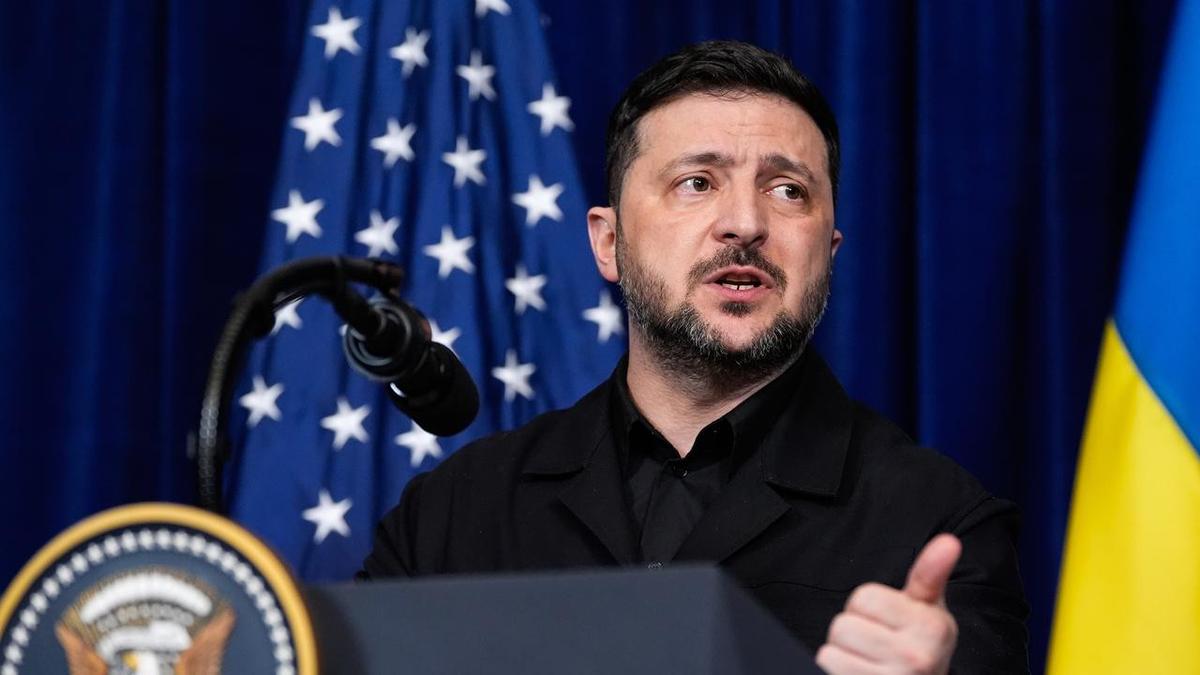
Ukrainian President Volodymyr Zelenskiy announced plans to replace the head of the country’s Security Service, the SBU, with Vasyl Maliuk stepping down from his role. This change comes amid a broader leadership reshuffle that includes appointing a new chief of staff. Maliuk, who became the SBU chief in February 2023 after serving as the acting head, has been credited with enhanced operational success during his tenure.
During his time in office, Maliuk oversaw several significant military operations. This included a daring drone strike that targeted multiple Russian strategic bombers located far from Ukraine. On social media platform X, Zelenskiy expressed gratitude for Maliuk’s service and encouraged him to focus on combat operations, stating, “There must be more Ukrainian asymmetric operations against the occupier and the Russian state, and more solid results in eliminating the enemy.”
In addition to the drone strike, the SBU under Maliuk’s leadership executed a successful strike against a Russian submarine and conducted three attacks on the bridge linking Russia to the annexed Crimean peninsula, a vital logistical route for Russian forces. Analysts have praised Maliuk for improving the effectiveness of the SBU, particularly following the dismissal of his predecessor, Ivan Bakanov, in July 2022 due to failures in countering Russian espionage.
Maliuk confirmed his resignation via the messaging platform Telegram, stating he would continue to work within the SBU to implement “world-class asymmetric special operations.”
Leadership Changes in Ukraine’s Government
Zelenskiy’s announcement follows the appointment of Kyrylo Budanov, the chief of military intelligence, as the new chief of staff. Alongside these changes, the president intends to appoint new ministers for defense and energy. Mykhailo Fedorov, currently the deputy head of government and minister for digital transformation, is slated to take over the defense portfolio from Denys Shmyhal. Shmyhal, who previously held the prime minister position, will transition to the role of energy minister.
These appointments are subject to confirmation by the Parliament, as Zelenskiy continues to reshape his government to address ongoing challenges and improve operational effectiveness in the face of Russian aggression. The president’s strategic changes reflect a commitment to enhancing Ukraine’s military capabilities and ensuring robust leadership in critical sectors.
The recent reshuffle signifies a significant shift in Ukraine’s approach to national security and military strategy, particularly as the conflict with Russia persists. The focus on asymmetric operations highlights the ongoing need for innovative tactics in response to the evolving nature of warfare.
