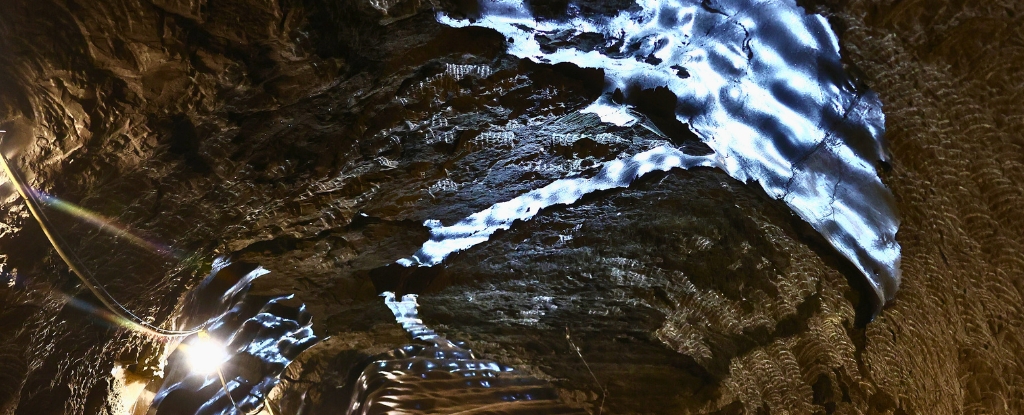
Recent research has revealed that ancient microbes, trapped in Alaskan permafrost for approximately 40,000 years, have been successfully revived. Scientists at the University of Colorado Boulder, led by microbiologist and geochemist Tristan Caro, conducted experiments on these long-frozen microorganisms, which were extracted from the US Army Corps of Engineers’ Permafrost Tunnel Research Facility.
According to Caro, “These are not dead samples by any means. They’re still very much capable of hosting robust life that can break down organic matter and release it as carbon dioxide.” This discovery is significant, as it highlights the potential for these microbes to reactivate as the Arctic continues to warm due to climate change.
As global temperatures rise, the Arctic permafrost—a layer of frozen soil, ice, and rocks covering nearly a quarter of the Northern Hemisphere’s landmass—is beginning to thaw. This process releases greenhouse gases, including methane and carbon dioxide, which have been sequestered in the permafrost for millennia. The study underscores the importance of understanding how this thawing could exacerbate climate change.
Microbial Activity and Climate Implications
The research team incubated the revived microbes at temperatures simulating an Alaskan summer, specifically at 3.8°C and 12.2°C. Initially, the microbes exhibited sluggish growth, with some strains replacing only one in every 100,000 cells daily. In contrast, typical bacterial strains can completely replace their populations within hours. After six months, however, the permafrost microbes began to show significant activity, indicating that they could potentially release greenhouse gases after periods of thawing.
This delayed response raises concerns about a possible feedback loop where longer, warmer summers could lead to increased emissions from these ancient microorganisms. Sebastian Kopf, a geomicrobiologist at CU Boulder, stated, “You might have a single hot day in the Alaskan summer, but what matters much more is the lengthening of the summer season to where these warm temperatures extend into the autumn and spring.”
The findings suggest that while immediate emissions may not be significant after thawing, the longer-term effects could contribute to global warming. The researchers emphasized the need to monitor how microbial and permafrost interactions evolve as climate change continues.
Future Research Directions
The implications of this research extend beyond just understanding microbial life in thawing permafrost. The study, published in the Journal of Geophysical Research: Biogeosciences, aims to provide insights into how climate change might influence the Arctic environment. Researchers highlight the need for further exploration into deeper and more ancient permafrost layers, which could hold even greater quantities of carbon.
As permafrost melts, the potential for increased greenhouse gas emissions becomes a pressing concern in the context of global climate strategies. Understanding these dynamics is crucial for predicting changes in Arctic ecosystems and their contribution to climate change.
In summary, the revival of these ancient microbes not only sheds light on the resilience of life but also serves as a critical warning about the interconnectedness of climate systems. The research underscores the urgency of addressing climate change and its far-reaching consequences on our environment.