



































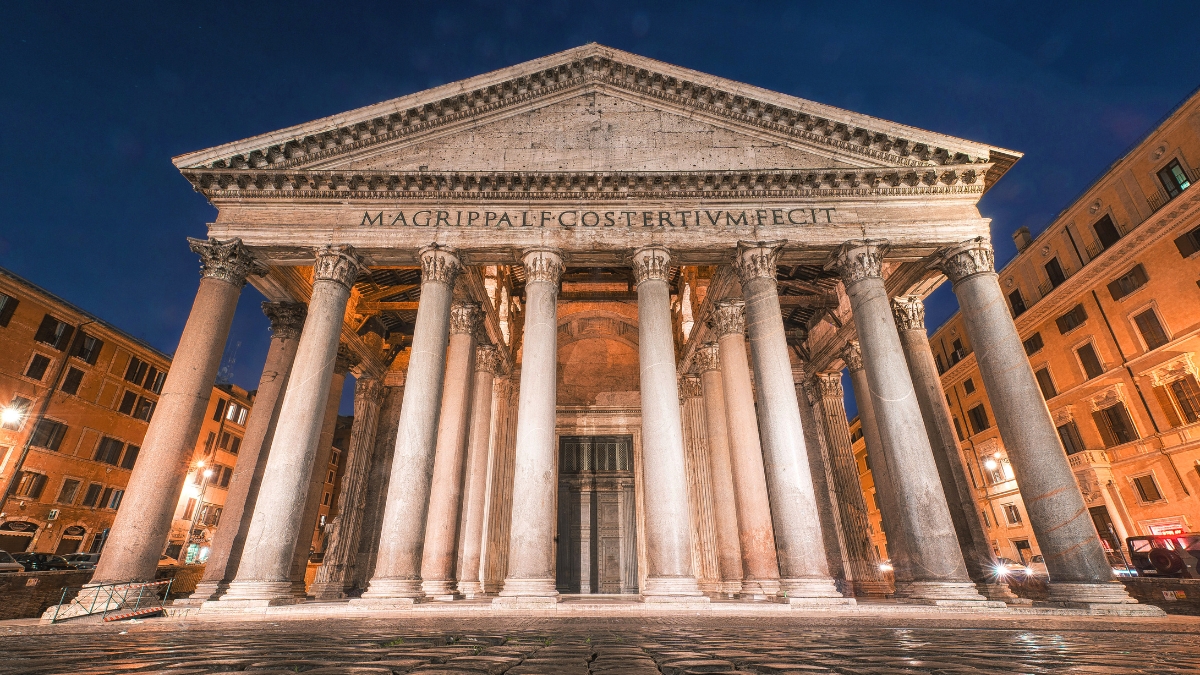
Recent research has unveiled significant insights into the composition and construction methods of ancient Roman concrete, shedding light on why some of these structures have remarkably withstood the test of time. A team of scientists from the Massachusetts Institute of Technology (MIT) discovered that the ingredients and mixing techniques used in the creation of this durable material were not as previously understood. These findings may also have implications for modern concrete production.
New Insights from Ancient Materials
Traditionally, Roman concrete was thought to consist primarily of pozzolana—volcanic ash—and slaked lime. This combination was believed to create a strong, long-lasting material essential for iconic structures like the Pantheon in Rome, which has stood for nearly 2,000 years. However, the 2023 study led by Admir Masic and Linda Seymour revealed that the Romans employed a different method involving quicklime rather than slaked lime.
The researchers examined ancient concrete samples from the archaeological site of Privernum, Italy. Using advanced techniques such as large-area scanning electron microscopy and energy-dispersive X-ray spectroscopy, they identified small, white chunks of lime within the concrete that previously suggested poor mixing.
According to Masic, this raised questions about the Roman’s meticulous approach to their construction materials. He stated, “If the Romans put so much effort into making an outstanding construction material, why would they put so little effort into ensuring a well-mixed final product?” Such inconsistencies led the team to propose a new technique called ‘hot mixing’, where quicklime was combined directly with pozzolana and water at high temperatures.
Benefits of Hot Mixing
The hot mixing process produces unique chemical compounds that enhance the properties of the concrete. Masic explained that this method not only accelerates curing and setting times but also contributes to the concrete’s impressive self-healing capabilities. Cracks that form in the concrete preferentially follow the lime clasts, which have a larger surface area. When water infiltrates these cracks, it reacts with the lime to create a calcium-rich solution that hardens and effectively seals the cracks.
This phenomenon has been observed in concrete from the Tomb of Caecilia Metella, where cracks have been filled with calcite, and it also helps to explain the longevity of Roman seawalls, which have endured extensive ocean exposure for millennia.
Tests conducted by the research team confirmed that concrete made with quicklime healed within two weeks, while a control sample without quicklime remained damaged. These findings could pave the way for a more environmentally friendly concrete alternative that leverages ancient Roman techniques.
Further studies in 2025 have compared the energy requirements of Roman-style concrete to those of modern Portland cement. Although Roman mixes require more water and initial energy input, their potential for longevity suggests a more sustainable option over time.
This ground-breaking research, published in Science Advances, opens avenues for modern construction methods to benefit from ancient wisdom, potentially leading to more durable and sustainable building materials.
