



































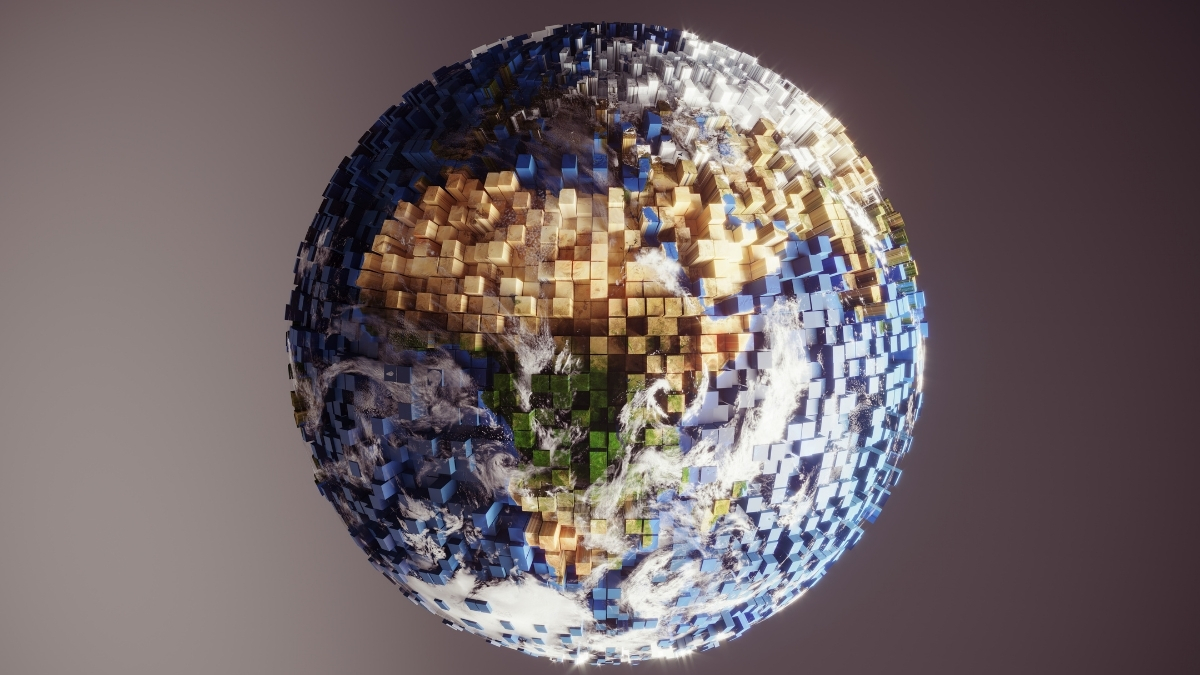
What if the world as we know it is merely a sophisticated simulation? The thought-provoking idea, known as the simulation hypothesis, has gained traction over the years, captivating both philosophers and scientists. This hypothesis suggests that advancements in technology could lead to the creation of realistic simulations of human life, potentially making our current existence just one of many.
Nick Bostrom, a philosopher at the University of Oxford, introduced this concept two decades ago. He argued that as technology evolves, particularly in virtual reality and artificial intelligence, it may become possible to simulate entire worlds filled with sentient beings. Bostrom’s theory relies on the premise that if future civilizations possess the capability to create such simulations, the likelihood increases that we are currently living in one.
The Logic Behind the Simulation Hypothesis
Bostrom’s argument unfolds logically. If humanity develops the ability to run numerous simulations of the past, including the 21st century, then statistically, it is more probable that we are living in one of those simulations rather than the original reality. He projected that by the 31st century, technological capabilities may allow for the simulation of trillions of humans, each experiencing their existence as if it were real.
This notion raises intriguing questions: If we are indeed in a simulation, could certain anomalies in our experiences—such as déjà vu or unexplained coincidences—be attributed to glitches in the program? Some theorists suggest that the boundaries of our observable universe, such as the inability to see beyond 50 billion light-years, mirror the limitations of a digital environment.
Perspectives from Experts
The simulation hypothesis has garnered support from notable figures, including Neil deGrasse Tyson and technology entrepreneur Elon Musk. Tyson, a well-known astrophysicist, has indicated that the odds of living in a simulation might be around 50-50. Musk has echoed similar sentiments, suggesting that the advancement of gaming technology hints at our possible simulation.
Despite the allure of the idea, skepticism remains prevalent. Critics point out that the computational power required to create such expansive and detailed simulations may be beyond humanity’s reach. As Bostrom himself acknowledges, the concept of running godlike simulations may remain a theoretical construct rather than a practical reality.
The ongoing debate surrounding the simulation hypothesis challenges our fundamental understanding of existence. It invites us to question the nature of reality itself and explore the philosophical implications of living in a potentially simulated world. The discussion has not only captivated academic circles but has also engaged the public imagination, leading many to ponder the core of their own experiences and perceptions.
In conclusion, while the simulation hypothesis lacks definitive scientific proof, it serves as a fascinating framework for examining the essence of reality. As technology continues to advance, the lines between the real and the simulated may blur further, leaving us to wonder just how much of our world is genuine—and how much might simply be an elaborate illusion.
