



































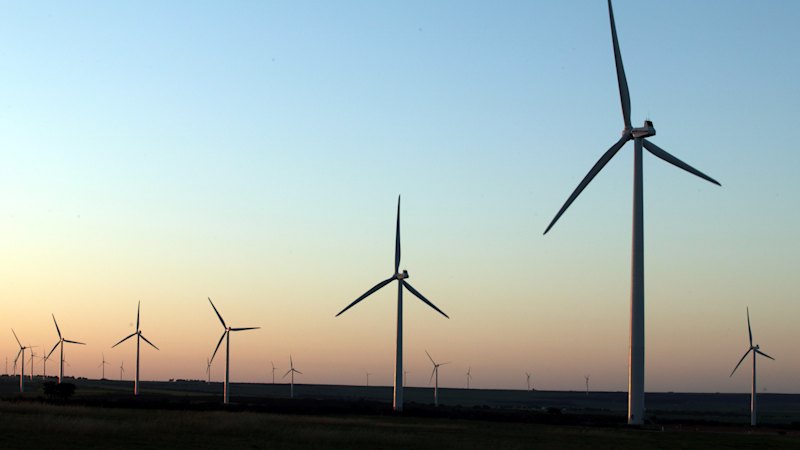
Australia is facing critical challenges in its electricity system as it shifts from traditional power sources to intermittent renewable energy. The Australian Energy Market Commission has acknowledged that the promised reduction in energy prices from renewable sources has not materialized, with wholesale prices projected to rise by 13 percent this decade. This situation raises concerns about the reliability and affordability of electricity in the country.
To understand the current predicament, it is essential to grasp the fundamental principles of electricity generation. Electricity relies on the movement of electrons, which necessitates a generator—a device that typically involves a spinning magnet within coils of wire. This principle has remained unchanged since the days of Michael Faraday and the invention of the steam engine. Most power stations, whether coal, gas, nuclear, or hydroelectric, function as mechanical systems that generate electricity through moving parts. In contrast, solar photovoltaic (PV) technology operates without moving components, relying solely on semiconductors.
The lack of inertia from renewable sources such as wind and solar is a significant concern. Inertia acts as a buffer for the electricity grid, helping to maintain stability when demand fluctuates or when generators fail. Traditional power sources, like coal and gas, provide this inertia naturally, while renewable sources and battery systems do not. Without adequate inertia, the grid risks becoming unstable, leading to potential blackouts and damage to infrastructure.
As Australia continues to transition to high levels of renewable energy, the consequences are becoming increasingly evident. For instance, South Australia, often cited as a leader in renewable energy adoption, has experienced the highest electricity prices in the country. The state has also had to invest in synchronous condensers to stabilize its grid, adding costs for consumers. Similarly, other regions with high renewable penetration, such as California and Germany, have faced challenges, including frequent blackouts and rising emissions.
The Australian government’s approach to energy policy has focused on economic modeling rather than engineering realities. This misalignment has resulted in Australia’s energy productivity and GDP growth lagging behind its peers since the increased reliance on renewable sources began in the mid-2010s. With the advent of artificial intelligence and growing demand for dispatchable energy, countries like Singapore are increasing their baseload capacity, while Australia is closing functional coal plants and losing potential investment.
The cost of transitioning to a renewable energy system is also escalating. The CSIRO initially estimated that a system powered by 90 percent wind and solar would cost around $70 per megawatt-hour by 2030. However, its latest estimates have nearly doubled this figure, reflecting the economic reality of maintaining existing coal plants versus investing in new renewable infrastructure. Delays in transmission projects and rising costs are further complicating the situation, with coal plants receiving subsidies to remain operational, highlighting the inadequacy of current renewable solutions.
Addressing these issues requires a fundamental shift in how energy policy is approached. Rather than focusing on favored technologies, policymakers should treat energy generation as an engineering challenge with three core constraints: emissions reduction, grid stability, and reserve capacity. The goal should be to achieve the lowest possible generation costs while ensuring reliability.
A pragmatic solution would involve retrofitting existing steam turbines instead of overhauling the entire grid. This approach would allow for the integration of various low-emission technologies, including coal, gas, and long-term thermal storage, while maintaining a focus on cost-effectiveness. Competitive auctions should be established to pay for carbon-abated megawatt-hours and grid stabilization, funded by reallocating existing subsidies.
Australia can return to a position of enjoying reliable, affordable electricity by embracing engineering principles rather than political ideology. The path forward requires a commitment to grid stability and an acknowledgment that the physical realities of electricity generation must guide policy decisions. If the country acts decisively, it can secure a stable energy future while reducing emissions and fostering economic growth.
