



































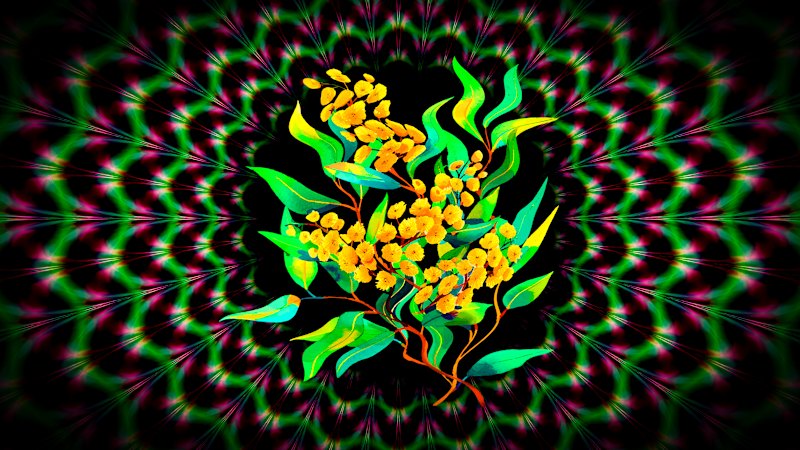
In a groundbreaking study, researchers in Western Sydney are investigating the potential of wattle, Australia’s floral emblem, to yield new psychedelic compounds aimed at treating challenging mental health disorders. Led by Dr. Mitchell Low from the NICM Health Research Institute at Western Sydney University, the research focuses on over 855 species of Australian wattle, which may harbor compounds capable of revolutionizing psychiatric therapies.
The significance of the acacia family, which includes the golden wattle, has long been acknowledged for its psychedelic properties. Some scholars even propose that the biblical account of Moses and the burning bush may have been inspired by a DMT-induced vision from an acacia shrub. Despite more than 1,000 native acacia species in Australia, the chemical composition of most remains largely unexplored.
Dr. Low emphasizes the need to understand the chemical makeup of these plants, stating, “We know the morphology of the species, but the chemical composition is still unknown.” The study aims to uncover new psychedelics that could assist in therapy for conditions such as anxiety, depression, and addiction.
Exploring Psychedelic Potentials
The research team is investigating the chemical properties of various wattle species, looking particularly for DMT and other compounds that may be suitable for modern psychiatric therapies. Preliminary findings indicate that some wattle samples contain DMT with greater potency than the plants typically associated with the compound, such as those used to create ayahuasca, often referred to as the “Vine of the Soul.”
Each compound may produce different effects, influenced by individual genetics. This understanding could pave the way for tailored therapies. “We’re looking as broadly as possible,” Dr. Low explains. “That’s part of the reason we’re looking deeply into acacia to see if there are other compounds which could be the next-generation psychedelic drugs.”
With over 2.2 million Australians suffering from long-term mental illnesses, the need for innovative treatment options is pressing. While traditional antidepressants help some patients, they do not suit everyone. As Dr. Low notes, “There’s an urgent need for new options.”
Last year, Dr. Low collaborated with researchers from the University of Melbourne and CSIRO to develop a DMT-based formulation derived from wattle. This pioneering study, published in November 2025 in Scientific Reports, assessed the formulation’s safety and psychoactive effects on nine healthy individuals in a controlled setting.
Lead author Dr. Daniel Perkins, head of the Psychedelics Research and Therapeutics Unit at the University of Melbourne, reported, “Participants reported effects that exceeded prior published psilocybin and LSD results.” He further highlighted the strong correlation between the intensity of acute experiences and lasting psychological benefits, including improved wellbeing and positive behavioral changes.
Future Steps in Psychedelic Research
The next phase involves a randomized controlled trial focusing on participants with major depressive disorder and alcohol use disorder. According to Dr. Nigel Strauss, a psychiatrist based in Melbourne, while interest in psychedelic-assisted therapy has surged since the release of Michael Pollan’s Netflix series, the field is still in its early stages.
In 2023, Australia authorized psychiatrists to prescribe MDMA for post-traumatic stress disorder and psilocybin for treatment-resistant depression. Dr. Strauss is selective in his prescribing practices but remains optimistic about the potential of these therapies when applied appropriately. He asserts that when effective, these treatments can significantly enhance quality of life.
The prospect of alternative treatments like DMT is particularly appealing, given its faster-acting nature compared to psilocybin, potentially making it more cost-effective. Current psychedelic-assisted therapy, which includes dosing sessions alongside preparatory and integration therapies, can be prohibitively expensive, costing up to $25,000. This service is only partially subsidized by select private health insurance funds and the Department of Veterans Affairs for veterans.
Dr. Low argues that if treatments can effectively alleviate mental health issues in just one or two sessions, they could represent significant savings compared to long-term therapy. He highlights the average mental injury claim now sits at $288,542, with mental health services costing approximately $13.2 billion annually in Australia.
The research led by Dr. Low and his team at NICM is critical, according to Dr. Perkins. “Australian flora contains a remarkable diversity of bioactive compounds that are largely unexplored,” he states. “The fact that Australian Acacia species contain DMT is well established, but there’s likely much more to discover.”
As the investigation continues, the potential for wattle to contribute to the next generation of psychiatric therapies remains an exciting prospect, offering hope for those struggling with mental health challenges.
