



































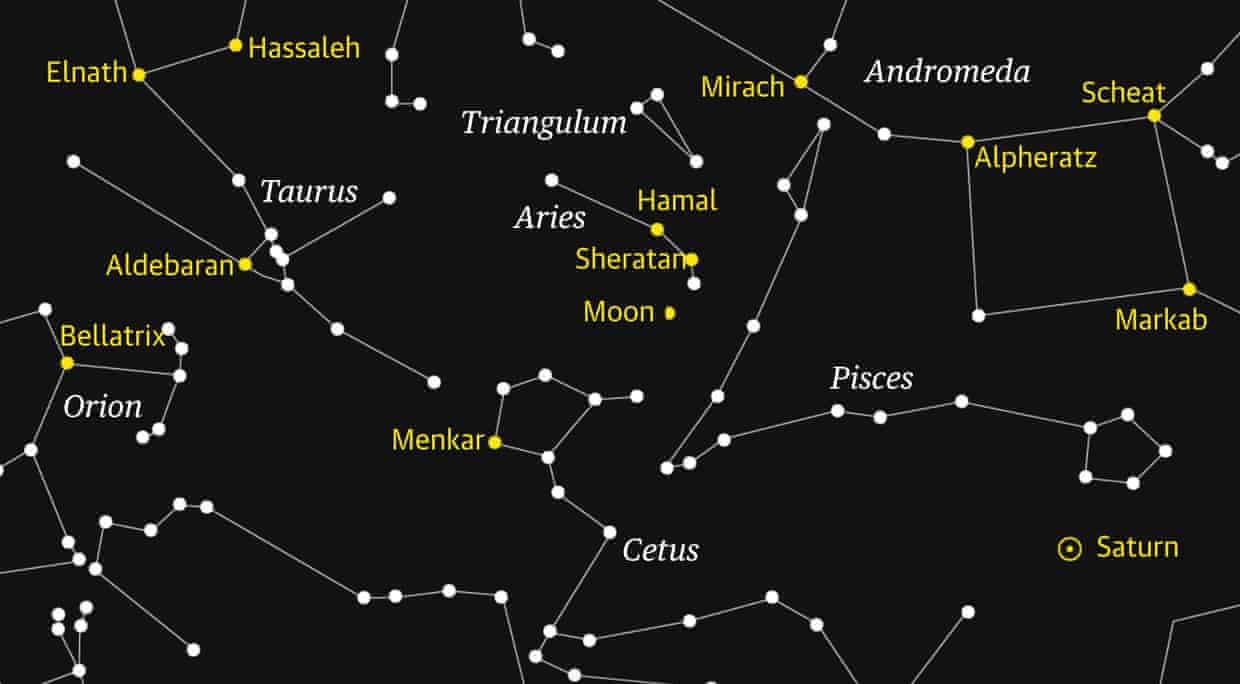
One of the zodiac’s lesser-known constellations, Aries, will be more visible this week, making it an excellent opportunity for stargazers to explore the night sky. Located between Taurus to the east and Pisces to the west, Aries is best observed during the winter months in the northern hemisphere.
Historical Significance of Aries
Aries boasts an ancient lineage, originally identified by the early Babylonians as a figure tending to fields. Over time, this constellation evolved into the representation of a ram, a symbol that has endured across various cultures. In ancient Egypt, Aries was associated with Amun-Ra, the ram-headed deity of creativity and fertility. Greek mythology further connects Aries to the legendary quest for the golden fleece, pursued by Jason and the Argonauts.
Despite its rich history, Aries is not one of the brightest constellations, containing only two prominent stars, Hamal and Sheratan. These stars are situated close to each other, often serving as the first point of recognition for observers attempting to identify the ram in the night sky. Their relative dimness compared to other celestial bodies can make locating Aries challenging without assistance.
Best Viewing Conditions This Week
This week, the moon will provide crucial help in spotting Aries. The lunar body will be 72% illuminated on the evening of December 29, 2023, acting as a natural signpost for those looking to identify the constellation. Stargazers in London should look south at around 20:00 GMT, while those in the southern hemisphere should direct their gaze towards the north-west as the sun sets.
As the winter nights unfold, the visibility of Aries presents a perfect opportunity for both novice and experienced astronomers to engage with the night sky. Whether you are using a telescope or simply your eyes, the constellation offers a glimpse into the ancient narratives woven into the stars.
