



































The “International Conference on Quantum Technology 2025” (Quantum HK 2025) recently concluded at The Hong Kong Polytechnic University (PolyU), bringing together over 200 experts, scholars, and industry leaders from around the world. This event served as a platform for in-depth discussions on the latest advancements and future developments in quantum technologies, emphasizing Hong Kong’s role as a pivotal hub for international research collaboration.
Hong Kong, strategically positioned between the Greater Bay Area and the global community, plays a vital role in driving innovation in quantum technology. The conference was co-organized by several leading institutions, including The University of Hong Kong (HKU), The Chinese University of Hong Kong (CUHK), and City University of Hong Kong (CityUHK), among others.
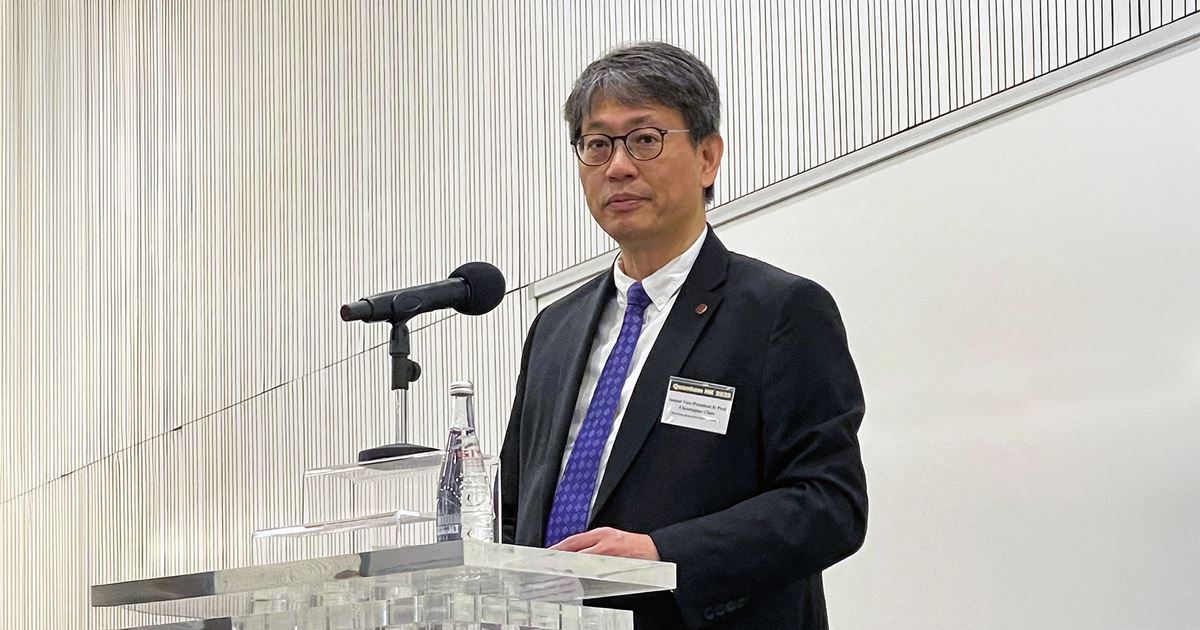
Prof. Christopher CHAO, Senior Vice President for Research and Innovation at PolyU, highlighted the significance of quantum technologies in today’s landscape. He stated, “As this year marks the International Year of Quantum Science and Technology, quantum technologies have become a key agenda item of global interest. Over the past year, breakthroughs in quantum computing, quantum communication, and quantum metrology have laid important foundations for the application of artificial intelligence and secure communications.”
PolyU has made notable strides in this field, successfully establishing Hong Kong’s first quantum chip-based communication network. This network recently completed a quantum encrypted transmission test over a 55 km-long optical fibre, showcasing the city’s leadership in quantum innovation.
Looking to the future, Prof. CHAO assured that PolyU will continue to nurture talent and foster interdisciplinary collaboration, aiming to translate scientific achievements in quantum technology into societal applications.
Co-chair of the conference, Prof. Ai-Qun LIU, who also serves as Director of the Research Institute for Quantum Technology at PolyU, noted the event’s interdisciplinary focus. “This conference gathered experts bringing insights from academia and industry, building an interdisciplinary platform for exchange and collaboration in quantum technologies,” he remarked. “Moving forward, it will continue to unite diverse stakeholders to expedite research translation and industrialisation, injecting new momentum into the development of quantum technologies in Hong Kong, the Greater Bay Area, and the nation.”
In addition to the keynote addresses, which covered topics like quantum computing and information security, the conference featured prominent speakers such as Academician Dapeng YU from the Shenzhen Institute for Quantum Science and Engineering, Prof. Xicheng ZHANG from the University of Rochester, and Prof. Guilu LONG from Tsinghua University.
Industry representatives from leading organizations, including Huawei, Tencent Quantum Lab, and Xuntai Quantum Technology, participated in roundtable discussions. These sessions focused on the industrialization of research outcomes and generated forward-looking recommendations on standardisation, modularisation, and scalability in quantum technologies. The discussions underscored the urgent need to develop a stable and multi-tier talent pipeline to effectively support innovation and growth in the quantum industry.
Quantum HK 2025 has established itself as a significant event in the global quantum technology landscape, driving forward the frontiers of research and collaboration across disciplines and borders.
