



































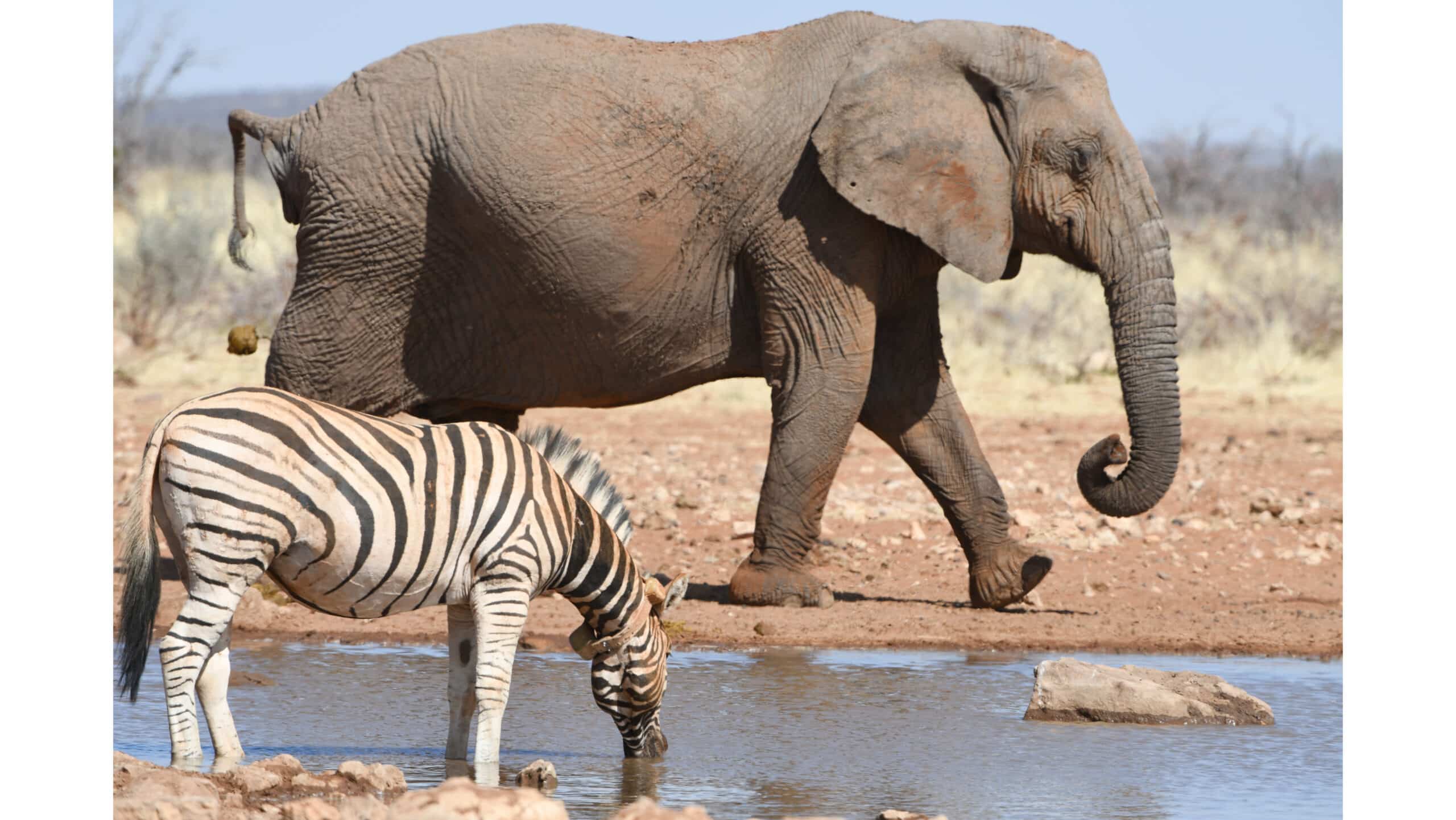
A recent study examining wild African herbivores highlights how environmental conditions significantly influence the evolution of gut microbiomes. The research, conducted in Namibia’s Etosha National Park, underscores that factors beyond diet and anatomy play a crucial role in shaping the microbes essential for animal health.
Erin McKenney, an assistant professor of applied ecology at North Carolina State University, co-authored the study. She noted, “There’s a concept in ecology called phylosymbiosis, which suggests that as species evolve and diverge, their gut microbiomes should also diverge in a predictable manner.” Despite this theory, previous studies have shown inconsistent results regarding this relationship.
The research team, including corresponding author Rylee Jensen, a recent master’s graduate from Northern Michigan University, sought to explore evidence of phylosymbiosis among various herbivore species in this arid ecosystem. The study involved collecting fresh fecal samples from 11 species, including African elephants, Angolan giraffes, and multiple antelope species.
Research Findings and Implications
Utilizing DNA extraction and sequencing techniques, researchers identified the types and abundance of bacteria present in the gut microbiomes of these animals. Jensen commented on their findings, stating, “We observed a stark contrast. Six of the species showed little or no evidence of phylosymbiosis, while five species—red hartebeest, blue wildebeest, gemsbok, impala, and springbok—displayed clear patterns of phylosymbiosis.”
Interestingly, these five species are all bovids, which are closely related in an evolutionary context. Jensen noted that this correlation aligns with the expectations of phylosymbiosis. However, previous studies in more temperate African ecosystems did not find similar evidence among bovid species, suggesting that environmental factors may either mask or reveal phylosymbiosis in gut microbiomes.
The study raises important questions about how different ecosystems affect microbial diversity. McKenney elaborated, “Areas that receive more rainfall typically support richer and more diverse vegetation, which may enhance gut microbial diversity. In contrast, drier environments like Etosha may eliminate microbial species that are not specifically adapted to the limited vegetation available.”
Future Research Directions
The implications of this research extend beyond the immediate findings. According to Diana Lafferty, co-author and associate professor at Northern Michigan University, as global ecosystems undergo shifts due to climate change, the microbial communities within Etosha’s herbivore guild may serve as indicators of future changes in other arid ecosystems.
As Lafferty stated, “Given the dramatic ecological shifts we are experiencing due to climate change, these questions about the role of environmental factors in shaping gut microbiomes are more important than ever.”
This study, titled “Phylogenetic influence on gut microbiome diversity within an African herbivore community,” is published as open access in the journal BMC Ecology and Evolution. It was co-authored by notable researchers, including Claudine Cloete, chief conservation scientist at the Etosha Ecological Institute, and James Beasley, Terrell Distinguished Professor of Wildlife Management at the University of Georgia.
As researchers continue to explore these intricate relationships, understanding the evolution of gut microbiomes will become increasingly vital, particularly in the context of environmental changes driven by human activity.
