



































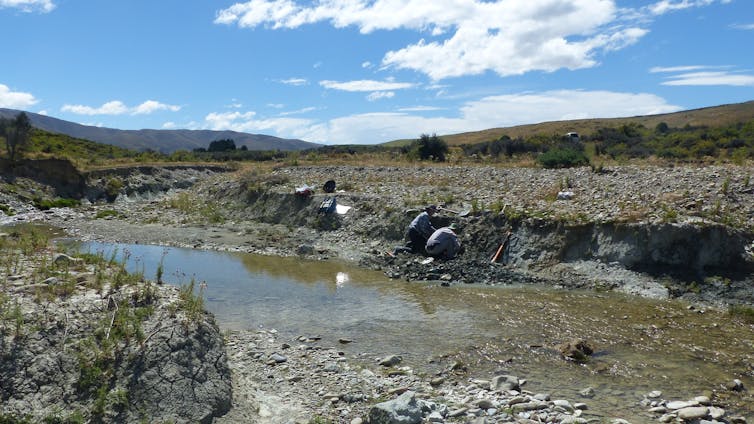
Researchers have identified a new waterfowl species from ancient deposits in New Zealand, further enriching the understanding of the region’s prehistoric ecosystem. This discovery, made at the famous fossil sites near St Bathans, reveals insights into the diverse fauna that thrived around Lake Manuherikia, which existed between 14 to 19 million years ago.
During the Miocene period, Lake Manuherikia spanned an impressive 5,600 square kilometres, making it ten times larger than New Zealand’s current Lake Taupo. The lake provided a habitat for various species, including crocodilians, turtles, and early relatives of modern birds such as bowerbirds, kiwi, and moa. The fossil deposits in St Bathans are considered some of the richest records of the Miocene, offering a glimpse into Aotearoa’s warmer, subtropical past.
Introducing Meterchen luti
The newly identified species, named Meterchen luti, is a small goose that adds to the collection of waterfowl previously uncovered in the area. The name is inspired by the nursery rhyme “Old Mother Goose”, with “Meterchen” meaning “mother goose” in ancient Greek and “luti” translating to “of the mud” in Latin. This naming reflects the bird’s origins from the ancient lake’s mud, rich in fossils that have allowed palaeontologists to piece together the region’s biodiversity.
The research team, which included experts from the Museum of New Zealand Te Papa Tongarewa, reexamined previous findings of goose remains in the fossil record. They compared these with a broader selection of bird skeletons to confirm the existence of this new species. While the St Bathans goose was based on fragmentary remains, sufficient evidence indicated it was distinct from the giant flightless geese of the genus Cnemiornis and their Australian counterpart, the Cape Barren goose.
Insights into New Zealand’s Avian Evolution
With this discovery, the number of identified waterfowl species from the St Bathans deposits rises to ten, showcasing a diverse ecosystem that once thrived in Lake Manuherikia. The research also sheds light on the evolving narrative of New Zealand’s bird lineage. Previous theories suggested that the ancestors of Cnemiornis geese had been present in Zealandia for over 14 million years. However, recent genetic studies indicate that these ancestors arrived from Australia around 7 million years ago.
This shift in understanding highlights the dynamic nature of avian evolution in New Zealand. Many large bird species, such as the takahē and the giant Haast’s eagle, are believed to have arrived in the last 4-5 million years. The reassessment of the St Bathans goose’s lineage supports the notion that significant biological turnover has occurred throughout Zealandia’s history.
The findings underscore the rapid morphological changes that can occur on isolated islands, where evolutionary processes often diverge from mainland trends. The giant flightless Cnemiornis geese, towering at one metre tall and weighing up to 18 kg, epitomize this phenomenon.
This research not only enhances the understanding of New Zealand’s prehistoric landscape but also reinforces that the narrative of its avian fauna is ongoing. Each new discovery contributes to a more comprehensive picture of how geological, climatic, and human influences have shaped the evolution of the region’s unique biodiversity.
As the investigation into Zealandia’s past continues, researchers remain committed to unraveling the complex story of its wildlife, ensuring that the rich history of New Zealand’s birds is thoroughly documented and understood.
