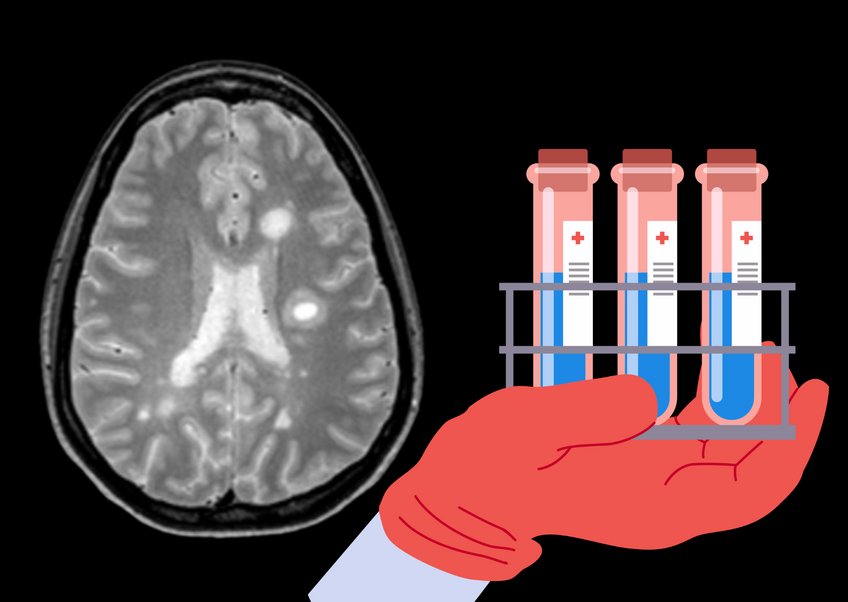
Researchers at the Max Planck Institute (MPI) of Biochemistry and the Technical University of Munich (TUM) have made significant strides in identifying new diagnostic markers for multiple sclerosis (MS). An analysis of cerebrospinal fluid (CSF) from over 5,000 patients with various neurological diseases has revealed a set of biomarkers that can help differentiate MS from other inflammatory conditions, particularly in cases where traditional markers are absent.
Diagnosing MS has long posed challenges due to the nonspecific nature of neurological symptoms, such as fatigue and visual disturbances. In many cases, patients experience delays in diagnosis that can extend for months or even years. According to Professor Bernhard Hemmer, head of the Department of Neurology at TUM, the diagnosis of MS typically relies on a combination of magnetic resonance imaging (MRI) and CSF analysis. While MRI can reveal inflammatory changes in the brain, CSF analysis is crucial for detecting chronic immune activity. Nevertheless, in some cases, the absence of typical markers, such as oligoclonal bands, complicates the diagnosis.
The collaborative effort between neurologists, including Hemmer and Christiane Gasperi, and Professor Matthias Mann, a leading expert in proteomics, focused on enhancing diagnostic accuracy. Mann stated that advancements in mass spectrometry technology have allowed researchers to measure a broader range of proteins in body fluids, which is essential for identifying potential disease markers.
The researchers employed a proteomic approach, which involves measuring as many proteins as possible to increase the chances of discovering relevant disease markers. Jakob Bader, the study’s lead author and a postdoctoral researcher, emphasized the importance of analyzing thousands of proteins across a diverse patient population to avoid misinterpreting variations as disease markers. This study uniquely analyzed CSF samples from a range of neurological disorders, including stroke and autoimmune diseases.
The findings revealed shared and specific protein deviations from control samples, which included individuals who had undergone CSF analysis for severe headaches but were not diagnosed with neurological diseases. This systematic comparison is vital for establishing accurate disease markers.
For the diagnostic applications, the researchers identified a panel of 22 proteins that can help distinguish MS from related inflammatory diseases more effectively than existing clinical parameters. Gasperi highlighted that approximately 10% of MS patients lack the detectable oligoclonal bands, making rapid and accurate diagnosis crucial for initiating treatment that can slow disease progression and minimize long-term disability.
Beyond improving diagnostic capabilities, the study also explored the potential to predict disease progression. By analyzing CSF samples from MS patients, the team discovered associations between the proteomic profile at diagnosis and future disability levels. Hemmer explained that these findings suggest that critical information regarding disease trajectory may already be present at the initial diagnosis, allowing for more personalized treatment strategies.
In summary, this groundbreaking research not only enhances the diagnostic process for MS but also offers insights into predicting individual disease courses. Mann noted that the methods developed in this study could pave the way for identifying biomarkers in other neurological disorders, including Alzheimer’s, Parkinson’s, and various brain tumors.
With these advancements, the prospect of more precise diagnostics and individualized treatment plans for MS patients is becoming increasingly attainable.