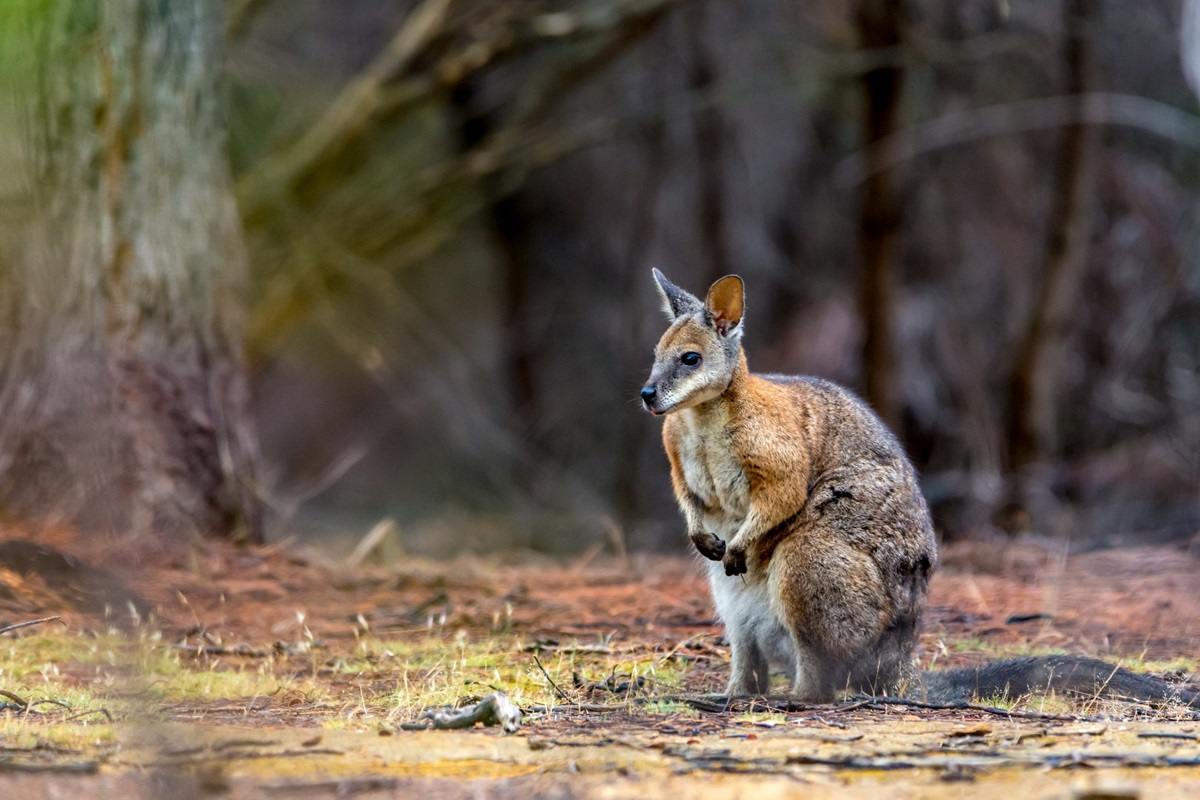
Scientists in Australia are making significant advances in genomics to protect the country’s unique biodiversity. By sequencing the genomes of various species, researchers can gain valuable insights into how organisms adapt to environmental changes. This research is particularly crucial as Australia faces threats from invasive species, climate change, pollution, and habitat destruction.
Every organism has a unique genetic foundation known as a genome, comprised of chemical building blocks: Adenine (A), Thymine (T), Cytosine (C), and Guanine (G). Sequencing a genome involves identifying and arranging these components to understand how a species functions and relates to others. The information gleaned from this process can inform conservation efforts, allowing scientists to monitor species and manage breeding programs effectively.
Australia boasts hundreds of thousands of plant, animal, and fungal species, many of which are endemic to the region. The first step in genome sequencing is extracting high-quality DNA, a task that varies depending on the organism and tissue type. Contaminants and degradation can complicate this process. Researchers employ detergents and salts, along with enzymes, to isolate the DNA, followed by purification methods that may involve alcohol washes and amplification for better visualization.
Dr. Tom Walsh, a Principal Research Scientist and Co-Leader of the CSIRO’s Applied Genomics Initiative, noted that modern sequencing techniques generate vast amounts of data. For instance, the genome of a locust comprises approximately 5 billion base pairs, producing around five gigabytes of raw data. “Assembling the genome requires overlapping DNA fragments, which can exponentially increase the data volume,” Dr. Walsh explained.
The process of sequencing is akin to solving a jigsaw puzzle. While obtaining the raw data is relatively quick, assembling the genome can be time-consuming, especially for complex genomes that have not been previously studied. Some genomes can be assembled in a weekend, while others may take months.
Once assembled, the genome must be annotated, meaning researchers identify and label different genes within the sequence. “Annotation is what enables you to understand the organism,” Dr. Walsh said, comparing it to having a picture on a puzzle box that guides the assembly process. A well-annotated genome allows scientists to compare genetic information across individuals and species.
The advances in computational power and sequencing techniques have transformed genomics research. For example, long-read sequencing generates larger data chunks, facilitating quicker data assembly. “One of the earliest genomes we sequenced, the Cotton Bollworm, took nearly 10 years and cost around $1 million. Now, similar projects can be completed in weeks for a fraction of the cost,” Dr. Walsh added.
In 2022, the Australian Reference Genome Atlas (ARGA) launched Genome Tracker, a tool designed to monitor the progress of genomic sequencing across various species. Dr. Kathryn Hall, who led the initiative, highlighted that only 2 percent of Australia’s documented species have had their genomes sequenced at least once. “Genome Tracker shows which areas of the family tree are well-represented and which are lacking,” she said, noting that while 16 percent of Australia’s mammals have been sequenced, much remains unknown about many species, including bats and rats.
Without Genome Tracker, researchers could spend weeks searching for species information across numerous databases. “High-quality genomic data is painstakingly created, and making it accessible will benefit future research,” Dr. Hall emphasized.
Moreover, genomics is enabling scientists to explore historical data through preserved specimens. Dr. Erin Hahn, a Research Scientist at the Australian National Wildlife Collection, noted that the facility houses 15 million specimens dating back to the 19th century. By extracting DNA from these samples, researchers can analyze how species have evolved in response to environmental pressures. “We have developed techniques to access genomic data from specimens preserved in formalin, which was previously thought impossible,” Dr. Hahn said.
This research allows scientists to track gene expression changes over time, revealing how species have adapted to rapid environmental changes. “This information is vital for informing environmental management practices and safeguarding our biodiversity,” Dr. Hahn added.
The potential applications of genomics are vast. By comparing genomes, researchers can understand evolutionary trends and predict future adaptations. For instance, studies on the Myrtaceae lineage have shown that species diversification rates decreased as the climate became more arid.
Genomics can also aid in managing invasive species, a leading threat to Australia’s biodiversity. By identifying genes responsible for insecticide resistance, researchers can develop more effective control measures. Additionally, genomics plays a crucial role in biodiscovery, where scientists seek novel compounds in nature. Through initiatives like the Australian Venom Innovation and Discovery Initiative, researchers are investigating how animal venoms have evolved, with the aim of developing new medicines and insecticides.
As scientists delve deeper into genomics, they are equipped to monitor population health and resilience among threatened species like the Spotted Handfish and the Night Parrot. Understanding genetic diversity can help assess inbreeding risks in small populations.
The use of environmental DNA (eDNA) allows for non-invasive monitoring of species by detecting DNA in soil, water, or air samples. This method enables scientists to identify species present in an area without direct observation. Furthermore, genomics supports ecotoxicological models that assess chemical pollution’s impact on native species, such as freshwater turtles.
By collaborating with universities, governments, and research organizations globally, CSIRO’s genomics research aims to make a substantial impact on biodiversity conservation. “The genome itself is just the beginning,” Dr. Walsh concluded. “Each one initiates a journey toward meaningful scientific impact.”