



































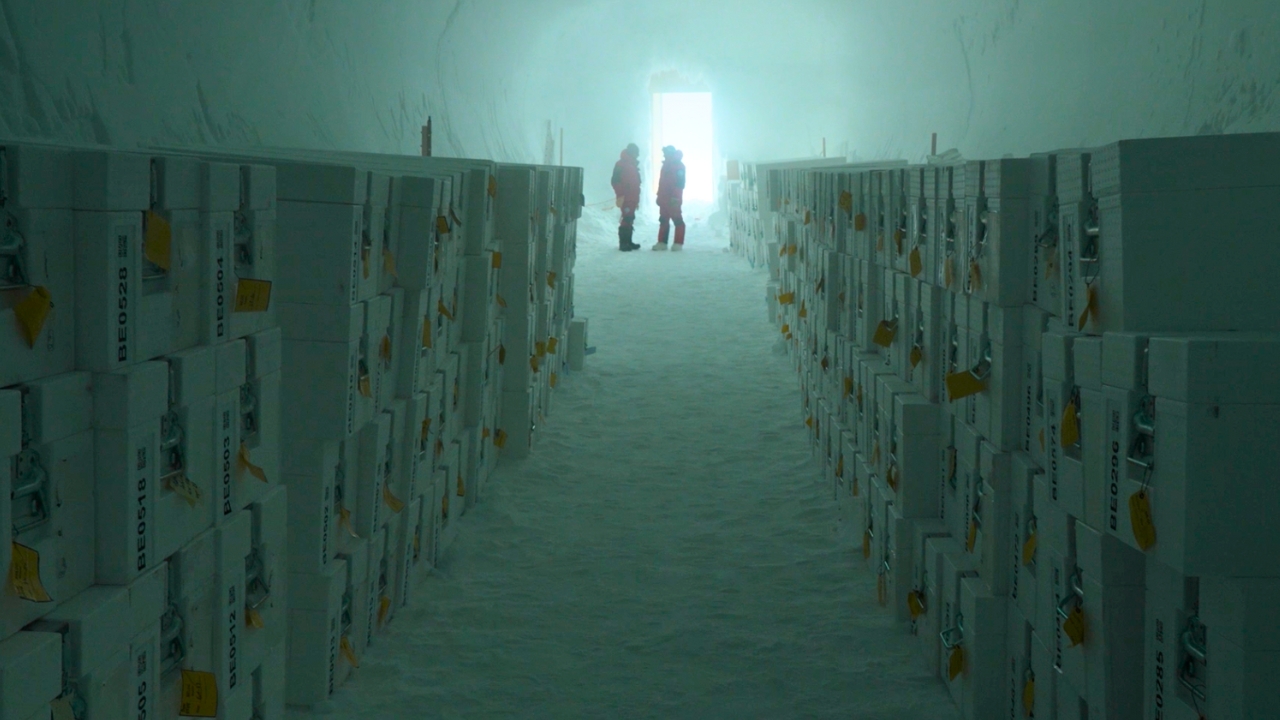
Scientists have successfully sealed ancient chunks of glacial ice within a groundbreaking sanctuary in Antarctica, aiming to preserve crucial records of Earth’s climate history for future generations. On March 13, 2024, two ice cores sourced from the Alps were stored in a specially designed snow cave located at Concordia Station, situated at an altitude of 3,200 meters (10,500 feet). This innovative facility is intended to safeguard these valuable samples in their natural environment at a consistent temperature of minus 52 °C, eliminating the need for refrigeration.
Preserving Climate Records for the Future
Ice cores are essential for understanding past climate conditions. The samples stored in Antarctica could help future scientists unlock the secrets of climate change long after the original glaciers have melted. According to Thomas Stocker, a Swiss climate scientist and chair of the Ice Memory Foundation, “To safeguard what would be otherwise irreversibly lost… is an endeavour for humanity.”
The project, which took nearly a decade to realize, faced numerous logistical and diplomatic challenges. The ice sanctuary itself is a cave measuring 35 meters long and 5 meters wide and high, excavated approximately 10 meters below the snow surface, where temperatures remain consistently low. In a ceremony at Concordia Station, roughly 1,000 kilometers (620 miles) from the coast, scientists cut a blue ribbon to commemorate the placement of core samples from the Mont Blanc and Grand Combine into the cold vault.
In the coming years, the initiative aims to expand this archive to include glacial ice from other significant alpine regions, such as the Andes, Himalayas, and Tajikistan. In September, an extraction of a 105-meter core was witnessed by representatives from the French news agency AFP.
Unlocking the Secrets of Ice Cores
Ice cores are created over millennia as layers of snow compact and freeze, capturing dust and other indicators of past climates. For example, a clear layer of ice signifies a warm period when the glacier melted before refreezing, while lower density layers indicate packed snow. Researching these cores can reveal essential information about ancient weather patterns.
Carlo Barbante, an Italian climate scientist and vice-chair of the Ice Memory Foundation, emphasized the future significance of these samples: “Scientists will use technologies that we cannot even imagine today, and they will extract secrets from the ice that are currently invisible to us.” As the planet continues to warm, the urgency of this project increases. Recent data from US and European climate monitors confirmed that 2025 was the third hottest year on record, largely attributed to human activity.
Barbante remarked, “We are in a race against time to rescue this heritage before it will vanish forever.”
The sanctuary’s location at Concordia Station is also strategically significant. Governed by an international treaty, it ensures that the ice cores remain free from political influence and accessible for scientific purposes. Future access to the facility will be determined based on scientific merit, as stated by Anne-Catherine Ohlmann, the foundation’s director. She acknowledged the challenges in establishing a legal framework for the sanctuary but maintained that it was essential to ensure the long-term availability of these ice cores for the benefit of humanity.
The successful inauguration of this ice vault represents a significant step in climate science, reflecting a commitment to preserving vital environmental records for generations to come.
