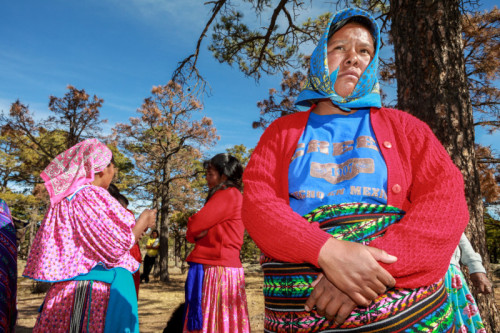
A recent study highlights a significant disconnect between global commitments to forest restoration and the realities faced by local communities that depend on these vital ecosystems. Research conducted by scientists at The University of Manchester and published in the journal Restoration Ecology emphasizes the necessity of integrating community voices into national restoration policies.
The findings stem from a comprehensive analysis of 24 government policies in Mexico implemented between 1988 and 2024. While there is a growing governmental commitment to combat climate change and restore ecosystems, the study reveals that indigenous peoples and local communities, although acknowledged in policy documents, are often excluded from meaningful decision-making processes regarding restoration projects.
Community Participation Lacking in Policies
Forest Landscape Restoration is increasingly recognized as a crucial strategy to address biodiversity loss and environmental degradation. Despite policies that advocate for community involvement and rights, the researchers found a lack of institutional mechanisms to empower local stakeholders effectively. Less than 30% of reviewed policies treat communities as equal partners, and only one grants them full control over restoration decisions.
This lack of authority is concerning, especially considering that communities manage a substantial portion of global forests. In Mexico, approximately 60% of forests operate under community-based land tenure. Despite this, less than 6% of documented restoration projects reflect genuine participation beyond basic consultation processes.
Without local leadership and engagement, restoration efforts risk being less equitable and ineffective. The study identified several structural barriers impeding progress, including fragmented coordination among government agencies, limited institutional capacity, short-term funding cycles, and inadequate local implementation guidance. These challenges hinder the translation of ambitious national commitments into actionable strategies that benefit communities and ecosystems alike.
Opportunities for Improvement and Future Action
While the study identifies significant shortcomings, it also highlights opportunities for advancement. Many policies are beginning to recognize the rights of Indigenous peoples, the value of traditional ecological knowledge, and the potential for restoration initiatives to enhance livelihoods and bolster climate resilience.
Strengthening collaboration across sectors, increasing funding, and improving governance could bridge the gap between policy ambitions and tangible outcomes. Lead researcher Mariana Hernandez-Montilla stated, “You can recognize indigenous rights in policy, mandate consultation, and still never transfer decision-making power to the people who manage these forests. Our research shows this is exactly what’s happening – consultation is treated as participation, but it’s not the same as authority.”
Although the study centers on Mexico, its implications resonate globally as nations accelerate their restoration pledges and engage with international initiatives led by organizations such as the United Nations. The researchers aim for their findings to inform policymakers in designing more equitable and effective restoration strategies. By ensuring that restoration efforts empower communities, these initiatives can yield lasting benefits for both people and the planet.
For further details, the original study can be accessed through the DOI: https://doi.org/10.1111/rec.70351.