



































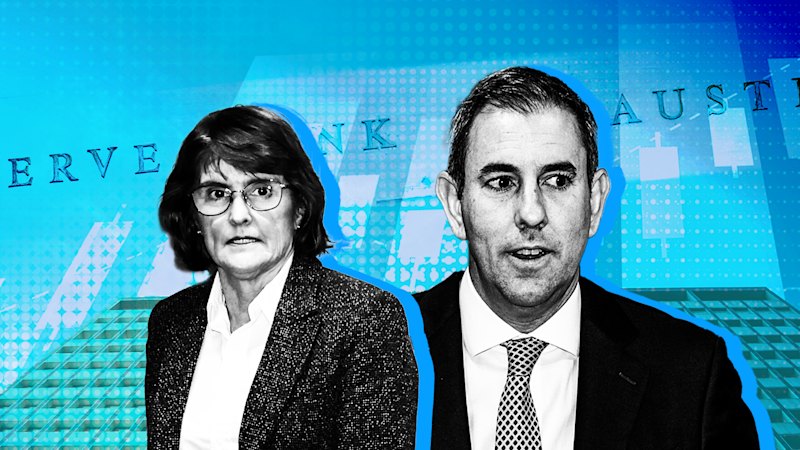
Treasurer Jim Chalmers has come under fire for his handling of questions surrounding government spending and its impact on inflation. This scrutiny intensified following the recent interest rate hike by the Reserve Bank of Australia, which marked the first increase since 2023. During an appearance on ABC’s Insiders on October 1, 2023, Chalmers faced pointed questions regarding whether government expenditure was contributing to rising inflation.
Host David Speers pressed Chalmers on which sector—public or private—grew faster in the September quarter. Chalmers asserted that the private sector outpaced the public sector. However, this claim was quickly challenged by data from the Australian Bureau of Statistics, which indicated that total public demand, encompassing both state and federal spending, had risen by 1.2 percent in the quarter, slightly surpassing the private sector’s growth of 1.1 percent.
Chalmers attempted to clarify his response by shifting the discussion to contributions to overall GDP growth. He noted that the private sector, being significantly larger, contributes more to GDP even with slower growth. In September, the private sector added 0.8 percentage points to GDP growth, compared to 0.3 percentage points from the public sector. While this distinction holds economic validity, it did not address Speers’ straightforward question.
The Reserve Bank’s Governor, Michele Bullock, compounded Chalmers’ challenges by stating that both private and public spending were contributing to the economy’s excess demand problem. This admission further complicated the treasurer’s narrative.
Following the interview, opposition shadow treasurer Ted O’Brien criticized Chalmers, accusing him of a “disturbing lack of understanding of basic statistics in the national accounts.” A spokesperson for Chalmers later attempted to clarify his comments, indicating he was referring to new public and private final demand—figures that exclude asset transfers and are favoured by Treasury. On this basis, Chalmers was correct, as new public demand rose by 1.2 percent, compared to 1.1 percent for private demand.
The implications of this exchange extend beyond mere statistics. It highlights a broader political struggle for Chalmers, who has served as treasurer for nearly four years. The challenge he faces is not just statistical literacy but the absence of a compelling narrative regarding the government’s efforts to manage the unprecedented inflation rates.
Inflation is a complex issue, and attributing it to a single factor is misleading. Both the Reserve Bank of Australia and the government share the responsibility. In retrospect, last year’s aggressive interest rate cuts, made under political pressure to provide relief to borrowers, may have been too drastic. These cuts contributed to a recovery in private demand, pushing annual growth in private demand to a three-year high of 3.1 percent in September.
Yet, stagnant productivity growth—an issue both political parties must contend with—has constrained economic expansion. Current estimates suggest that Australia can only sustain growth of about 2 percent before inflationary pressures resurface. This productivity stagnation is also impacting the services sector, where rising wages without corresponding productivity gains force companies to pass increased costs onto consumers.
Further complicating matters are persistent issues in housing supply, driving rent increases of around 4 percent annually. The Albanese government‘s flagship anti-inflation measure, temporary electricity bill rebates, is also criticized for exacerbating inflation as it begins to unwind, revealing the limited effectiveness of such relief measures.
While public demand growth has slowed to 1.4 percent annually as of September, it has nevertheless reached 28.7 percent of GDP, marking the highest level outside of the pandemic. Even if government spending did not ignite the current inflationary period, it is difficult to argue that it has not contributed to the problem.
As the government navigates these challenges, the need for a coherent and compelling economic narrative becomes increasingly critical. Chalmers must effectively communicate the complexities of these issues to regain confidence and provide clarity to the public concerning fiscal policy and its implications for inflation.
