



































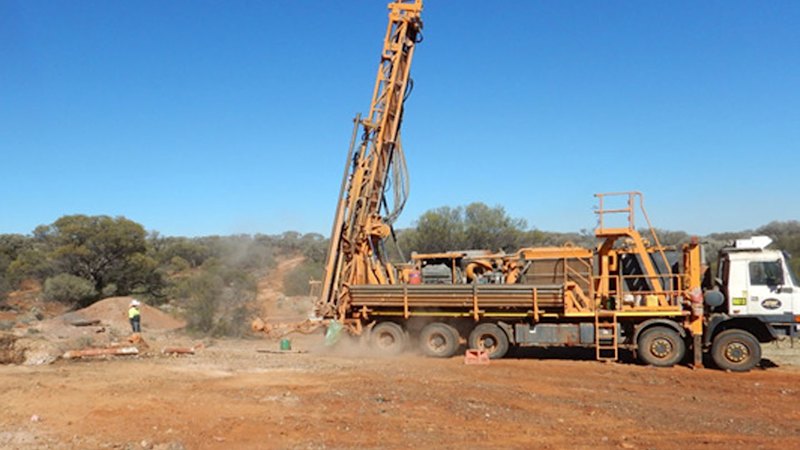
Venus Metals Corporation has made significant strides in exploring new gold targets at its Bellchambers project, located near Sandstone in Western Australia. This advancement follows a groundbreaking hyperspectral study led by the CSIRO, which identified new, undrilled zones that show promising signs of gold potential.
The research is part of the CSIRO’s Kick-Start program, utilizing innovative “mineral fingerprinting” technology. This method includes satellite hyperspectral imagery that captures specific invisible light wavelengths, combined with high-resolution drill-core scanning through the proprietary HyLogger-3 system. The result is a powerful tool that maps subtle changes in rock minerals, often indicative of nearby gold deposits.
At the Bellchambers site, the study detected mineral signatures closely associated with alterations in chlorite, a mineral that frequently exhibits significant iron enrichment near gold mineralization. By identifying these signatures in drill cores and extending the analysis to satellite imagery, the research has revealed anomalies across the tenement, including regions that had not been previously drilled.
The hyperspectral imagery has also provided clarity on distinguishing rocks in their original positions from those altered by weathering and erosion. This clarity enhances confidence in surface targets and facilitates connections between shallow indicators and deeper gold systems. The newly identified hotspots will undergo field verification and will be integrated into Venus’ exploration model, refining the search for both extensions and new zones at Bellchambers.
The current resource at Bellchambers, combined with the Range View resource, comprises approximately 766,000 tonnes at 1.27 g/t gold, equating to 31,400 ounces. With gold prices nearing A$7,400 per ounce, the in-ground value of this resource could easily reach nine figures. Furthermore, Venus estimates a conceptual exploration target for these zones of 800,000–900,000 tonnes at 1.75–2.0 g/t gold, potentially adding another 45,000–60,000 ounces to the total.
In light of these developments, Venus is planning a pre-feasibility study later this year to further assess the project’s viability. The recent progress, backed by CSIRO, strengthens Venus’ position, particularly in light of QGold’s recent bid of 21 cents per share, which values the company at only A$41.5 million. The Venus board has deemed this offer insufficient, recommending that shareholders reject it as it does not reflect the company’s true asset value.
Additionally, the exploration findings align with Venus’ announcement of a comprehensive strategic review conducted by Sydney’s amicaa Advisors. This review aims to maximize shareholder value from the company’s Western Australian portfolio. Notable assets include a 1 percent net smelter royalty over Rox Resources’ 2 million ounce Youanmi gold project, recently valued at approximately A$40 million. The company also holds 50 million Rox shares, valued around A$30 million, contributing nearly A$70 million in exposure related to Youanmi alone.
As the gold market remains robust and with such valuable assets at play, the insights gained from the hyperspectral study at Bellchambers emphasize Venus Metals’ potential, suggesting that its market valuation could be significantly undervalued as the bid deadline approaches and the broader context of its assets becomes clearer.
