



































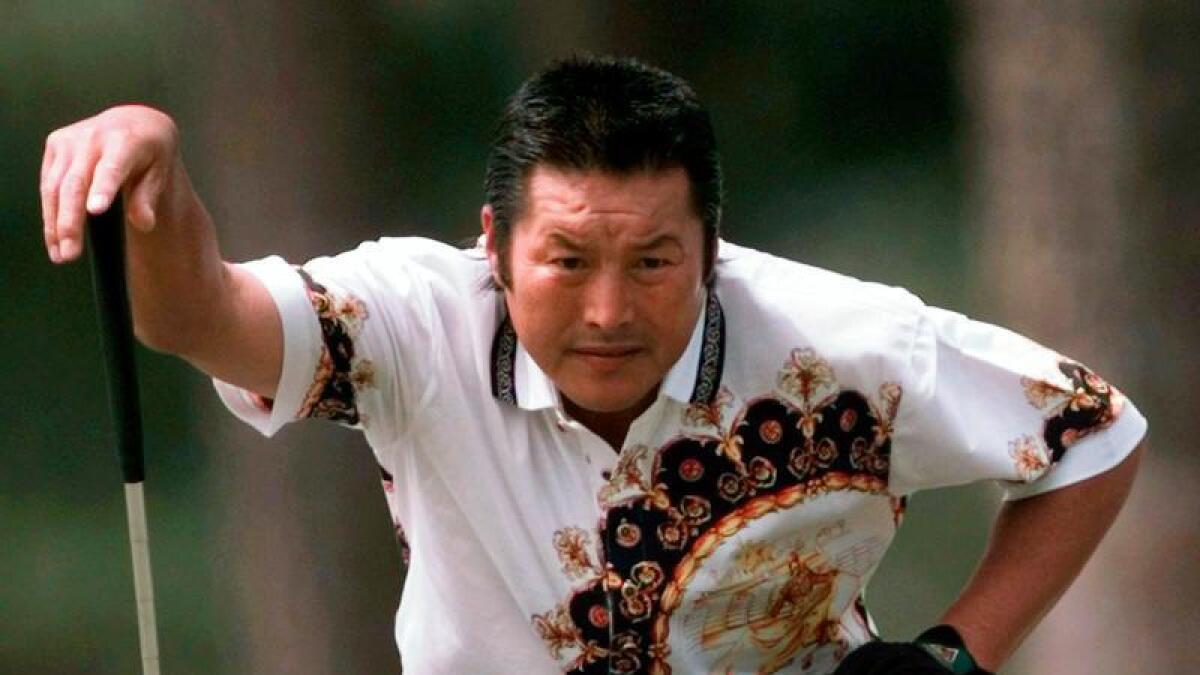
Jumbo Ozaki, the renowned Japanese golfer, has died at the age of 86 after a battle with colon cancer. Ozaki, celebrated for his powerful swing and vibrant personality, won an impressive 94 titles on the Japan Golf Tour over his 29-year career. His last victory came at the ANA Open in 2002, when he was 55 years old.
Ozaki’s remarkable career saw him rise to No. 5 in the world rankings in 1996, making him one of the top players during his prime. Despite never winning a major championship outside of Japan, except for the New Zealand PGA Championship, he was inducted into the World Golf Hall of Fame in 2011. The Japan Golf Tour honored him in a social media post, stating, “He is an indispensable, one-of-a-kind figure in discussing men’s golf, both now and in the future.”
Impact on Golf and Legacy
Throughout his career, Ozaki participated in 49 major tournaments, with his best finish occurring at the 1989 US Open at Oak Hill, where he placed just three shots behind winner Curtis Strange. He played in the Masters for the final time in 2000, finishing tied for 28th place at the age of 53.
Ozaki’s influence extended beyond his own achievements. He inspired fellow Japanese golfers, including Isao Aoki, the first Japanese player inducted into the Hall of Fame, and Hideki Matsuyama, who became the first to win a major at the 2021 Masters. His contributions to Japanese golf have propelled the sport into national prominence, fostering a generation of players inspired by his legacy.
Ozaki’s accolades include five victories at the Japan Open and six at the Japan PGA Championship. He led the Japan Golf Tour money list a record 12 times, including five consecutive years from 1994 to 1998. His final money title came in 2002, solidifying his status as a dominant force in Japanese golf.
Personal Life and Interests
During his induction into the Hall of Fame, Ozaki expressed a sense of gratitude for his recognition, despite his regret at not playing more internationally. “But I dedicated my life to Japanese golf and am extremely grateful the voters thought I was worthy of this honour,” he remarked, having received 50 percent of the vote on the international ballot.
Known for his charisma, Ozaki was often compared to Arnold Palmer in Japan. His flamboyant style included wearing silk shirts and baggy pants, and he was not just a talented golfer; he also played the guitar and had three songs that charted in Japan. Interestingly, his first passion was baseball, and he pitched professionally for three years before committing to golf.
Ryo Ishikawa, a prominent young golfer who won his first Japan Golf Tour title at age 15, acknowledged Ozaki’s mentorship. “Jumbo used to be a baseball player, so he always tried to teach me the link from pitching or hitting to golf,” Ishikawa shared in a 2010 interview with The Associated Press. “Jumbo wanted me to hit the ball far.”
Ozaki often traveled with an entourage when competing in international tournaments, ensuring a familiar environment by bringing along a sushi chef for his team. He had two younger brothers, Naomichi (Joe) and Tateo (Jet), both of whom also played on the tour.
In 1996, Ozaki represented Asia in the Presidents Cup, teaming up with Vijay Singh to defeat the American pair of Fred Couples and Davis Love III. Although he qualified for the 1998 Presidents Cup, he opted out of the trip to Australia, allowing his brother Joe to take his place.
Jumbo Ozaki’s legacy in the world of golf is undeniable. His contributions to the sport in Japan and his influence on future generations of golfers will be remembered long after his passing.
