



































Grain producers Gary and Ryan Greaves faced a challenging harvest this year, but their efforts yielded promising results. Located at Journey’s End, approximately 30 kilometres north-west of Koorda, the Greaves family anticipated a lower crop yield than last year’s average of 1.8 tonnes per hectare. This forecast was based on a notably dry start to the season, with just 36 millilitres of rain recorded by the end of March.
Seeding began on April 10, covering 4,000 hectares with a mix of barley, wheat (including the Kansai, Vixen, and Scepter varieties), oats, and lupins. The breakdown included 2,000 hectares of wheat, 600 hectares of barley, 600 hectares of oats, and 200 hectares of lupins. The weather fluctuated significantly; while April brought 41 millimetres of rain, May saw a mere 8 millimetres. Fortunately, June, July, and August delivered over 40 millimetres each, helping to sustain their crops despite a drier September.
Ryan Greaves noted, “June through to August really carried the bat for us, but we had quite a dry finish in September.” Despite these challenges, the family managed to maintain effective control over key factors like machinery performance. “We were really happy with the seed germination and seed to soil contact,” he added, highlighting the benefits of their hydraulic tynes that improved this crucial connection.
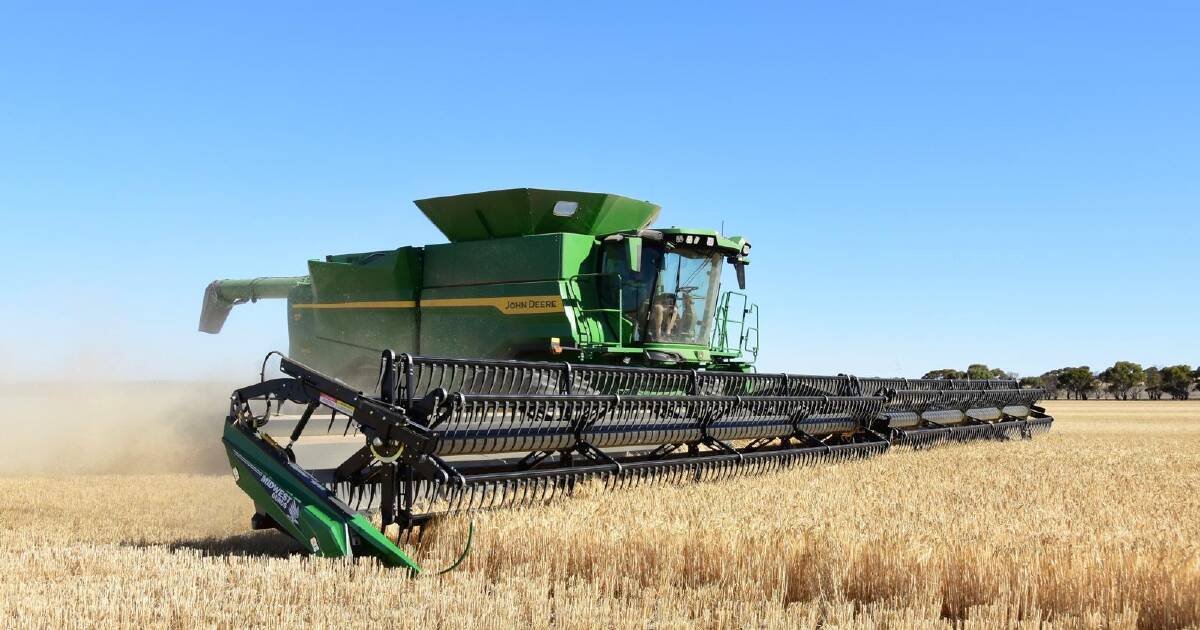
The harvest did encounter some setbacks, particularly with frost affecting around 300 hectares in a valley. Although this impacted some crop quality, it was only a minor portion of their overall production. For harvesting, the Greaves family invested in a John Deere S7 800 equipped with a 60-foot Midwest front. After adjusting the machinery, they utilized its Predictive Ground Speed Automation feature, which adjusts speed based on operator inputs and internal sensors.
“We set up all the automation that it had to offer, and I haven’t gone through all the figures yet, but I have noticed an increase in productivity as well as a decrease in losses,” Ryan explained. The efficiency of the new equipment allowed them to cover more ground with one header rather than two headers, each with 40-foot fronts, as they had used in the previous year.
The automation feature also includes a built-in camera that assesses grain quality, enabling adjustments to optimise the samples received. Ryan expressed excitement about this capability, stating, “The real kicker for us… is to compare high-yielding areas with high nitrogen withdrawal areas.” This will allow them to make more informed decisions on nitrogen inputs for the following year, ensuring that resources are allocated where they are needed most.
The Greaves family completed their harvest on December 1, a typical timeline for their operations. They managed to avoid the heavy rains that affected many in mid-November, which allowed them to continue working efficiently at the local CBH receival bin, which operated seven days a week. The results were positive, with wheat, barley, and oats producing an average yield of 2.5 tonnes per hectare.
“For our inputs and our input costs, we’re really happy with it,” Ryan noted. While their lupins did not perform as well, he clarified, “We’re just trying something out with the lupins, and it’s more for our sheep feed as well.” The Greaves family’s adaptability and investment in technology have positioned them well for future harvests, demonstrating resilience in the face of challenging agricultural conditions.
