



































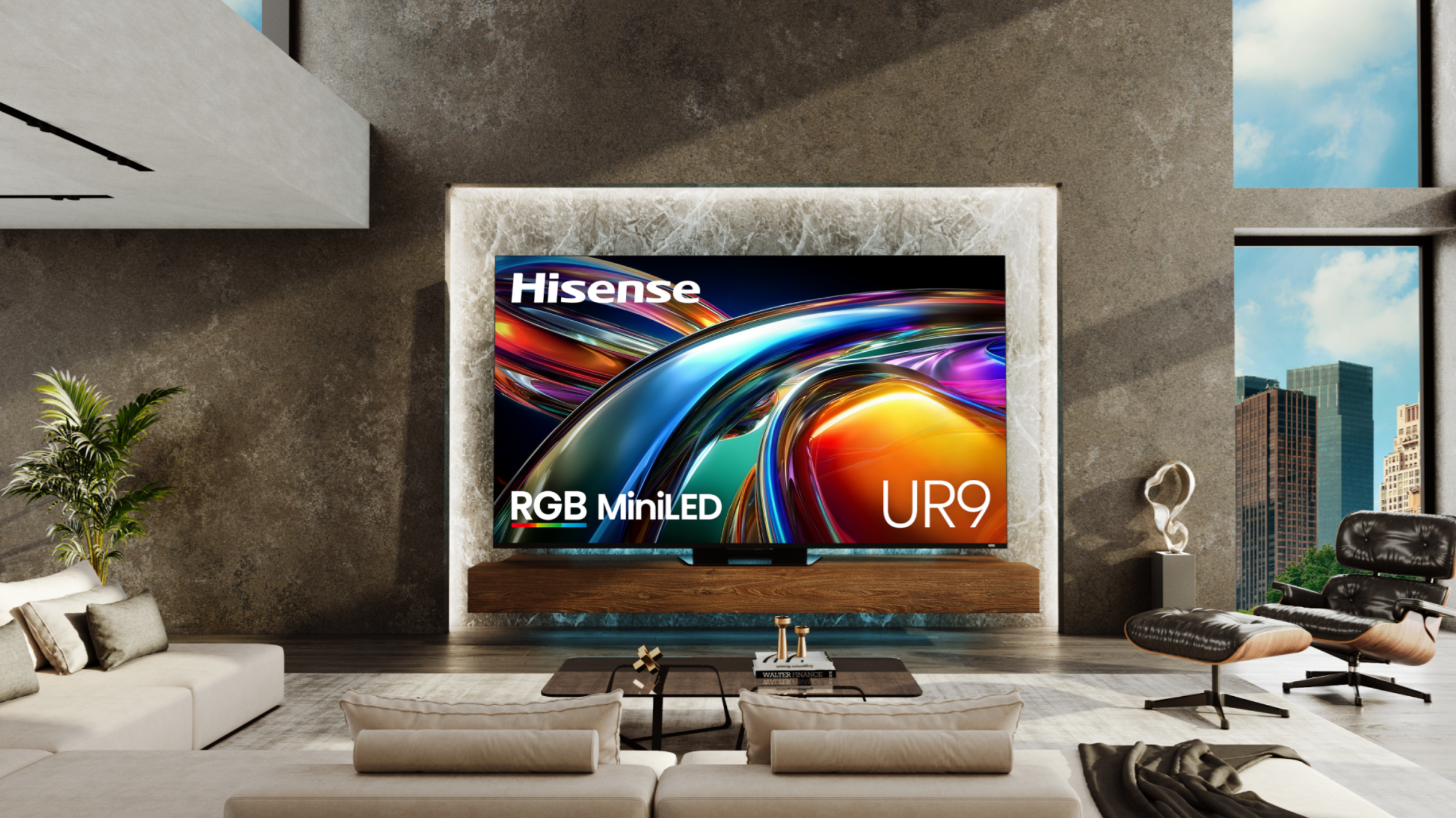
Hisense has introduced its most advanced television lineup to date at CES 2026, unveiling the new V Home OS and a flagship 116-inch RGB MiniLED TV. This innovative display will be part of Hisense’s offerings in Australia for 2026, positioning the brand to compete directly with major players like LG and Samsung.
Unlike its American counterpart, which utilizes Google TV, Hisense Australia is implementing a reengineered version of its VIDAA OS, now branded as V Home. This platform is designed to enhance user experience and will also incorporate advertising features, a shift that highlights Hisense’s strategic direction in the competitive television market.
Flagship Model Features
The centerpiece of the new lineup is the 116UXS, a cutting-edge 116-inch television that showcases Hisense’s latest RGB MiniLED evo technology. This model stands out with an industry-first sky blue-cyan fourth LED in its backlight, aimed at expanding the color spectrum. This advancement promises improved precision in wavelength, resulting in more lifelike color reproduction and smoother gradients.
The 116UXS operates on Hisense’s proprietary dual-chip architecture, which combines an AI-driven picture processing chip with a dedicated RGB MiniLED control chip. This technology allows for precise control over color and brightness, enhancing scene adaptation and overall image quality, regardless of the viewing environment.
Key features of the 116UXS include advanced anti-glare matte technology, enhancing performance in bright rooms, and a Devialet-tuned 6.2.2 CineStage X Surround audio system, which is designed to deliver immersive sound quality.
Expanded Television Portfolio
In addition to the flagship model, Hisense unveiled a broader 2026 TV portfolio that includes the new UR Series, which expands RGB MiniLED technology to a variety of screen sizes. The refreshed ULED models and the latest CanvasTV range were also part of the announcement. CanvasTV uniquely integrates display technology with home décor, transforming into an artwork-style feature when not in use.
Hisense asserts that its RGB MiniLED technology represents a significant advancement over traditional MiniLED displays. By utilizing individually controlled red, green, and blue LEDs, this system eliminates the need for a color filter layer, enhancing color accuracy, contrast, and energy efficiency—resulting in a reduction of energy consumption by up to 20%. The introduction of the cyan LED further refines color nuance, particularly in areas sensitive to the human eye.
For gaming enthusiasts, selected models in the UR Series will support Game Mode Ultra, featuring refresh rates of up to 180Hz. This capability is set to provide smoother motion and faster responsiveness for next-generation gaming experiences.
On the software front, Hisense announced that VIDAA OS will transition to V Home OS in 2026, incorporating a strategic partnership with Microsoft. This collaboration will bring Copilot generative AI features to Hisense televisions and extend to Xbox cloud gaming, allowing users to stream games directly to their TVs without requiring a console.
Kevin Ke, Managing Director of Hisense Australia and New Zealand, emphasized that the expanded 2026 lineup underscores the company’s commitment to display innovation and shared entertainment experiences within the home.
Pricing and availability details for Hisense’s 2026 TV range in Australia will be announced closer to the product launch, allowing consumers to prepare for these groundbreaking advancements in home entertainment.
