



































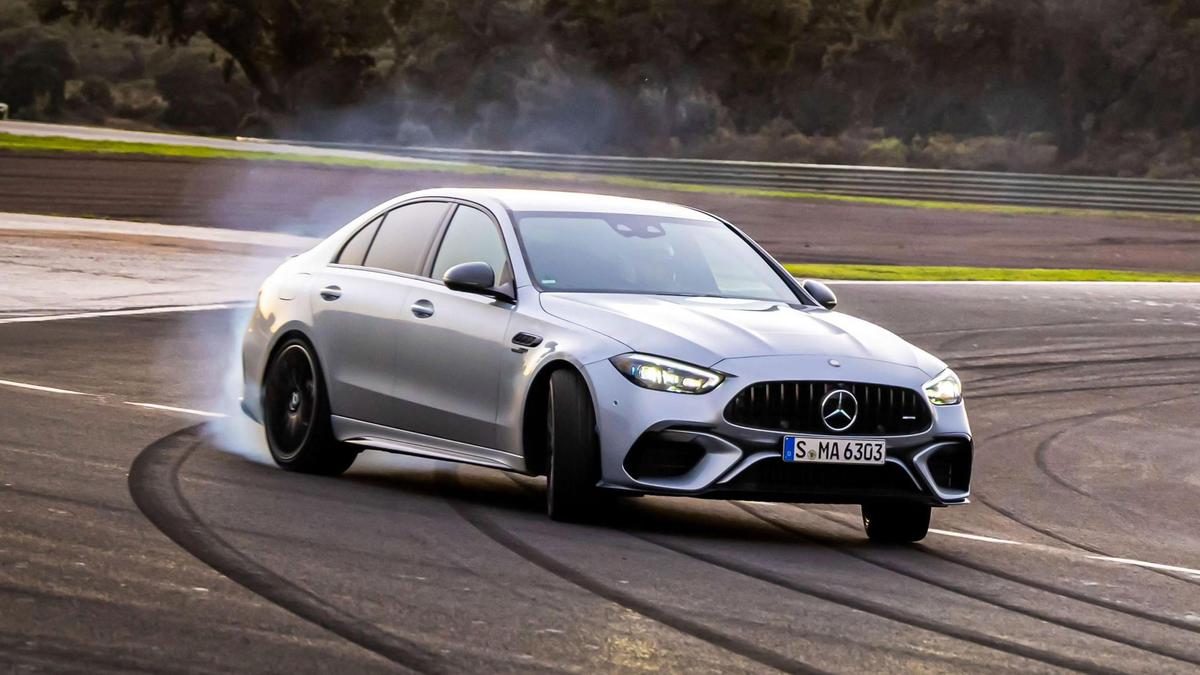
Mercedes-AMG has announced significant changes to its performance lineup, confirming that the C63 model and its four-cylinder plug-in hybrid drivetrain will be discontinued. This decision, attributed to upcoming European regulations, marks a notable shift in the brand’s approach to hybrid technology.
In a recent interview with Edmunds, Michael Schiebe, CEO of Mercedes-AMG, revealed plans to replace the C63 with a new model, the C53. This vehicle will utilize a pure inline six-cylinder engine, departing from the previous hybrid setup. The C53 is anticipated to make its global debut in the second half of 2026.
The new C53 will feature the same powertrain as the CLE53, which includes a 3.0-litre turbocharged straight-six engine combined with a 48V mild hybrid system. This configuration delivers a total output of 330 kW and 600 Nm of torque, enabling the coupe to achieve a 0-100 km/h acceleration in just 4.0 seconds. In contrast, the C63 S E-Performance, with its complex plug-in hybrid system, produces a substantial 500 kW and 1,020 Nm, achieving 0-100 km/h in a remarkable 3.4 seconds.
Schiebe’s comments highlight a focus on the “purity” of the upcoming engine, implying a move away from the plug-in hybrid technology. While the C53 will not feature a plug-in hybrid system, it is likely to retain the mild hybrid setup from the CLE53. This decision comes amid overwhelmingly negative feedback from fans regarding the elimination of the four-cylinder option.
The shift away from the four-cylinder plug-in hybrid is primarily driven by the forthcoming Euro 7 emissions regulations. Schiebe emphasized the challenges posed by these regulations, stating, “Under the regulations of EU7, it’s quite difficult to carry [the four-cylinder PHEV drivetrain] into the future.” This transition involves discontinuing the “M139” engine in the mid-size segment, which will be replaced by the inline six-cylinder configuration.
Interestingly, the Euro 7 rules, set to be approved in 2025, are less stringent than originally anticipated during the development of the C63. The updated regulations will largely carry over test conditions and exhaust emissions limits from the previous Euro 6 standards. The main adjustments involve stricter limits on brake particle emissions, minimum performance requirements for battery durability in electric and hybrid vehicles, and new tyre abrasion standards.
Reports indicate that the discontinuation of the C63 may also affect the GLC63, which could see a similar replacement by a new GLC53 variant. As the automotive industry adapts to these regulatory changes, Mercedes-AMG’s strategic realignment reflects a broader trend towards more traditional powertrains in response to evolving consumer preferences and legislative pressures.
This evolution within Mercedes-AMG underscores a significant moment in the performance car segment, as the brand pivots towards a future that prioritizes both performance and compliance with stringent environmental standards.
