



































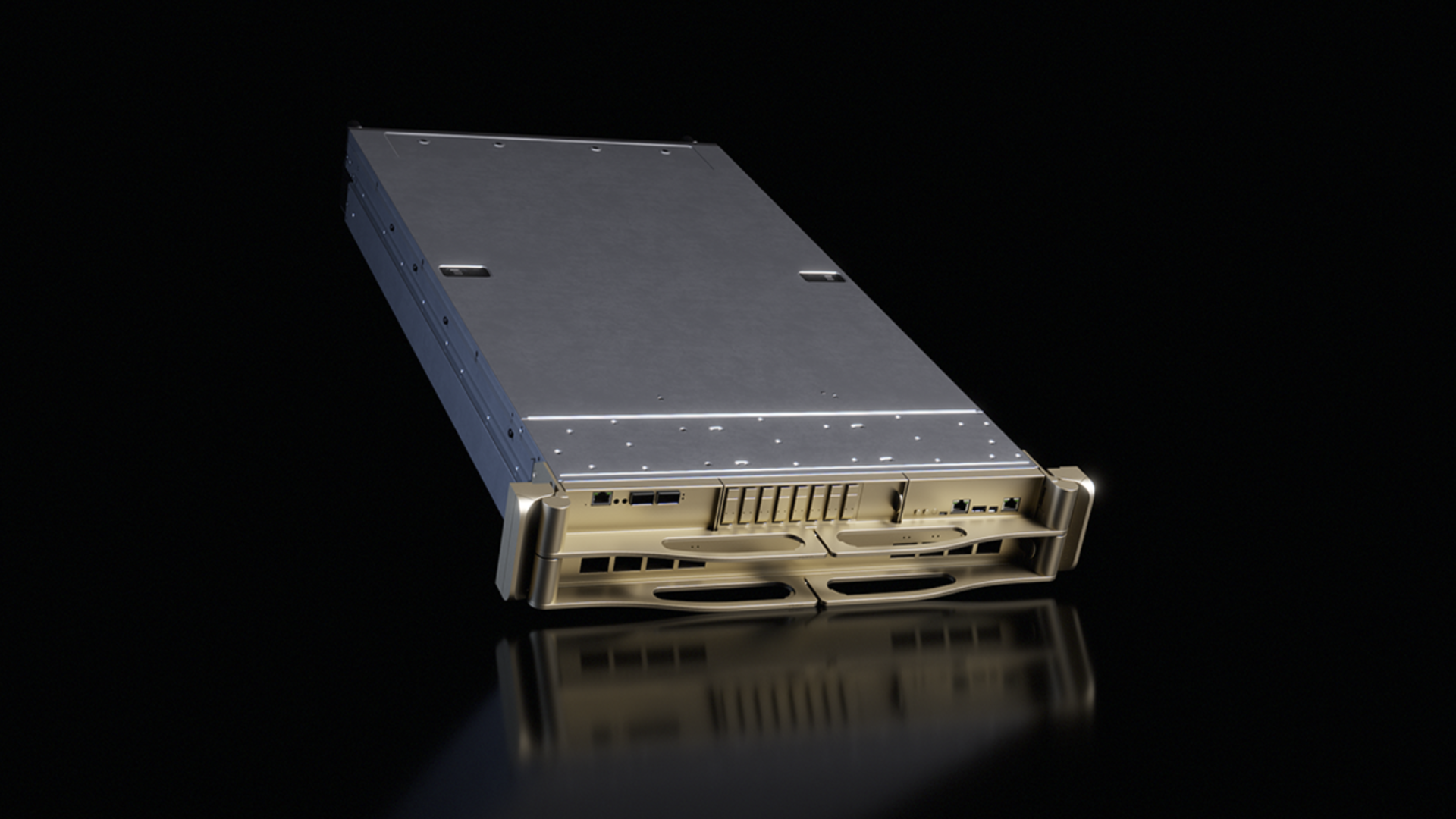
At CES 2026, Nvidia introduced its next-generation DGX SuperPOD, a cutting-edge system designed to deliver an impressive 28.8 Exaflops of AI computing power using only 576 GPUs. This announcement marks a direct challenge to Huawei’s existing technology, particularly its Atlas 950 SuperPod, which offers 16 Exaflops per unit.
The new DGX SuperPOD integrates multiple Vera Rubin NVL72 and NVL8 systems into a single, coherent AI engine. Each NVL72 system consists of 36 Vera CPUs, 72 Rubin GPUs, and 18 BlueField 4 DPUs, achieving a combined 50 petaflops of performance. The advanced architecture is built to handle large-scale workloads while minimizing infrastructure complexity.
Innovative Technology for Maximum Efficiency
Nvidia’s SuperPOD features impressive specifications that enhance its capability. The aggregate NVLink throughput reaches 260 terabytes per second for each rack, allowing all memory and compute resources to function seamlessly together. The Rubin GPUs are equipped with a third-generation Transformer Engine and hardware-accelerated compression, facilitating efficient processing for both inference and training tasks.
Connectivity plays a crucial role in the design. The system uses Spectrum-6 Ethernet switches and Quantum-X800 InfiniBand, which ensure high-speed data transfer with low latency. Each DGX rack includes 600 terabytes of fast memory, NVMe storage, and integrated AI context memory, making it suitable for demanding training and inference pipelines.
The innovative design emphasizes end-to-end networking performance, significantly reducing congestion in large AI clusters. With its focus on efficiency and performance density, Nvidia’s offering stands out in a competitive landscape.
Strategic Positioning Against Huawei
Nvidia’s approach contrasts sharply with Huawei’s strategy, which relies on scaling through hardware counts. The Rubin platform aims to unify AI compute, networking, and software, creating a streamlined environment that supports long context reasoning and multimodal model deployment. By integrating advanced software orchestration through Nvidia Mission Control, the company enhances cluster operations and infrastructure management.
The performance density of Nvidia’s SuperPOD allows it to compete effectively with Huawei’s projected output while minimizing space, power, and interconnect overhead. The DGX SuperPOD’s ability to achieve 28.8 Exaflops with fewer units not only demonstrates its efficiency but also positions it as a formidable player in the AI market.
As the tech industry eagerly anticipates further developments, Nvidia’s SuperPOD could reshape the competitive dynamics between leading technology firms. With its focus on high-performance computing and integrated solutions, Nvidia aims to set a new standard in AI infrastructure.
TechRadar will provide ongoing coverage of CES 2026, offering insights into groundbreaking announcements and innovations. Stay tuned for updates on everything from AI advancements to consumer technology trends.
