



































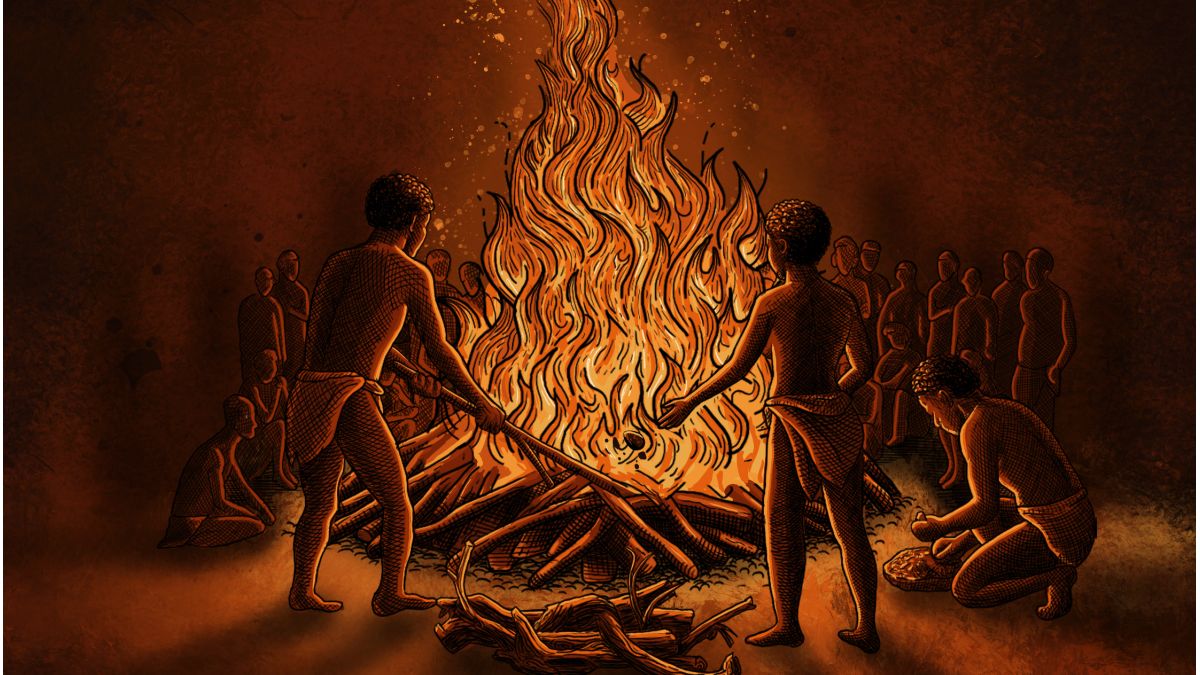
BREAKING: Archaeologists have just announced the discovery of the world’s oldest confirmed evidence of an adult cremation, dating back an astonishing 9,500 years. This groundbreaking find occurred in a rock shelter at the HOR-1 archaeological site in Malawi and reveals complex funerary rituals previously unknown to hunter-gatherer societies.
The remains, identified as those of a woman aged between 18 and 60 at the time of death, were meticulously prepared for cremation on a large pyre. Researchers, led by anthropologist Jessica Cerezo-Román from the University of Oklahoma, note that this represents the earliest evidence of intentional cremation in Africa and the oldest in situ pyre discovered worldwide.
This discovery challenges long-held beliefs about the simplicity of ancient burial practices. The elaborate cremation involved gathering and maintaining a large quantity of wood, indicating significant social investment and planning. The site, used for mortuary practices for at least 8,000 years, suggests a rich tradition of ancestor veneration and a shared social memory among early humans.
The findings, published in Science Advances, reveal that the cremation took place at a site connected to human activity for around 21,000 years. Evidence shows that the pyre burned for many hours, with the remains subjected to high temperatures that resulted in the cracking of bones. Cut marks indicate that some body parts were disarticulated before the cremation, hinting at ritualistic practices related to remembrance and social memory.
This discovery not only sheds light on the complexity of ancient rituals but also emphasizes the emotional weight humans have placed on death for millennia. The practice of cremation, previously thought to emerge only around 7,000 years ago, now has a much older origin.
The archaeological site’s ash deposits, consisting of at least 30 kilograms (66 pounds) of wood and other materials, reveal that the cremation was a resource-intensive event. The layers of ash suggest that the spot was used for fires over several centuries, indicating it was a “persistent place,” deeply rooted in the community’s ancestral landscape.
This urgent discovery not only deepens our understanding of ancient funerary practices but also reshapes our views on the social structures of prehistoric societies. As researchers continue to analyze the site, more revelations about the complexities of early human life and death are expected.
Stay tuned for further updates as this story develops, highlighting the profound implications this discovery has for understanding human history and cultural evolution.
