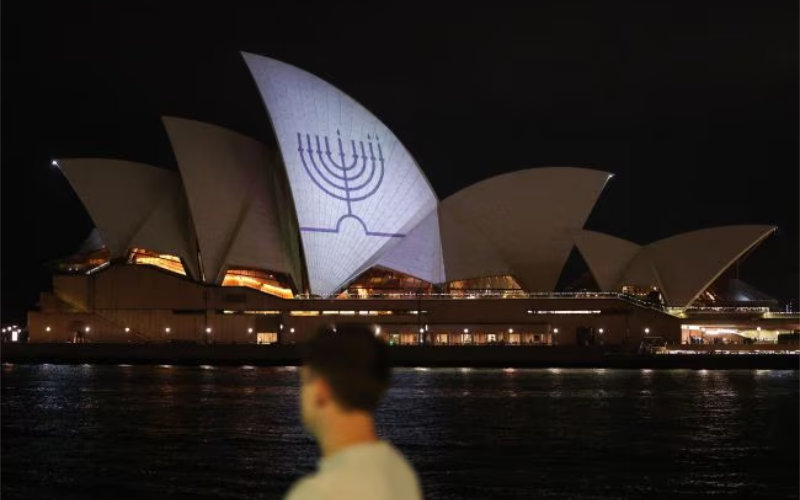
URGENT UPDATE: A growing crisis of empathy is unfolding in Australia as the nation grapples with a stark hierarchy of grief following recent tragedies. Prominent leaders gathered at the Opera House on Thursday night, donning kippahs and expressing solemn condolences for the 15 tragic deaths that have ignited national mourning. Yet, the response has raised critical questions about who is allowed to mourn and whose grief is valued.
This moment of public sorrow, broadcasted live, is part of a month-long display of collective grief that has seen vigils, ceremonies, and illuminated monuments. However, the emotional resonance of this mourning starkly contrasts with the absence of recognition for the grief of Aboriginal Australians, whose suffering is often dismissed or marginalized.
Approximately 750,000 to 800,000 Aboriginal Australians face a painful reality as they are told to celebrate on January 26, a date they observe as a day of mourning for dispossession and cultural destruction. Activists argue that while the deaths of Jewish Australians are mourned with national prominence, Aboriginal voices calling for acknowledgment of their pain are labeled as divisive or un-Australian.
As public sympathy unfolds, the media landscape, heavily influenced by News Corp Australia, has perpetuated this double standard. Jewish mourning is framed as a moral obligation, while Aboriginal grief is often treated as an inconvenience. This disparity raises urgent questions about the values of Australian society and the way it honors its history.
The Uluru Statement from the Heart, which calls for a permanent advisory body to give Aboriginal Australians a voice in Parliament, was overwhelmingly rejected in a recent referendum. In stark contrast, the government appointed a special envoy for Jewish Australians without public consultation, granting institutional power that Aboriginal Australians have long sought but have been denied.
This inconsistency leads to a troubling question: Why does the country mourn for foreign nations but withhold recognition from its First Nations peoples? The ongoing national grief for Jewish Australians contrasts sharply with the minimal attention given to deaths in custody of Aboriginal Australians, highlighting a systemic neglect of their suffering.
Aboriginal Australians see political leaders donning religious symbols for external communities while refusing to acknowledge their own heritage. The discrepancy in mourning practices exposes a painful truth about Australia’s national identity and its inability to unify in grief for all its peoples.
As this situation continues to evolve, the call for equality in mourning grows louder. The emotional impact of this crisis is undeniable; many Australians feel the weight of this injustice and are compelled to question the integrity of their nation. The need for a unified approach to national grief is urgent, as empathy is not lacking, but rather, honesty in recognizing all forms of suffering is.
The unfolding narrative of grief in Australia demands attention. As both political leaders and media outlets grapple with these issues, it is clear that the nation’s future hinges on its ability to address this hierarchy of grief and to extend the same compassion to Aboriginal Australians that is afforded to others.