



































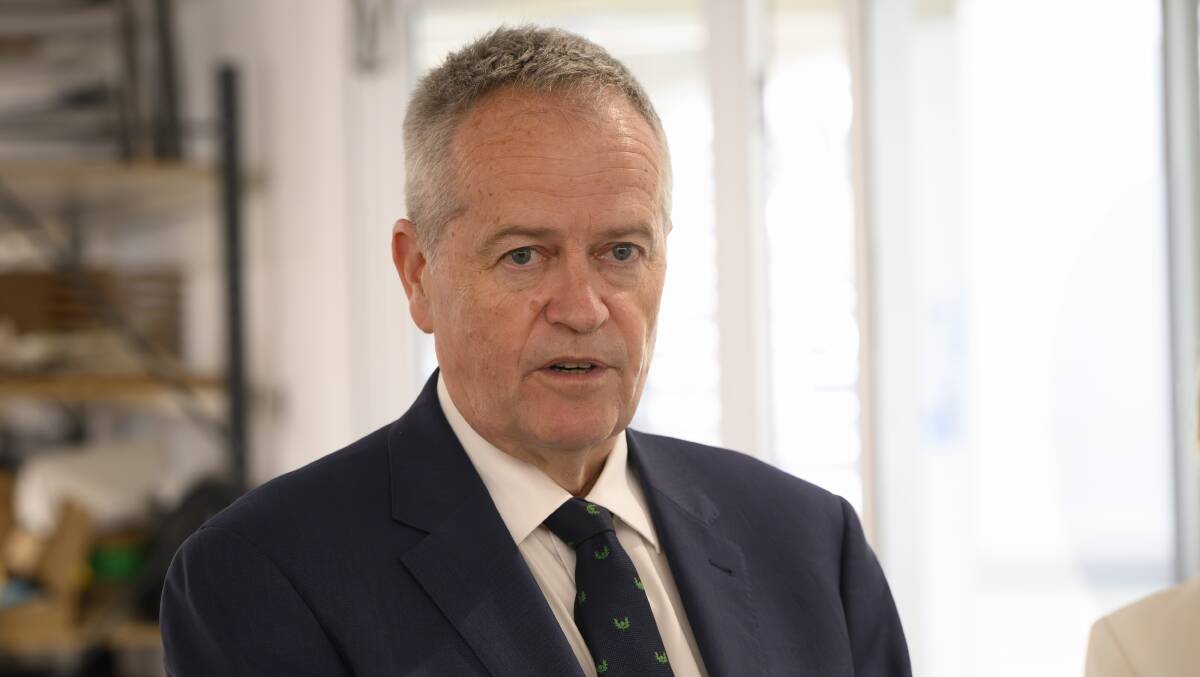
UPDATE: Former Labor leader Bill Shorten is reigniting the debate over capital gains tax reform, highlighting ongoing issues of inequality in the Australian property market. Just seven years after his 2019 election loss, Shorten insists that the 50 percent capital gains tax discount, unchanged since 1999, continues to favor property investors over average workers.
In a powerful statement, Shorten asserted that income earners like plumbers, nurses, and police officers are unfairly taxed at higher rates while property profits remain lightly taxed. “You can do nothing all day… and instead just sit on a building, and sell it and pay [minimal] tax on the profits,” he declared, emphasizing the growing disparity affecting 13.5 million taxpayers in Australia.
Shorten’s initial proposal to halve the capital gains tax discount to 25 percent was met with resistance in 2019, contributing to the election victory of Scott Morrison. Despite the backlash, he maintains that the principle behind his policy remains vital. “Income is taxed too heavily, but property profits are taxed too little,” he reiterated.
The former leader, who stepped away from politics in early 2025 to become the vice-chancellor of the University of Canberra, called on current leaders to reconsider capital gains tax settings. He argues that the current system perpetuates inequality and does not adequately address the housing crisis, focusing instead on enhancing government income.
The issue of negative gearing, which allows property investors to deduct losses from their taxable income, further complicates the landscape. Shorten’s perspective highlights the need for urgent reform to level the playing field for everyday Australians.
As discussions on tax reform intensify, all eyes will be on Prime Minister Anthony Albanese and Treasurer Jim Chalmers to determine how they will address these mounting concerns. With the ongoing impact of inflation and rising property prices, the urgency for equitable tax policies has never been clearer.
Stay tuned for more updates as this critical issue unfolds.
