



































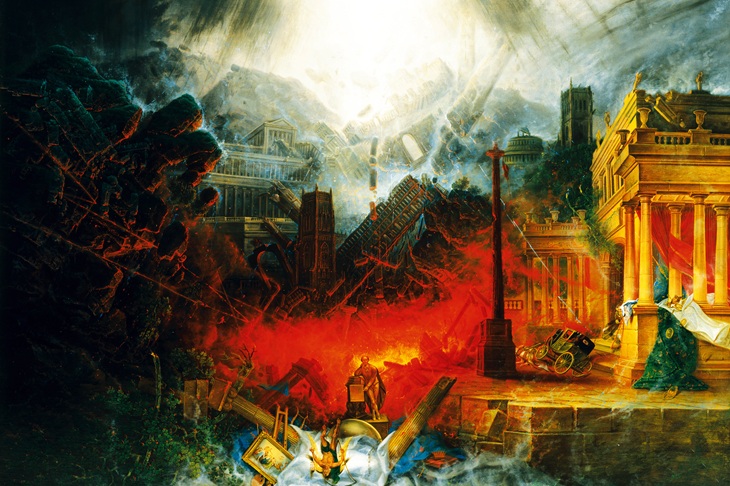
URGENT UPDATE: Experts are raising alarms about a potential global catastrophe by 2026, warning that the ordinary person could face unprecedented challenges. As geopolitical tensions and technological disruptions escalate, the risk of societal collapse looms large.
Imagine waking up in January 2026 to reports of sabotaged TurkStream pipelines, linked to escalating proxy warfare between Russia and NATO. Such events could trigger a surge in energy prices, with costs potentially tripling or quadrupling overnight. The Abqaiq processing plant in Saudi Arabia, the world’s largest crude stabilization facility, and the Ras Tanura terminal, the largest oil loading port, could be targeted, leading to dire consequences for global energy markets.
The fallout would be swift. Many developed nations could see their strategic petroleum reserves depleted within weeks, making heating unaffordable for millions across Europe and North America. As inflation continues to stretch budgets, the ordinary man could find grocery prices soaring beyond reach.
In the United States, escalating tariffs initiated during the Trump administration are already igniting supply chain chaos. Costs for essential goods, from electronics to clothing, are set to skyrocket, with potential factory closures leading to double-digit unemployment rates reminiscent of the Great Depression. Automation driven by artificial intelligence may eliminate millions of mid-level jobs almost overnight.
Geopolitical tensions are also expected to intensify, particularly in the South China Sea, where conflicts could escalate into open naval confrontations. The Middle East seems poised for further turmoil, with ongoing violence in Gaza and Lebanon threatening broader regional stability. This could lead to oil prices soaring to $200 per barrel, resulting in gasoline rationing in several countries.
In the midst of these crises, experts predict a “cyber pandemic” that could cripple critical infrastructure. A state-sponsored or rogue cyberattack may lead to widespread power outages, frozen banking systems, and halted digital payments, forcing ordinary citizens to line up for cash that could be in short supply. Hospitals may struggle to operate on generators, and misinformation could spread rapidly through social media, creating further panic.
As trust in institutions erodes, a new and potentially deadly pathogen may emerge, leading to renewed lockdowns that economies cannot withstand. The ripple effects could result in devastating food shortages, igniting riots and social unrest.
Climate disasters will compound these issues, with extreme weather patterns such as relentless flooding in Asia and Africa, and unprecedented heatwaves turning parts of Europe and North America into dust bowls. Mega-wildfires and hurricanes may devastate coastal areas, crippling insurance companies and leaving many homeless and vulnerable.
The interconnected crises could lead to the unraveling of the global order, with the potential for the AI bubble to burst, triggering a stock market crash even more severe than that of 2008. Governments may face mounting debts from stimulus spending and military conflicts, with hyperinflation affecting both fragile states and developed nations. As wages stagnate and costs soar, homelessness may reach critical levels.
In response to these growing challenges, experts warn that governments may impose stricter controls, including compulsory digital identities linked to Central Bank Digital Currencies (CBDCs), restricting access to essential services. The potential for AI-driven surveillance to predict dissent could normalize “pre-crime” arrests under emergency powers.
As social polarization peaks, misinformation could turn communities against each other, leading to cultural and ethnic conflicts. The recent surge in incendiary discourse across major social platforms serves as a grim preview of how quickly these dynamics can escalate.
For the ordinary person, the stakes are alarmingly high. With empty shelves, job losses, and a pervasive sense of fear, many are already grappling with the impacts of these looming crises. Health and mental well-being are deteriorating as stress mounts, and the flicker of hope dims against a backdrop of uncertainty.
Dr. Mathew Maavak, a retired international consultant in strategic foresight, governance, and artificial intelligence, emphasizes that these scenarios represent only the “middle ground” perspective of a global risk analyst. As we approach 2026, the urgency of these warnings cannot be overstated.
Share this article to raise awareness about the potential challenges that lie ahead. The time to prepare for these possible scenarios is now.
