



































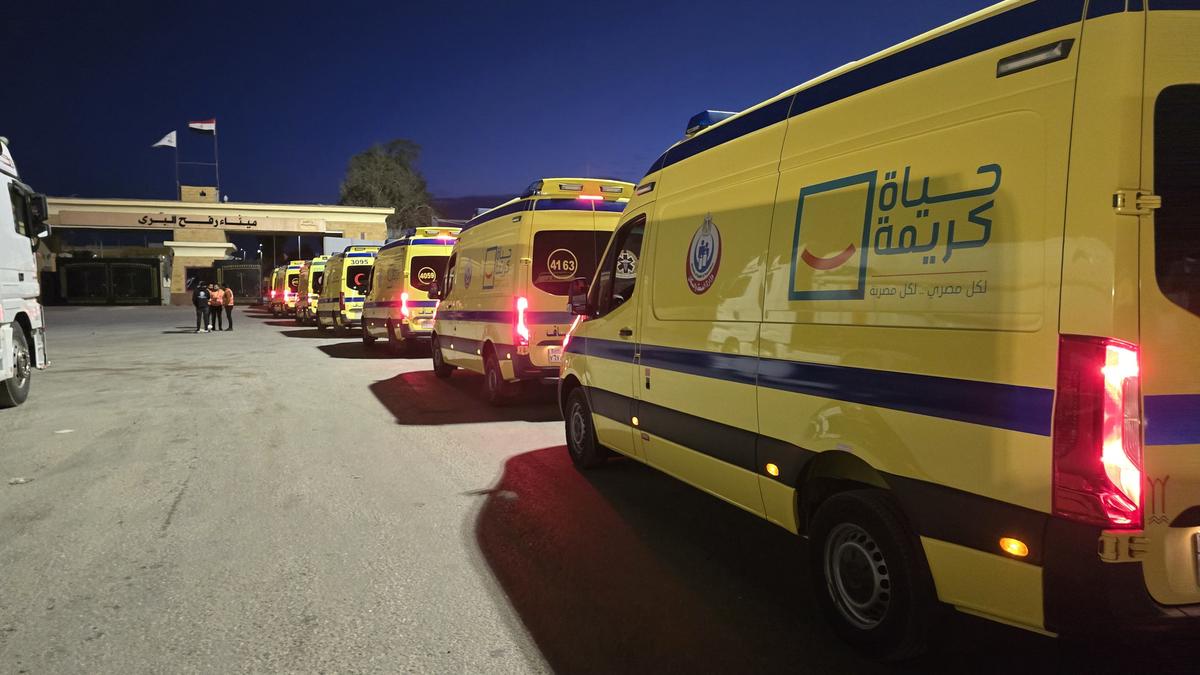
UPDATE: The Rafah crossing between Gaza and Egypt has partially reopened as of Monday morning, marking a significant development nearly two years after it was closed by Israel. According to an Israeli security official, this reopening allows a small number of Palestinians to enter and exit the war-torn enclave, a crucial step in the ongoing humanitarian crisis.
The reopening comes as part of the first phase of a US-brokered ceasefire agreement that went into effect in mid-October. The European Union is overseeing operations at the Rafah crossing, which has been largely shut since Israel took control in May 2024. This move follows extensive preparations over the weekend involving the EU, Egypt, and other stakeholders.
Initially, only 150 Palestinians will be permitted to leave Gaza each day, while just 50 will be allowed to enter, as reported by Egypt’s state-affiliated Al-Qahera News. This limited capacity raises concerns about the overwhelming medical needs of the population. The Palestinian Ministry of Health reports that over 20,000 patients in Gaza are awaiting treatment outside, including at least 440 life-threatening cases. Tragically, nearly 1,300 individuals have died waiting for access to necessary medical care.
At Al-Aqsa Martyrs’ Hospital in Deir al-Balah, Ibrahim Al-Batran, a kidney dialysis patient, expressed his desperation upon hearing the news. “Many people have died while waiting for treatment, and I may die today, tomorrow or the day after tomorrow while I’m waiting,” he said, highlighting the human toll of the ongoing crisis.
While the reopening symbolizes hope, the steep costs associated with crossing and lengthy bureaucratic processes mean that many Palestinians may still struggle to find a way out. Previously, it was reported that crossing fees could reach thousands of dollars, a sum that is unattainable for most.
Israeli Prime Minister Benjamin Netanyahu has emphasized that the opening will be “limited,” with no passage of humanitarian aid or commercial goods permitted at this time. However, the return of the last deceased hostage, Ran Gvili, last week has paved the way for this initial step toward normalcy.
The Rafah crossing’s reopening is a crucial part of the ceasefire agreement’s first phase, officially concluding a series of negotiations. The US government announced the commencement of the second phase of the agreement two weeks ago, coinciding with President Donald Trump launching his Board of Peace in Davos.
As developments unfold, the reopening of the Rafah crossing has been hailed by officials as a “lifeline and symbol of opportunity” for the beleaguered residents of Gaza. The situation remains fluid, and the international community is watching closely to see how this will impact the humanitarian landscape in the region.
Stay tuned for more updates on this urgent situation as it continues to develop.
