



































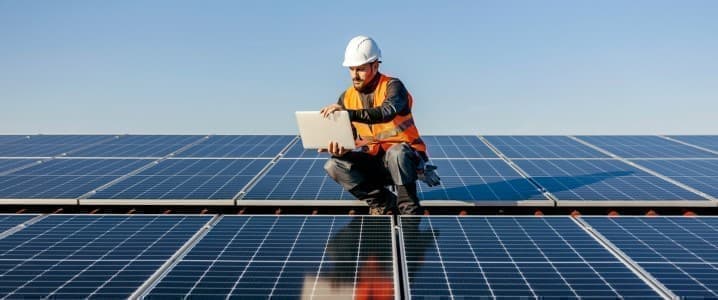
The global transition towards clean energy is experiencing significant challenges due to critical shortages of transformers essential for electricity distribution. As nations strive to enhance their renewable energy capacity in response to escalating energy demands, the lack of investment in crucial grid infrastructure threatens to create a bottleneck in this vital transition.
Countries around the world are rapidly expanding their wind and solar energy capabilities. This surge is largely driven by increasing energy demands fueled by global economic growth and advancements in artificial intelligence. Despite heavy investments in renewable energy production, the infrastructure needed to support this growth has not kept pace. Both the United States and Europe are grappling with critical transformer shortages alongside aging grid systems, raising concerns about energy security in the face of recent historic blackouts, such as the cascading grid failure affecting Spain and Portugal last year.
Urgent Infrastructure Needs Highlighted
A report from the World Economic Forum emphasizes that while the need for infrastructure investment has gained attention in European policy discussions, “ambition is not yet being matched by action from governments, policy-makers, investors and businesses.” In the United States, experts anticipate a prolonged transformer shortage, with little relief on the horizon.
According to data from Wood Mackenzie, demand for power transformers in the U.S. has soared by 116 percent since 2019, while distribution transformer demand has risen by 41 percent. Ben Boucher, a senior analyst at Wood Mackenzie, stated, “This surging transformer demand has created a significant supply deficit, with domestic manufacturing capacity unable to keep pace.” As a result, utilities are increasingly reliant on imports to meet project timelines, with imports expected to constitute approximately 80 percent of U.S. power transformer supply and 50 percent of distribution transformer supply by 2025.
Complex Challenges Block Progress
The situation has sparked debate among industry experts. Some argue that the perceived transformer shortage may be overstated, attributing the issue to self-inflicted procurement challenges rather than a genuine supply crisis. The complexity of the problem spans multiple economic sectors and supply chains, making it difficult to pinpoint a singular cause.
Despite differing opinions on the nature of the shortage, the consequences remain severe. A recent article in Power Magazine notes that what began as a supply squeeze has evolved into a crisis, exacerbated by years of underinvestment in domestic manufacturing, a post-pandemic surge in construction and electrification, and market volatility in materials such as grain-oriented electrical steel (GOES) and copper. These factors have extended lead times for large power transformers beyond historical norms, with no immediate relief in sight.
Although demand for transformers is now experiencing exponential growth, this increase follows years of subdued demand, leaving potential investors hesitant about committing to the sector. Notably, Hitachi Energy, a major transformer manufacturer, has adopted a cautious approach, investing only when there is guaranteed demand for its products. CEO Andreas Schierenbeck acknowledged the challenges, stating that while Hitachi has planned investments totaling $1 billion in new manufacturing capacity across the United States, these efforts may still fall short of bridging the supply-demand gap. “There are still customers who are just in the old world with transactional behavior, and they’ll have to be lucky to get a slot,” Schierenbeck remarked.
The ongoing transformer shortages highlight a critical juncture in the global clean energy transition. As nations push towards renewable energy goals, the pressing need for a robust and resilient grid infrastructure becomes increasingly clear. The decisions made now will shape the future of energy security across various regions, underscoring the urgency for coordinated action among governments, businesses, and investors.
