



































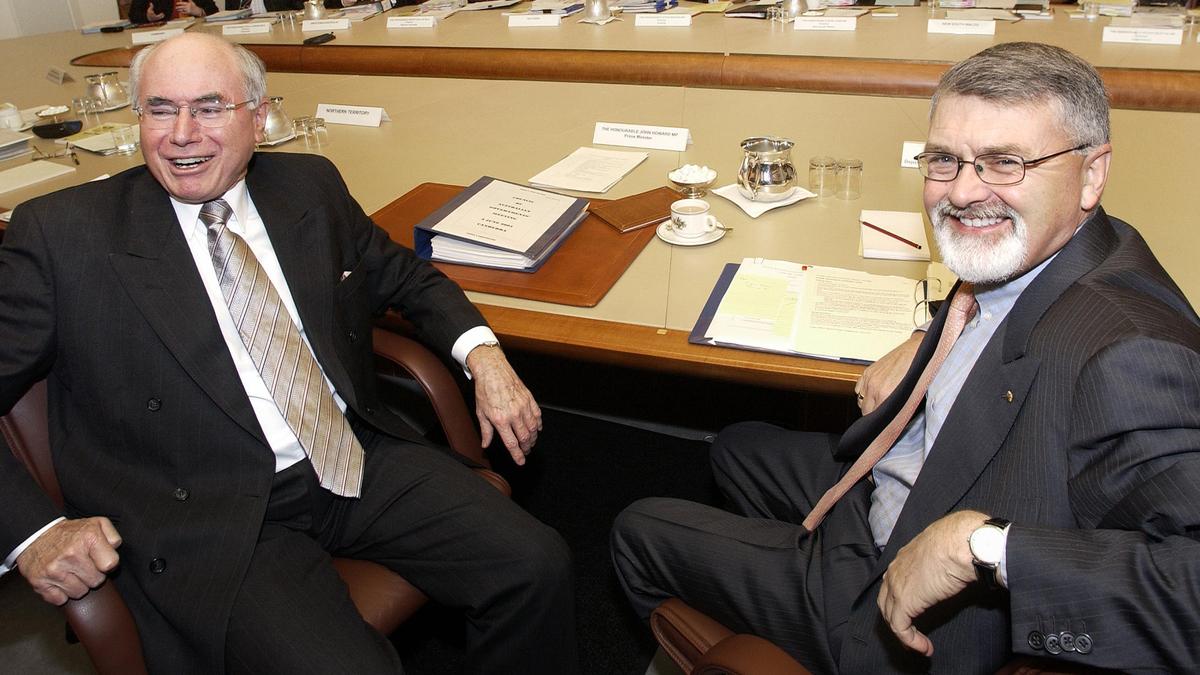
UPDATE: New cabinet papers released this week reveal that former Prime Minister John Howard was emboldened by a rare double majority in the Senate, allowing his government to pursue significant industrial relations reforms known as WorkChoices. The documents, unveiled by the National Archives, highlight how the Howard administration seized a “once-in-a-generation opportunity” to implement sweeping changes that ultimately contributed to its downfall.
These revelations show that Howard and then-Employment Minister Kevin Andrews accelerated their ambitious agenda for industrial reform, aiming to reshape Australia’s workplace relations dramatically. The cabinet papers, dating back to 2005, indicate that ministers intended to act quickly, despite anticipating strong backlash from unions.
In an interview with The West Australian, Philip Ruddock, the former attorney general, stated, “Now that you’ve got the numbers, the view will be it’s the best time to progress it.” This sentiment encapsulates the urgency that drove the government’s decision-making process at that time.
The documents reveal that the Howard government felt empowered after winning a decisive Senate majority in the 2004 elections. This momentum pushed them to adopt a more aggressive approach toward workplace reforms than initially planned. However, the implementation of WorkChoices sparked significant controversy and was a key factor in the government’s defeat in the 2007 elections.
Despite acknowledging the potential electoral risks, Ruddock stressed that the full impact of these reforms on their political future was not fully understood at the time. “Did we contemplate that we may not be able to do well enough to secure our further re-election? I guess that was always a possibility,” he admitted.
WorkChoices was designed to establish an independent Fair Pay Commission to set minimum wages, reduce safety nets, and limit trade union power. The package was formalized just eight days after entering parliamentary debate in December 2005. This swift passage was made possible by a supportive Senate composition, which shifted in July of that year.
The cabinet’s decision-making process was intense, with initial proposals requiring three meetings in March before final approval came in May. The urgency was underscored by advice from the Treasury, which encouraged further cuts to wage protections. However, the cabinet opted for a measured approach, indicating awareness of the potential backlash.
The Australian Council of Trade Unions (ACTU) launched a vigorous campaign titled “Your Rights at Work,” which many analysts credit as a significant factor in the Howard government’s electoral defeat. Cabinet historian David Lee noted that the campaign resonated deeply with the Australian public, highlighting the emotional stakes involved in the reforms.
Additionally, the newly released papers reveal other contentious issues discussed during the same period, including debates over the privatization of Telstra and budget concerns over national cultural institutions.
As these cabinet papers shed light on a crucial moment in Australian political history, they raise questions about the lasting impact of WorkChoices on the nation’s workplace relations landscape. The documents also remind us of the delicate balance politicians must navigate when implementing significant reforms, particularly in the face of public opposition.
What happens next? Analysts and political experts are monitoring the ongoing discussions surrounding workplace relations reforms in Australia, raising the question of whether contemporary leaders will draw lessons from Howard’s ambitious but contentious legacy.
Stay tuned for further developments as this story unfolds.
