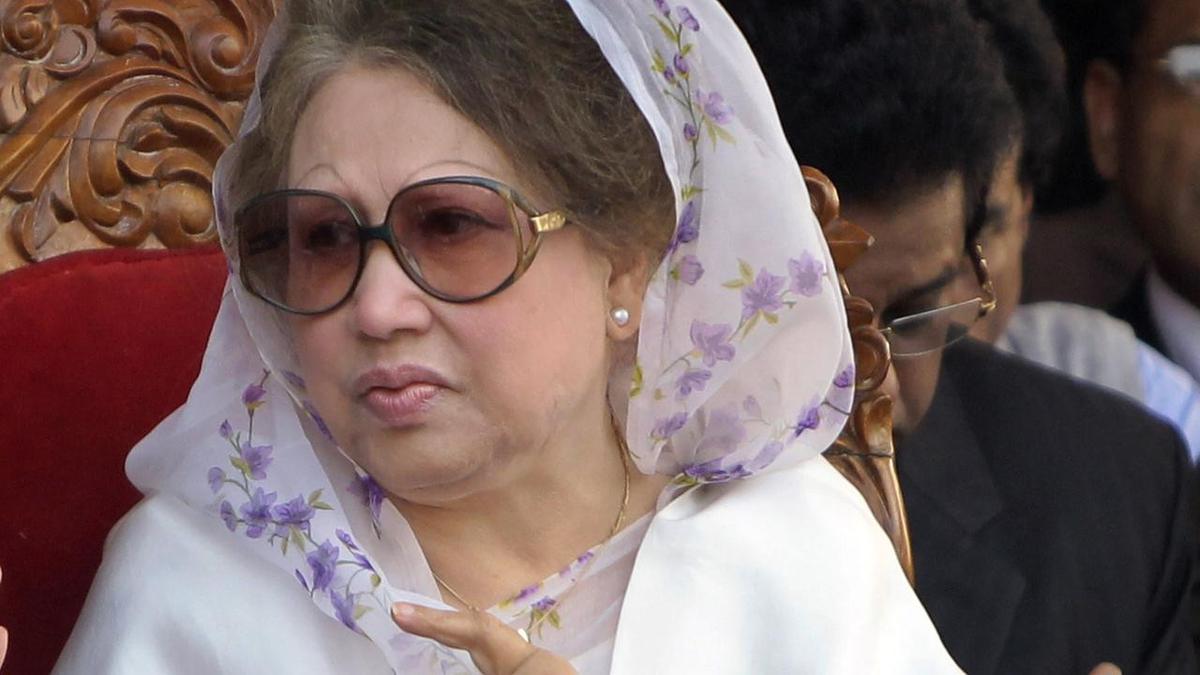
BREAKING: Bangladesh’s former prime minister Khaleda Zia is in “very critical” condition at a hospital in Dhaka, her party reports. The 80-year-old leader of the Bangladesh Nationalist Party (BNP) was admitted on November 23 due to a severe chest infection affecting her heart and lungs, raising urgent concerns about her health.
As the situation develops, her self-exiled son and acting party chief, Tarique Rahman, has indicated uncertainty regarding his return to Bangladesh. Rahman, who has been living in London since 2008, expressed on Facebook that his return is “not entirely” within his control, hinting at potential political or legal challenges. This statement has sparked widespread speculation about his future in Bangladesh’s volatile political climate.
Despite these concerns, the interim government, led by Nobel laureate Muhammad Yunus, has assured that there are “no restrictions or objections” to Rahman’s return. Shafiqul Alam, Yunus’ press secretary, emphasized that the government will issue a travel pass within a day if Rahman decides to come back. Touhid Hossain, the de facto foreign minister, confirmed that all legal barriers have been lifted, as Rahman has been acquitted in all cases against him since Hasina’s ouster in August last year.
The BNP has regained momentum in Bangladesh’s political landscape following the ousting of former prime minister Sheikh Hasina in a student-led uprising last year. The party’s increasing prominence raises questions about the future of governance in Bangladesh, especially after boycotting disputed elections in 2014 and 2024.
With Zia’s health in decline and Rahman’s potential return looming, the political dynamics in Bangladesh are at a critical juncture. Observers are closely watching how these developments will unfold in the coming days as the BNP positions itself as a frontrunner in the nation’s shifting political environment.
Stay tuned for updates on Khaleda Zia’s condition and Tarique Rahman’s possible return as this story continues to develop. The implications for Bangladesh’s political future are immense, and both local and international audiences are eager for clarity.