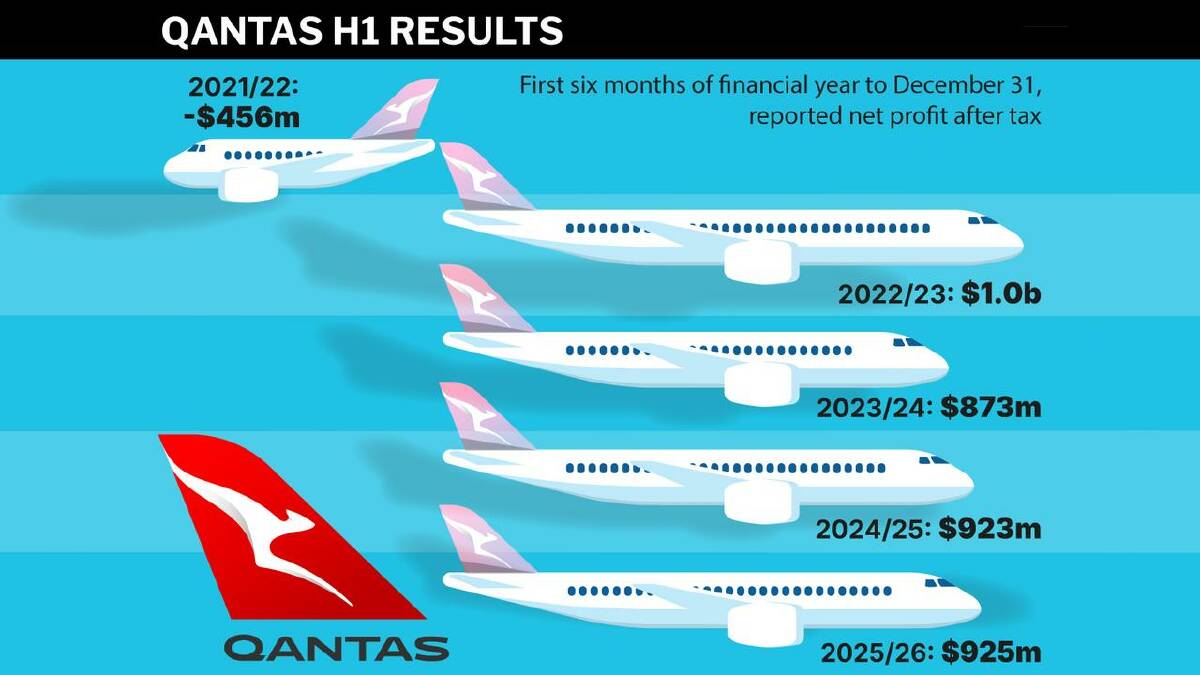
UPDATE: Qantas Group shares have plunged 9.2% to $9.67 following a disappointing report on international earnings, marking a three-month low for Australia’s largest airline. The drop follows the airline’s announcement of a $1.5 billion underlying pre-tax profit for the six months ending December, which, while slightly better than expected, could not quell investor concerns over softer-than-anticipated international demand.
The initial rise of 4.1% in share value quickly reversed as analysts scrutinized the earnings figures. Market analyst Josh Gilbert from eToro highlighted that the results were mixed, with some critical metrics falling short of expectations. “Qantas has wound back planned domestic capacity growth due to weaker corporate demand,” Gilbert stated, emphasizing the potential implications for the broader economy.
Demand for economy class flights from Australia to the US has weakened significantly, even as inbound travel from the US has surged. Factors such as a declining Australian dollar and shifting US economic conditions are contributing to this trend. Qantas CEO Vanessa Hudson defended the company’s performance, asserting that it reflects the airline’s successful investments in new aircraft.
In the last six months, Qantas received nine new aircraft, including a fourth Airbus A321XLR for routes between Brisbane and Manila. Hudson revealed plans for an additional 30 new aircraft to be delivered over the next 30 months, including Airbus A350s for the ambitious “Project Sunrise” non-stop flights to New York and London starting in mid-2027.
“This level of new aircraft deliveries is unprecedented in my three decades at Qantas,” Hudson stated during a press conference. The budget subsidiary, Jetstar, has seen a considerable boost from its fleet renewal program, contributing to a 60% increase in earnings growth, driven largely by next-generation aircraft that provide better fuel efficiency and lower maintenance costs.
Despite these developments, Hudson warned of rising aircraft charges and government fees, which have increased at double the rate of inflation over the past year. However, she assured that Qantas is working to offset these costs for its customers.
The airline has announced an interim dividend for shareholders totaling $300 million, equating to 19.8 cents per share, reflecting a 20% increase. Additionally, Qantas plans to allocate up to $150 million for share buybacks, aiming to stabilize investor confidence amidst fluctuating market conditions.
As the company navigates these challenges, it is redeploying one of its A380s from flights to Los Angeles to bolster services to Singapore, where demand remains strong. Qantas is also set to launch its first-ever direct flight between Sydney and Las Vegas, a seasonal service operating from December 29, 2027, to March 12, 2028.
In a move aimed at enhancing customer loyalty, Qantas has revamped its frequent flyer program, allowing members to roll over unused status credits and earn them through everyday spending for the first time.
The immediate future for Qantas remains uncertain as both domestic and international travel landscapes continue to shift. Investors and customers alike are urged to stay tuned for further updates on the airline’s performance and strategic adjustments in the coming months.