



































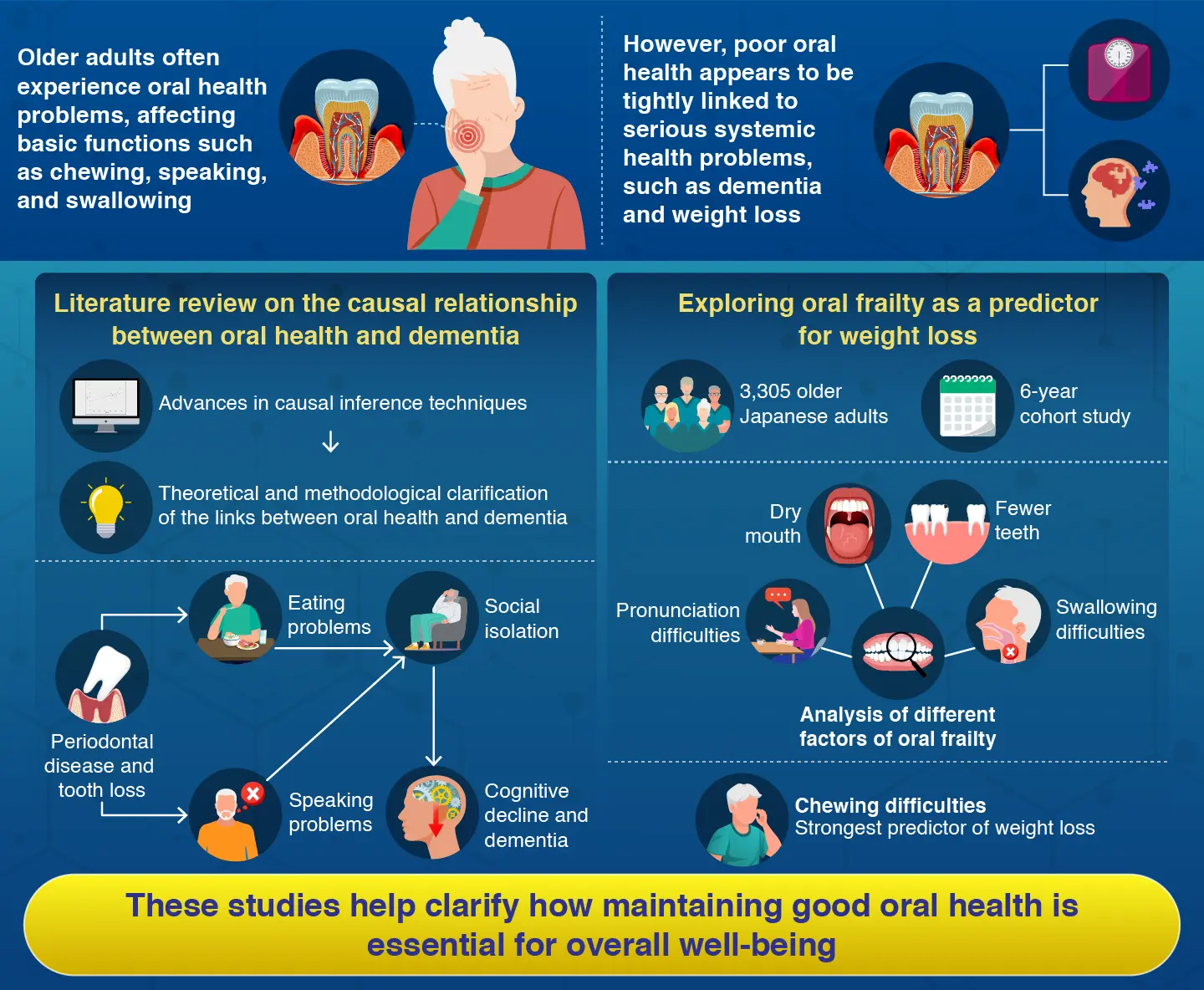
Researchers from Science Tokyo have uncovered significant links between poor oral health and an increased risk of dementia, highlighting both biological and social pathways. Their findings, published in the Journal of Dental Research, suggest that difficulties with eating and speaking may contribute to social isolation, thereby amplifying dementia risk.
The study draws on extensive epidemiological research and addresses how common oral health issues, such as tooth loss and dry mouth, can deteriorate basic functions like chewing and swallowing. These impairments not only pose immediate health challenges but may also lead to serious conditions later in life, including neurodegenerative diseases.
Unpacking the Connections
While numerous studies have established an association between oral health and dementia, the underlying mechanisms remain unclear. Previous research has predominantly focused on biomedical factors, such as inflammatory molecules and oral bacteria, which may affect brain health. However, less attention has been given to the social consequences of oral function.
Professor Jun Aida, who leads the research team at the Department of Dental Public Health, emphasized the importance of understanding how social interactions are influenced by oral health. “These functions have a social aspect that facilitates interpersonal interactions and can reduce social isolation,” Aida explained. The research indicates that poor oral health could lead to dementia by increasing the likelihood of social withdrawal due to difficulties in eating and speaking.
Aida’s team conducted a thorough literature review, synthesizing findings from recent studies to clarify the complex relationship between oral health and dementia. They noted that many studies have examined the potential bidirectional relationship, considering how cognitive functions prior to initial surveys could confound results.
Longitudinal Study Findings
In addition to the literature review, the researchers undertook a longitudinal study involving over 3,000 older adults in Japan. This study, also published in the Journal of Dental Research on August 16, 2025, focused on the relationship between oral frailty and weight loss. The findings revealed that chewing difficulty was a major predictor of weight loss, underscoring the broader implications of oral health on overall well-being.
Overall, Aida and his colleagues argue that their research provides crucial evidence that oral health impacts not only dental health but also broader health aspects, including nutritional status and brain function. “Together, our papers provide important evidence that oral health affects not only the teeth and mouth, but also broader aspects of health, including brain function, nutritional status, and social engagement,” Aida concluded.
The researchers call for additional studies to further investigate these intricate relationships and to identify effective interventions that can promote better oral health and, by extension, enhance cognitive function in older adults. The implications are profound, suggesting that improving oral health could potentially mitigate the risk of dementia and improve overall quality of life for the aging population.
