



































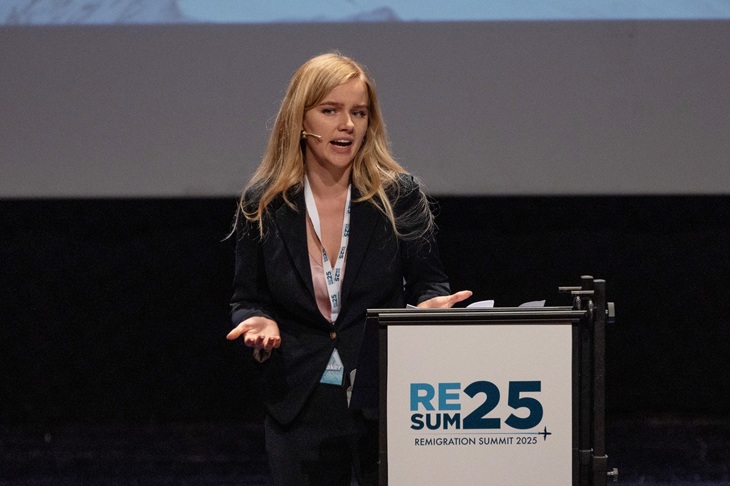
URGENT UPDATE: The UK government has officially banned Dutch political commentator Eva Vlaardingerbroek from entering the country, revoking her Electronic Travel Authorisation (ETA) on January 13, 2026. This sudden decision has ignited a fierce debate over free speech and government censorship.
Vlaardingerbroek, a rising star with 1.2 million followers on X, expressed her outrage via social media, stating, “No reason given. No right to appeal. Zero due process.” She received the notification just three days after criticizing UK Prime Minister Keir Starmer, heightening suspicions that the ban may be politically motivated.
The official notice declared her presence in the UK as “not conducive to the public good,” a vague assertion that has raised significant concerns about governmental overreach. Critics argue that this restrictive action reflects a growing trend among Western democracies to limit dissenting voices, particularly those that challenge mainstream narratives.
Vlaardingerbroek is known for her staunch defense of European farmers and her outspoken views on immigration and national sovereignty. Supporters hail her as a fearless advocate for free speech, while detractors label her rhetoric as divisive and aligned with far-right ideologies. As a prominent figure in a youth-led right-wing movement, her influence is particularly resonant among younger audiences.
The timing of the ban has drawn attention, occurring shortly after Vlaardingerbroek’s sharp critique of the UK leadership. Many believe that her growing platform poses a threat to the status quo, leading to fears that the UK government aims to silence dissenting voices.
This incident has become a focal point in the ongoing culture wars, with Vlaardingerbroek’s supporters arguing that her ban infringes on fundamental rights to free expression. Government officials maintain they have the authority to restrict entry for individuals deemed a threat to public order, but the broad language of the ban raises critical questions about the limits of such power.
The impact of this ban extends beyond Vlaardingerbroek herself; it serves as a litmus test for free speech in the UK and other Western nations. As thousands face arrest under controversial hate speech laws, the implications of this decision could set a dangerous precedent for the future of political discourse.
As the situation develops, observers are left questioning the balance between national security and the preservation of democratic freedoms. Will other governments follow suit in restricting entry to dissenting voices? The urgency of this matter cannot be overstated, and it highlights the need for ongoing dialogue about the nature of free speech in an increasingly polarized world.
Stay tuned for more updates on this developing story.
