



































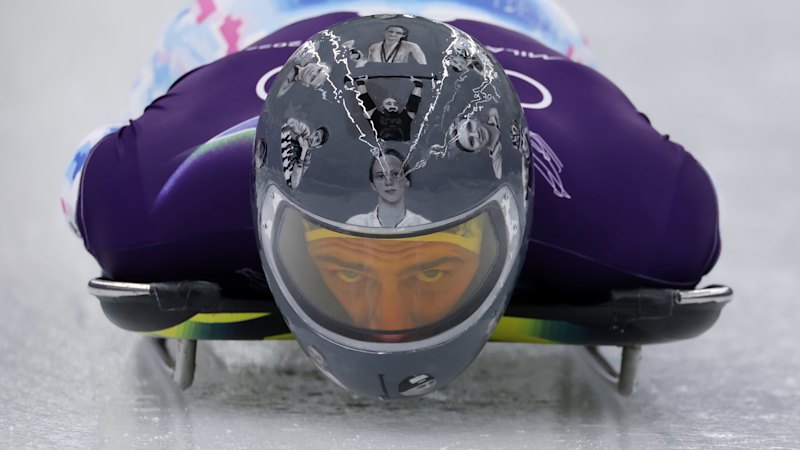
BREAKING: Ukrainian athlete Vladyslav Heraskevych has been disqualified from the skeleton competition at the 2023 Winter Games after wearing a helmet memorializing athletes killed in the ongoing war. The decision came just minutes before his race, igniting outrage and calls for protest.
Heraskevych, 27, had trained with the helmet adorned with the names of two dozen fallen compatriots in Italy. Despite a heartfelt appeal from IOC President Kirsty Coventry, he was initially told he would lose his accreditation, only to be allowed to keep it following Coventry’s intervention. “I am disqualified from the race. I will not get my Olympic moment,” he stated, highlighting the emotional weight of the situation.
The International Olympic Committee (IOC) cited rules against political messages on the field, claiming they must maintain a neutral environment. “They [Ukrainian athletes] were killed, but their voice is so loud that the IOC is afraid of them,” he added, emphasizing the tragic circumstances behind his helmet’s design.
Coventry met with Heraskevych in a tense and emotional meeting prior to the race, expressing her disappointment at the inability to find a compromise. “No one, especially me, is disagreeing with the messaging,” she said, acknowledging the powerful tribute but stressing the IOC’s strict regulations. The IOC had previously suggested alternatives, such as wearing a black armband, but no agreement was reached.
This incident echoes past controversies, notably the 1968 Summer Olympics when U.S. sprinters Tommie Smith and John Carlos were expelled for their political protest. “If we allow one athlete this expression … it will lead to chaos,” stated IOC spokesperson Mark Adams, reinforcing the organization’s stance.
Ukraine’s Olympic Committee is considering legal action, planning to appeal the decision at the Court of Arbitration for Sport. Ukraine’s President Volodymyr Zelensky expressed his discontent on social media, stating, “Sport shouldn’t mean amnesia, and the Olympic movement should help stop wars, not play into the hands of aggressors.”
Ukrainian officials, including Matvii Bidnyi, the Youth and Sports Minister, voiced their support for Heraskevych, declaring, “We will correct this mistake through legal channels. Vladyslav, you acted with dignity.” The emotional toll was evident as teammates consoled each other in tears following the ruling.
Heraskevych’s father, Mikhailo Geraskevych, was visibly distraught, reflecting the personal impact of this decision on the athlete’s family and country. “Even though the IOC wants to betray the memory of these athletes, I will not betray them,” Heraskevych vowed, reiterating the significance of their sacrifices.
American skeleton competitor Daniel Barefoot commended Heraskevych’s bravery, emphasizing the importance of standing by one’s beliefs. Despite his disqualification, the Ukrainian athlete has sparked a conversation about the intersection of sports and political expression.
As the skeleton events continue, the fallout from this incident will likely resonate throughout the Games, with calls for solidarity and remembrance growing louder. The IOC has yet to comment further on the situation, while the emotional responses from athletes and officials underscore the ongoing impact of the war on Ukrainian sports.
Stay tuned for immediate updates as this story develops.
