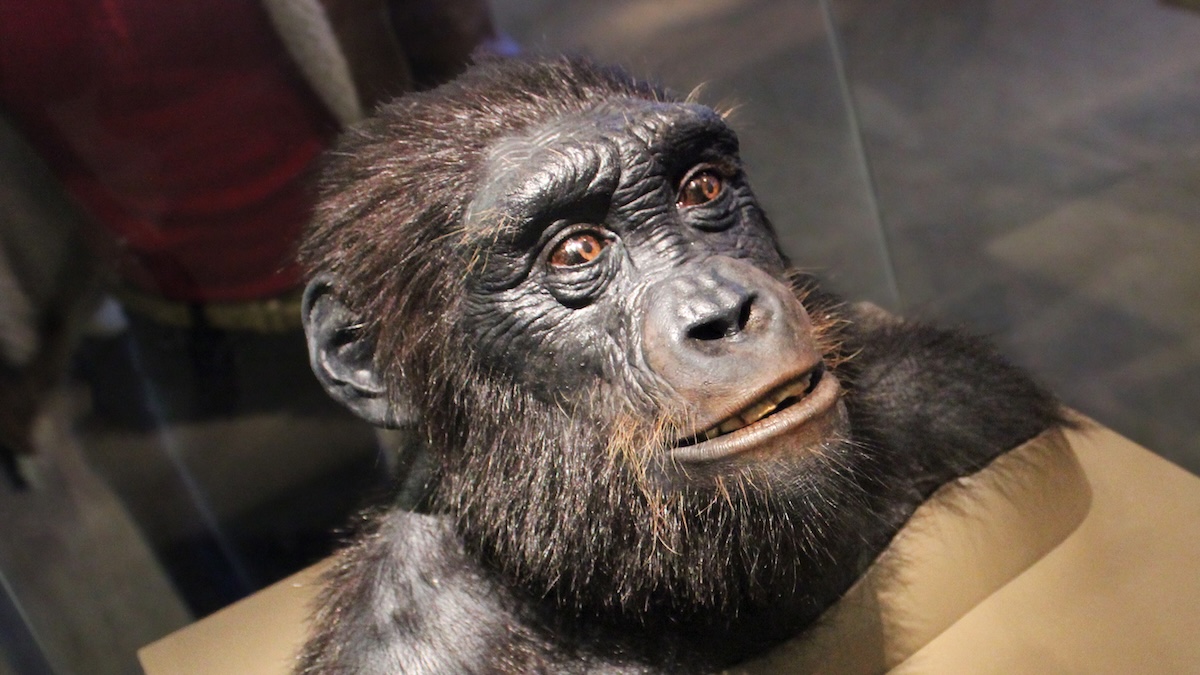
BREAKING: A groundbreaking study has confirmed that the ancient hominid, Sahelanthropus tchadensis, which lived 7 million years ago, may have walked on two legs, reshaping our understanding of human evolution. This urgent revelation comes from a team at New York University, who have provided compelling evidence that challenges previous assumptions about this early human ancestor.
The research, published in Science Advances, presents a clear argument that Toumai, as this species is affectionately nicknamed, was indeed bipedal. This finding is significant because it suggests that the evolution of bipedalism occurred much earlier than previously thought.
Lead researcher Scott Williams stated, “Our analysis of these fossils offers direct evidence that Sahelanthropus tchadensis could walk on two legs, demonstrating that bipedalism evolved early in our lineage.” This statement underscores a pivotal moment in understanding how our ancestors adapted to their environments.
The researchers employed advanced 3D geometric analyses of the arm and leg bones of S. tchadensis, comparing these to both living and extinct relatives. They identified three crucial features indicating bipedalism. Notably, they discovered a twist in the femur that allows the legs to point forward effectively, enhancing walking efficiency.
Additionally, the researchers observed prominent buttock muscles in S. tchadensis, essential for stabilizing the hips during movement. However, the most striking evidence was the identification of a femoral tubercle. This anatomical feature serves as an anchor point for a vital ligament connecting the pelvis and femur, previously known only in hominins.
Despite these adaptations for walking, S. tchadensis retained traits suited for climbing. Williams further elaborated, “Sahelanthropus tchadensis was essentially a bipedal ape that possessed a chimpanzee-sized brain and likely spent a significant portion of its time in trees, foraging and seeking safety.”
This research not only sheds light on our ancient relatives but also emphasizes the complexity of human evolution. As scientists continue to unravel these mysteries, the implications of this study are profound for our understanding of how early hominids navigated their environments.
Stay tuned for more updates as researchers continue to uncover the secrets of our past. The implications of these findings could reshape our understanding of human ancestry, making this a developing story to watch closely.