



































European shares experienced a modest uptick as investors reacted positively to Wall Street futures, indicating a potential recovery from last week’s significant sell-off. The benchmark STOXX 600 index, comprising 600 large companies across Europe, rose by 0.6 percent. In the United States, S&P 500 e-mini futures showed a rebound of 0.4 percent following a decline driven by concerns regarding inflated valuations in the artificial intelligence sector and ongoing inflation challenges.
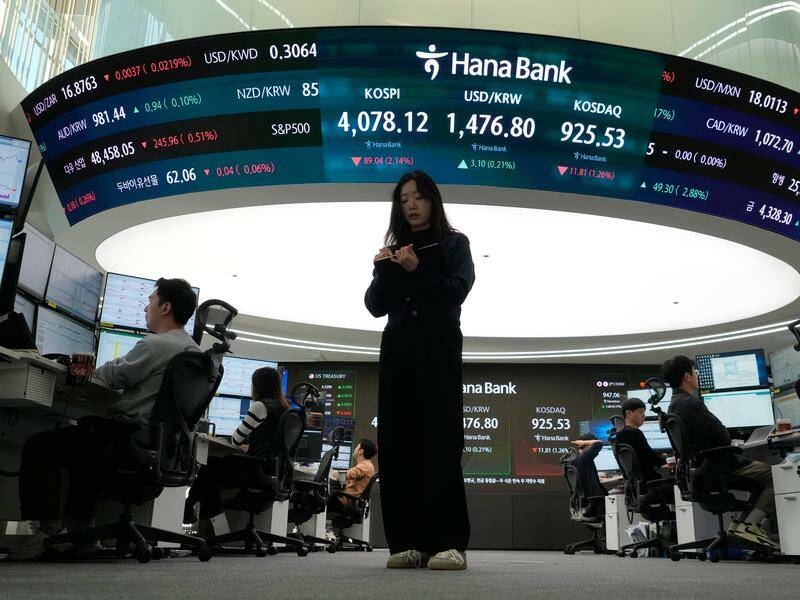
In Asia, market performance was less optimistic. The MSCI Asia-Pacific index, excluding Japan, fell by 1.2 percent, primarily led by a 2.7 percent drop in South Korean shares, despite the country being among the best-performing markets this year. Marc Velan, head of investments at Lucerne Asset Management in Singapore, noted that the negative sentiment across Asia seemed to be a reaction to last Friday’s sell-off in the US technology sector rather than being spurred by regional issues.
Central Bank Decisions Loom
Market participants are now focusing on a week filled with crucial central bank meetings and economic data releases. The Bank of Japan is widely expected to increase interest rates by 25 basis points to 0.75 percent, while the Bank of England may also cut rates by the same margin to 3.75 percent. The European Central Bank is anticipated to maintain its current interest rates, alongside similar decisions expected from Sweden’s Riksbank and Norway’s Norges Bank.
Investors will also review previously delayed economic data stemming from the US government shutdown, including the jobs report for November and the monthly consumer price index. Ben Bennett, head of investment strategy at L&G Asset Management in Hong Kong, suggested that the data might not fully reflect current economic conditions due to the challenges in data collection during the shutdown, stating, “We’ll have to wait until 2026 to get a clearer reading on the US economy.”
China’s Property Market Concerns
In China, economic indicators continue to signal a troubled recovery, particularly in the property sector. Official data revealed that new home prices declined further in November, complicating the government’s efforts to stabilize the market. China Vanke, a major state-backed property developer, announced it would hold a second meeting with bondholders after failing to secure approval for a one-year extension on a bond payment due on Monday. This situation raises the risk of default, with analysts like Jeff Zhang, an equity analyst at Morningstar, warning of significant repercussions for the sector if Vanke defaults.
Zhang commented, “Investors may be more concerned about the balance sheet and government’s attitude towards bailout for even the ‘safe names’.” The US dollar has slightly weakened, dipping 0.1 percent against the Chinese yuan, trading at 7.0486 yuan, remaining close to its strongest level in over a year.
Market Reactions and Commodity Insights
In Japan, stocks saw some support after the Bank of Japan’s “tankan” survey indicated that business sentiment among large manufacturers reached a four-year high, suggesting resilience against the impact of rising US tariffs. The Topix index increased by 0.2 percent, while the yen appreciated by 0.6 percent against the US dollar, reaching 154.955.
Meanwhile, in commodities, Brent crude oil prices rose by 0.5 percent, trading at $61.44, driven by supply concerns stemming from geopolitical tensions between the US and Venezuela. Additionally, Imperial Oil reported a fire alert at its refinery facility in Ontario, Canada, which can process 120,000 barrels per day. On the other hand, Russian officials stated that an oil refinery in Afipsky escaped damage from a recent Ukrainian drone attack.
In the realm of precious metals, gold prices continued their upward trajectory, extending a rally into a fifth day and nearing a record high of $4,381.21. Spot bullion was last reported at $4,348.83, an increase of 1.1 percent. Additionally, cryptocurrency markets recovered, with Bitcoin gaining 1.5 percent to reach $89,845 and Ethereum rising 2 percent to $3,145.
As central banks prepare for significant decisions and economic challenges remain prominent, market participants are likely to remain vigilant in the coming days, closely monitoring developments that could impact global financial stability.
