



































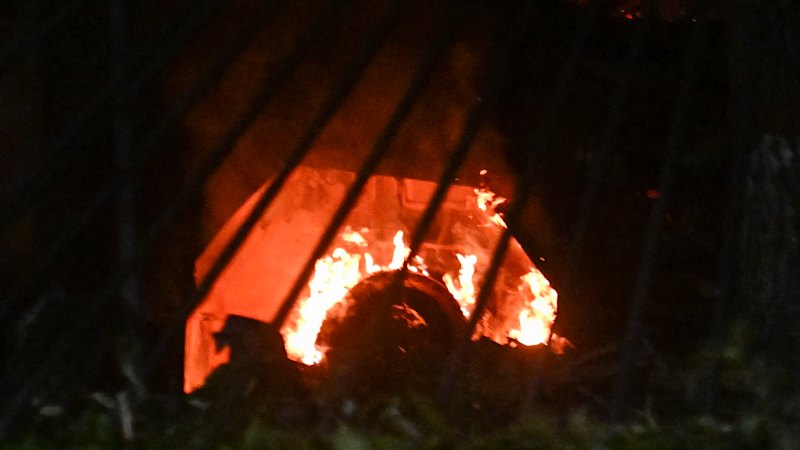
A family holiday in Caracas took a dramatic turn when explosions erupted near the city, forcing an Australian couple to consider an escape plan. Alexander, an Australian lawyer, and his wife, who has Mexican-Venezuelan roots, were enjoying their festive break when they were jolted awake at 02:00 on December 23, 2023, by the sound of fighter jets flying alarmingly close.
Initially, Alexander thought the noise resembled planes performing flyovers at sporting events. But moments later, a “dull, very profound” sound filled the air as explosions erupted from the nearby airport, less than two kilometres away. “It was very obvious what was happening,” Alexander recalled later that evening.
Chaos Erupts in Caracas
The couple witnessed the immediate aftermath of the explosions, which set parts of the airport ablaze. As lights flickered on in surrounding buildings, late-night patrons from a nearby bar spilled into the street. Videos of the explosions quickly circulated on WhatsApp, and residents across the city reported power and water outages.
Alexander turned to international news sources, like CNN and The New York Times, for updates, but found a significant delay in coverage. “There’s a vacuum of information, largely because all the media available in the country is state-run,” he noted, expressing frustration at the lack of timely news. A senior Venezuelan official later confirmed that at least 40 military personnel and civilians had perished in the incident.
The stark contrast between the chaos of that night and the couple’s previous two weeks was striking. They had arrived in Caracas to celebrate Christmas and New Year with family, relishing the vibrant atmosphere of the city. “The roads were packed, and people were shopping,” Alexander described. “The airport was fine, customs were fine, everyone was getting ready for Christmas.”
Aftermath and Uncertainty
As they navigated the fallout from the explosions, the mood in Caracas shifted dramatically. The city, typically bustling with noise and activity, fell largely silent. “It’s a loud city, Venezuelans are a loud people, but it’s noticeably quiet,” he observed. While some residents took to the streets, with mixed reactions to the recent events, most remained indoors, grappling with a sense of unease.
In the wake of the attack, residents formed long lines outside supermarkets, anxious to stock up on essential items. Alexander’s wife stood in line for three hours to purchase eggs, toilet paper, milk, and drinking water. Conversations around her revolved around economic opportunities and the potential for new businesses. “This country has been through so much over the last 25 years, and has had so many high hopes, and had so many of those hopes dashed,” Alexander reflected, noting the cautious optimism among the locals.
With air travel disrupted, the couple faced a complex journey back to New York City. They had originally booked a flight that would connect through Curacao, but with flights suspended, they considered alternative options, including a possible drive to the border.
In a moment of desperation, Alexander checked the official Instagram page of the airport for updates. The only post featured a photo of President Nicolás Maduro embracing his wife, accompanied by a caption that read, “The empire kidnapped them. We want them back!”
As the couple remains safe with family, they are left to contemplate the uncertainty of their situation in a city that has shifted from holiday cheer to heightened tension in a matter of hours.
