



































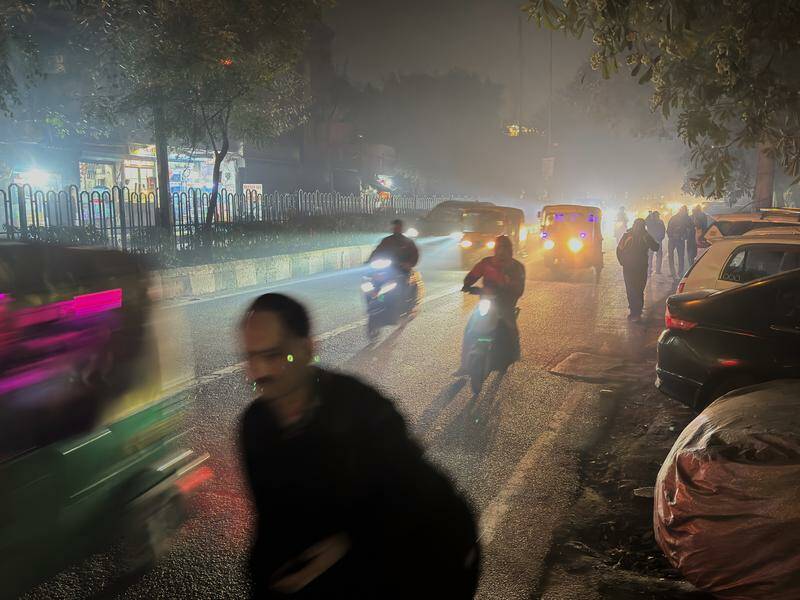
India has implemented stricter anti-pollution measures in Delhi and nearby areas as the air quality has worsened to the lowest levels recorded this season. On Saturday evening, the Commission for Air Quality Management invoked stage four— the highest level— of the Graded Response Action Plan, according to an advisory released by the country’s environment ministry. By Sunday, Delhi’s air quality index soared to “severe,” with readings exceeding 450 at multiple monitoring stations, a rise from 430 on Saturday and marking the worst levels recorded this winter, as reported by the Central Pollution Control Board.
The newly enforced regulations include a ban on older diesel trucks entering the city, a suspension of construction projects, including public initiatives, and a shift to hybrid schooling. With a population of approximately 30 million, Delhi frequently suffers from thick smog during the winter months. This phenomenon occurs as cold, dense air traps emissions from vehicles, construction activities, and agricultural burning in surrounding states. As a result, pollution levels in the region rank among the highest globally, posing severe respiratory risks to residents.
Authorities have advised the public to remain indoors, particularly vulnerable groups such as children and individuals with respiratory or cardiac conditions. Those who must venture outside are encouraged to wear masks. The recent decline in air quality has been attributed to high moisture levels and a change in wind direction, conditions that restrict the dispersion of pollutants and contribute to smog formation, as stated by the Commission for Air Quality Management.
The government’s decisive action reflects growing concerns over the health impacts of air pollution in one of the world’s most densely populated cities. With severe air quality being linked to various health issues, including asthma and cardiovascular diseases, the measures aim to mitigate the immediate risks faced by millions of residents.
As Delhi continues to grapple with pollution challenges, the situation underscores the need for long-term strategies to improve air quality and safeguard public health. The implementation of these measures serves as a critical step in addressing the pressing environmental crisis that affects not only Delhi but also surrounding areas.
