



































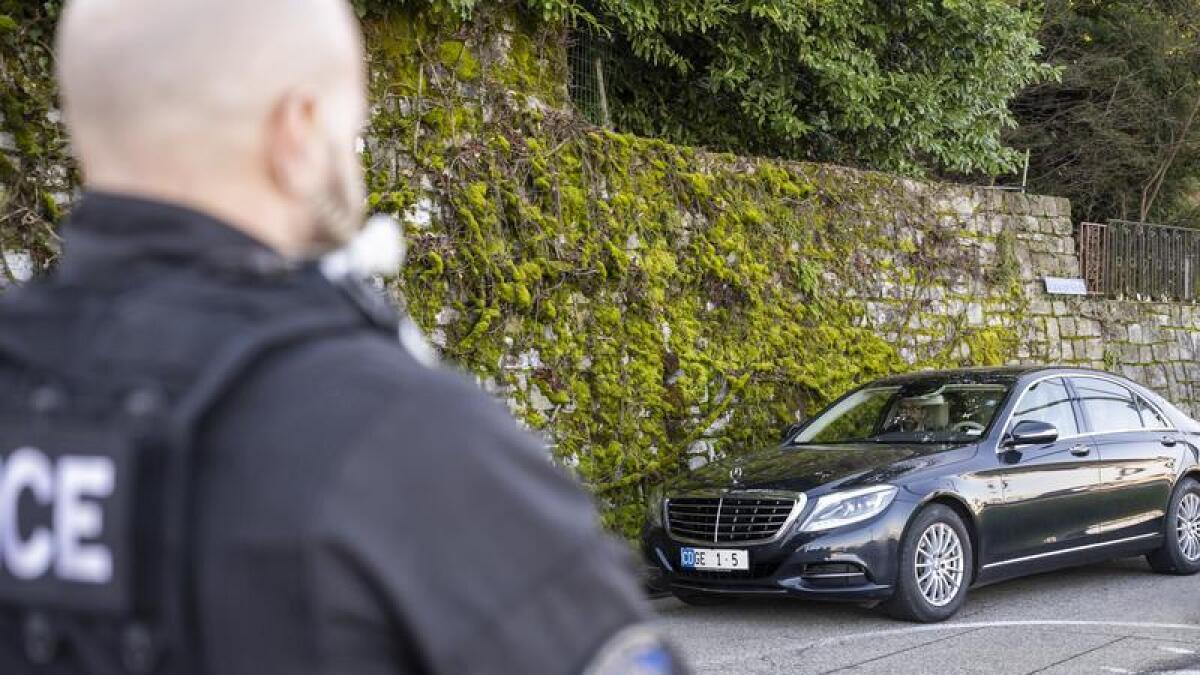
Iran and the United States are set to resume crucial negotiations regarding Iran’s nuclear program, with talks scheduled to begin in Vienna on Monday. The discussions aim to address ongoing tensions surrounding Iran’s uranium enrichment and its broader nuclear ambitions. According to Oman’s Foreign Minister Badr al-Busaidi, there has been “significant progress” in preliminary discussions held at an Omani diplomatic residence, indicating a potential breakthrough in the long-stalled negotiations.
The upcoming talks in Vienna, which is also the headquarters of the International Atomic Energy Agency (IAEA), follow a series of discussions that have involved the exchange of “creative and positive ideas.” While specific details regarding the agenda remain limited, both parties will need to consult with their respective capitals, suggesting that the negotiations could be complex.
Concerns about the potential consequences of the talks linger, as analysts have warned that a failure to reach an agreement could provoke military action from the United States. President Donald Trump is keen to secure a deal that would constrain Iran’s nuclear capabilities, particularly in the wake of growing dissent within Iran following nationwide protests in January.
Iran, on its part, remains committed to continuing its uranium enrichment, despite the devastation of its nuclear program resulting from US-led military actions in June 2025. Following those attacks, which targeted three nuclear sites, Iran has reiterated that it views all US military bases in the Middle East as legitimate targets. This raises the prospect of significant escalation, with the potential for a regional conflict that could involve neighboring countries, including Israel.
In a recent interview, Iranian Deputy Foreign Minister Abbas Araghchi emphasized the catastrophic nature of a potential war, stating, “There would be no victory for anybody – it would be a devastating war.” Meanwhile, in Washington, Democratic leaders are preparing to introduce legislation requiring President Trump to seek congressional approval before undertaking any military action against Iran. Democratic leader Hakeem Jeffries described any military engagement without congressional authorization as “reckless” and unconstitutional.
The negotiations will involve key figures, including Araghchi and Steve Witkoff, a billionaire real estate developer and special envoy for the Middle East. Previous rounds of discussions between the two collapsed after Israel initiated military action against Iran. Recent images released by Oman depict Witkoff meeting with al-Busaidi and Araghchi, signaling renewed diplomatic efforts.
US Secretary of State Marco Rubio has voiced concerns over Iran’s ongoing attempts to rebuild elements of its nuclear program. While Iranian officials assert that they have not enriched uranium since June, they have denied access to IAEA inspectors at the bombed sites, raising questions about transparency and compliance with international agreements.
The IAEA and Western powers have long maintained that Iran had a nuclear weapons program until 2003. Prior to the June military strikes, Iran was enriching uranium up to 60 percent purity, alarmingly close to weapons-grade levels of 90 percent.
US intelligence assessments indicate that while Iran has not restarted an active weapons program, it has engaged in activities positioning it to produce a nuclear device should it choose to do so. Iranian officials continue to claim that their nuclear program is peaceful, but threats to pursue a nuclear weapon have surfaced in recent years, underscoring the urgency of the upcoming talks in Vienna.
As the world watches, the outcomes of these negotiations could significantly shape the geopolitical landscape in the Middle East and beyond.
