



































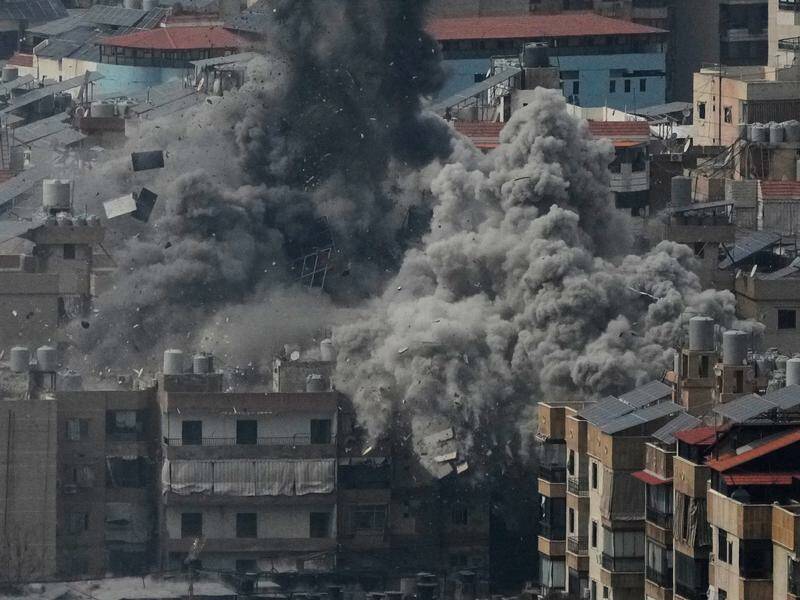
As the conflict between Israel and Iran escalates into its second week, tensions in the Gulf region have reached a critical point. Iran has issued an apology to neighboring countries for its recent strikes on Gulf Arab civilian targets, aiming to mitigate regional anger. This comes amid a series of retaliatory actions, with both nations conducting attacks that have spread beyond their borders.
Iran’s military strikes have targeted Israel and Gulf states hosting U.S. military installations, leading to significant civilian casualties. In the past week alone, the United Arab Emirates, Kuwait, Qatar, Bahrain, and Saudi Arabia have reported drone and missile attacks attributed to Iran. Iranian President Masoud Pezeshkian stated that a temporary leadership council approved a suspension of attacks on neighboring countries, except in response to aggression from those nations. “I personally apologise to neighbouring countries that were affected by Iran’s actions,” he remarked on Saturday.
Despite this gesture, it remains unclear how much influence Pezeshkian’s statement will have, as reports indicate that some strikes continued into Saturday morning. In recent years, Iran had sought to improve relations with its Gulf neighbors, a diplomatic effort that has unraveled following a series of Iranian missile and drone attacks. Gulf states expressed outrage at the targeting of their civilian infrastructure, including hotels, ports, and oil facilities, despite their insistence that they would not permit U.S. bases to be used for attacks on Iran.
The ongoing conflict has not only affected regional stability but has also significantly impacted global markets. Energy prices have surged, and the situation has raised concerns regarding the security of the vital Strait of Hormuz, through which about one-fifth of the world’s oil supply is transported daily. Reports indicate that Iranian attacks have resulted in the deaths of at least 1,332 Iranian civilians, according to Amir Saeid Iravani, Iran’s ambassador to the United Nations. Conversely, Israeli strikes have resulted in the deaths of at least 11 individuals in Israel, while six U.S. service members have also been reported killed.
In a show of support for Iran, Russian President Vladimir Putin extended condolences to Pezeshkian over the civilian casualties and called for an immediate cessation of hostilities. The Iranian army announced early Saturday that it had conducted drone strikes on Israeli targets, as well as U.S. bases in Abu Dhabi and Kuwait, in retaliation for a U.S. attack on its naval ship, the IRIS Dena, which resulted in significant loss of life among sailors.
The situation has prompted a swift response from the Israeli military, which reported intercepting missiles launched from Iran. Following these attacks, Israel targeted infrastructure in Tehran and conducted strikes on Iranian and Hezbollah positions in Lebanon.
The conflict has sparked heightened tensions within the international community, with U.S. President Donald Trump demanding Tehran’s “unconditional surrender.” In a post on his Truth Social platform, Trump stated that following such a surrender, the U.S. and its allies would work to restore Iran’s economy and stability.
As the situation continues to evolve, the prospects for a peaceful resolution appear bleak. The ongoing violence has not only escalated military actions but also raised significant humanitarian concerns, as civilian populations bear the brunt of the conflict. The future of regional stability hangs in a precarious balance as both sides prepare for potential further escalation.
