



































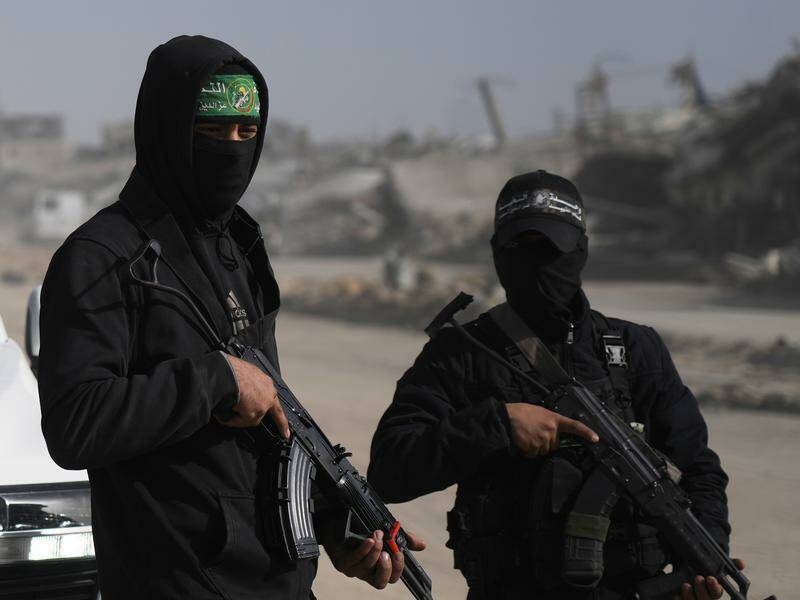
Hamas has expressed serious concerns that the recent assassination of a senior commander by Israel may jeopardize the fragile truce established in the Gaza Strip. In a televised address, Hamas’ chief negotiator, Khalil al-Hayya, confirmed the killing of Raed Saed during an Israeli airstrike, which occurred a day prior to his statement. This marks the highest-profile assassination of a Hamas figure since a ceasefire agreement was brokered in October 2023.
Hayya stated, “The continued Israeli violations to the ceasefire agreement … and latest assassinations that targeted Saed and others threaten the viability of the agreement.” He called on international mediators, particularly the United States, to ensure Israel adheres to the ceasefire terms. The US administration, under the leadership of President Donald Trump, has been pivotal in negotiations surrounding the ongoing conflict.
Saed was identified by Hamas sources as the second-in-command of the group’s armed wing, following Izz el-Deen Al-Hadad. Israeli officials assert that Saed played a crucial role in planning the October 7, 2023, attack on Israel, an incident that escalated the conflict significantly.
Concerns Over International Force Deployment
In his address, Hayya also discussed the proposed deployment of an International Stabilisation Force (ISF), authorized by the United Nations. He specified that the role of the international forces should be limited to maintaining the ceasefire and separating the opposing sides along the borders of Gaza, without intervening in internal affairs.
The deployment of this force is envisioned as a key part of the next stage of Trump’s peace plan, which follows the initial phase initiated on October 10, 2023. This initial phase included a tentative ceasefire, with Hamas releasing hostages and Israel reciprocating by freeing detained Palestinians.
According to US officials, the US Central Command will convene a conference in Doha on December 16, 2023, with partner nations to strategize the formation and deployment of the ISF in the Gaza enclave. The ongoing developments in this region reflect the complexities of the peace negotiations and the challenges posed by continued violence.
As the situation unfolds, the international community remains watchful, aware that any disruption can have far-reaching implications for peace efforts in the region.
