



































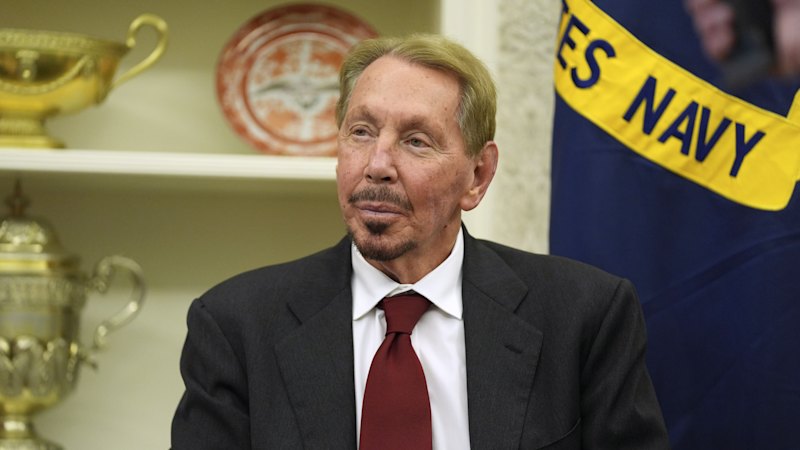
The year 2025 has seen Larry Ellison, co-founder and chairman of Oracle, emerge as a central figure in the technology sector, overshadowing many of his billionaire peers, including Elon Musk. As the year progressed, Ellison became pivotal in numerous high-profile business narratives, particularly in the rapidly evolving landscape of artificial intelligence (AI).
Ellison’s influence was underscored on January 21, 2025, when Donald Trump, then newly inaugurated as President of the United States, hosted a significant meeting at the White House. Alongside Ellison, Sam Altman of OpenAI and Masayoshi Son from SoftBank, the group announced an ambitious $500 billion initiative aimed at developing AI infrastructure, promising to create approximately 100,000 jobs. Despite some skepticism regarding the feasibility of this plan, it marked a turning point for Ellison and Oracle.
In the months that followed, Oracle embarked on an extensive build-out of AI-optimized data centers, a move that significantly impacted the company’s financials. This aggressive strategy led to a negative cash flow for Oracle for the first time since the early 1990s, a stark contrast to Ellison’s previous reluctance to engage with cloud computing. By the summer, Oracle secured a monumental deal with OpenAI, valued at around $300 billion, making the AI lab its largest customer and further solidifying Ellison’s place in the AI sector.
Investors reacted positively to Oracle’s expanding partnership with OpenAI, leading to a remarkable surge in Ellison’s net worth. On a single day in September, his fortune increased by $89 billion, reaching a staggering $388 billion, briefly making him the richest individual in the world, surpassing Musk.
This wealth expansion coincided with familial ambitions, particularly those of his son, David Ellison. In August, David’s Skydance Media successfully acquired control of Paramount, with significant financial backing from his father. Shortly thereafter, David attempted to extend his influence by pursuing a deal with Warner Bros. Discovery. Although the initial bid was rejected in favor of a Netflix offer, the younger Ellison’s assertive tactics, including a hostile takeover attempt, mirrored strategies employed by Larry in his earlier business ventures.
Despite these ambitious undertakings, Ellison has faced challenges. As Oracle’s stock price fluctuated, so too did his wealth, which has recently dipped to just under $250 billion. Investors have begun to express concerns regarding AI expenditure, particularly as Oracle has taken on considerable debt to finance its data center developments. This situation raises questions about the company’s long-term sustainability, especially as it relies heavily on the success of its partnership with OpenAI.
Ellison’s financial strategy in 2025 has shifted dramatically from previous years, where he primarily invested in luxury assets such as private jets and real estate, including a significant portion of Lanai, a Hawaiian island. Now, his fortunes are tightly linked to the competitive AI market and the uncertain future of his son’s media endeavors.
As 2025 unfolds, the evolution of Larry Ellison’s influence in technology continues to captivate observers. His ability to navigate the complexities of the AI boom while managing financial risks presents a fascinating case study in modern business leadership.
