



































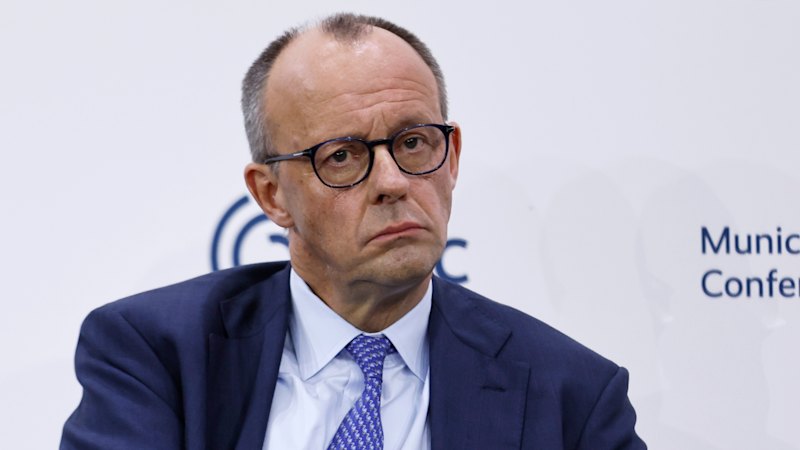
German Chancellor Friedrich Merz emphasized the need for a robust European nuclear defense during his address at the Munich Security Conference on March 15, 2024. His remarks come amid a reevaluation of transatlantic relations, particularly in light of the challenges posed by the political climate in the United States under former President Donald Trump. Merz highlighted the necessity for Germany and Europe to enhance their security and independence while fostering new partnerships globally.
In his speech, Merz warned against a return to a world dominated by great power politics. He stated, “This order, as incomplete as it’s been even at the best of times, no longer exists as it did.” His comments reflect a growing concern among European leaders about the implications of shifting global dynamics. He underscored that Europe must not only bolster its defenses but also adapt to the evolving geopolitical landscape.
Merz disclosed that he is engaged in “confidential talks” with French President Emmanuel Macron regarding nuclear deterrence strategies, marking a significant development as Europe considers its defense posture. This discussion comes at a time when, for the first time since the end of the Cold War, European nations are evaluating the necessity of establishing their own nuclear capabilities.
Despite this shift, Merz urged caution regarding relations with the United States. He advised against dismissing the US outright, emphasizing that such views are short-sighted. He stated, “We must recognize the potential that can still be realized by engaging with Washington.” This call for cooperation reflects a nuanced approach to transatlantic ties, especially following the controversial remarks by JD Vance, the US Vice President, at last year’s conference.
The Munich Security Conference has become a platform for leaders to reassess the post-World War II alliance. Merz’s remarks resonated with a broader sentiment among European leaders, who are grappling with the impact of Trump-era politics. He delineated a clear distinction between European values and the “culture wars” associated with the MAGA movement, asserting that Germany must pursue alliances based on shared principles rather than isolationist tendencies.
Merz further illustrated Europe’s capabilities, citing the continent’s “enormous” military, economic, and technological potential. “We Germans know that a world in which only power is taken into account is a dark place,” he remarked, referencing Germany’s historical lessons from the 20th century. He called for a collective effort to move forward by dismantling trade restrictions and protectionist policies.
The discussions on nuclear deterrence highlight a significant shift in European defense strategy. Germany, which has phased out its nuclear capabilities and relies on NATO’s nuclear sharing arrangements, is now considering how to navigate its security landscape. Merz affirmed that any discussions surrounding nuclear deterrence would adhere to Germany’s legal obligations within NATO, ensuring that no zones of differing security emerge in Europe.
The conference drew attention not only to transatlantic alliances but also to the broader geopolitical context. Amidst the gathering, Marco Rubio, the US Secretary of State, and other prominent figures from the US Congress participated, reinforcing the importance of transatlantic ties. As leaders face the realities of a fragmented international order, Merz’s address serves as a call to action for Europe to take ownership of its security.
In a parallel sentiment, Mark Carney, the Canadian Prime Minister, recently criticized the existing international system at the World Economic Forum, suggesting that it is effectively dead. He advocated for middle powers to reinforce their alliances to counter predatory influences globally. Carney’s remarks, which drew backlash from Trump, echo the sentiments expressed by Merz regarding the need to adapt to a changing world.
The Munich Security Conference report underscored the precarious state of transatlantic relations, characterizing the current moment as one of the bleakest in the past eight decades. Wolfgang Ischinger, the conference chair, pointed to the destabilizing forces represented by Trump, alongside challenges from Russia and China, as contributing factors to a disintegrating international order.
As the conference continues, Merz’s push for a redefined European security framework resonates with the urgent need for a cohesive response to emerging global threats. The discussions in Munich may well shape the future of transatlantic relations and the security architecture within Europe for years to come.
