



































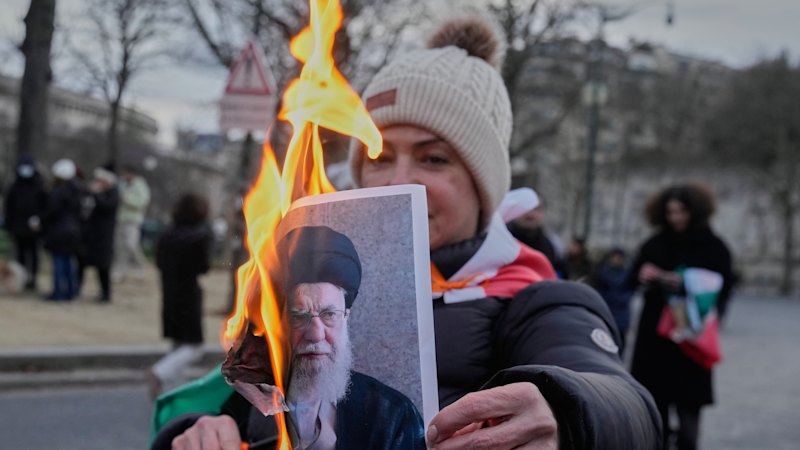
Protests have erupted across Iran, with hundreds of thousands defying government threats to rally against the regime of Supreme Leader Ayatollah Ali Khamenei. Demonstrations, which began two weeks ago, have spread from the capital, Tehran, to numerous cities in the country of 90 million. This surge in public dissent marks a pivotal moment, as leaders worldwide contemplate the implications of a potential regime change in Iran.
Protesters are driven by outrage over economic mismanagement, rampant inflation, and government corruption. According to the Human Rights Activists News Agency, over 500 protesters have died in the violence, and more than 10,000 have been arrested. As unrest continues, the Iranian government has sought to suppress dissent by blocking internet access and restricting communication networks.
The international community is closely monitoring the situation. Donald Trump, the President of the United States, has voiced support for the protesters, suggesting the U.S. may consider military action if the Iranian regime continues to respond violently. Recent military briefings have indicated that options for strikes against Iran are under consideration, raising tensions and uncertainty in the region.
The Economic Impact of Unrest
The upheaval in Iran has sent shockwaves through global energy markets. Brent crude oil prices surged by more than 5 percent, reaching over $63 a barrel as investors reacted to the potential for supply disruptions from OPEC’s fourth-largest oil producer. William Usher, a former senior Middle East analyst at the CIA, described this moment as “the biggest moment in Iran since 1979,” referring to the revolution that established the Islamic Republic. He noted that the regime is facing significant challenges, particularly with the economy.
Protests are not only a response to the currency crisis but are also fueled by anger towards the regime itself. The Iranian leadership’s attempts to navigate this unrest are complicated by the diverse backgrounds of the protesters, spanning from urban elites to conservative factions, all of whom seek change.
Global Reactions and Potential Outcomes
The fallout from these protests has implications beyond Iran’s borders. Israel is reportedly coordinating with European governments regarding the evolving situation, highlighting the global stakes involved. If the Islamic Republic were to collapse, it could represent a significant geopolitical shift, particularly for Russian President Vladimir Putin, who would lose another ally following the recent political turmoil in Venezuela and Syria.
Market analysts are increasingly concerned about the chaos that could ensue if the regime falls. Mark Mobius, an emerging markets investor, remarked on the potential for profound change, stating, “The best outcome would be a complete change in the government. The worst outcome would be continued internal conflict.”
While some analysts believe a revolution is unlikely, the fear of chaos remains prevalent, particularly among Iranian citizens who have witnessed the turmoil in neighboring countries. As protests continue, leaders in the Gulf Co-operation Council (GCC) are apprehensive about the implications of a power vacuum that could arise from a potential regime change.
Amidst these developments, the Iranian government remains defiant. President Masoud Pezeshkian, a moderate figure within the regime, has called for unity and dialogue while the security forces prepare for a harsher crackdown on dissent. The regime’s response will be crucial in determining the future stability of Iran and the region as a whole.
As the situation unfolds, the world watches closely, anticipating how this pivotal moment will shape not only Iran’s future but also the broader geopolitical landscape.
